
Verbes de Style de Vie Physique et Social - Verbes pour les Actions Involontaires
Ici, vous apprendrez quelques verbes anglais se référant à des actions involontaires telles que "respirer", "haleter" et "transpirer".
Réviser
Flashcards
formes
Orthographe
Quiz
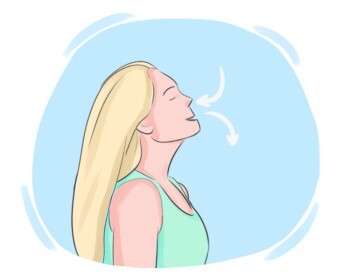
to take air into one's lungs and let it out again

respirer
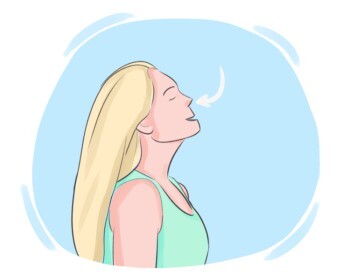
to take air or substances into the lungs by breathing in
inspirer
Pendant la pratique du yoga, les participants sont invités à inspirer profondément par le nez et à expirer lentement par la bouche.
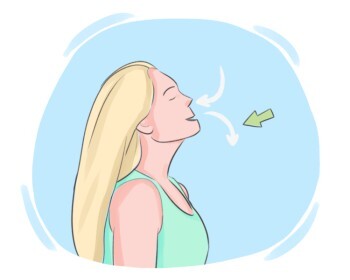
to breathe air or smoke out through the mouth or nose
expirer
Par temps froid, vous pouvez voir votre souffle lorsque vous expirez dans l'air froid.
to breathe in and out, taking in oxygen and expelling carbon dioxide from the lungs
respirer, inspirer et expirer
Les poissons respirent à travers leurs branchies, extrayant l'oxygène de l'eau.
to draw air into and expel it from the lungs
respirer, inspirer et expirer
Après une longue course, elle avait besoin de respirer profondément pour reprendre son souffle.

to breathe in short, quick gasps with effort or exertion
haleter, souffler
Il soufflait par courtes rafales, essayant de calmer son cœur qui battait la chamade après le sprint.
to take a sudden, quick breath through the mouth, especially because of surprise, pain, fear, or difficulty breathing
haleter, avoir le souffle coupé

to breathe quickly and loudly, often due to excitement, exertion, or energetic activity
haleter
Le chien haletait d'excitation alors qu'il courait après la balle.
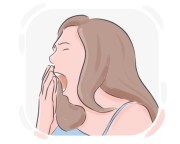
to unexpectedly open one's mouth wide and deeply breathe in because of being bored or tired
bâiller
Se sentant épuisée, elle ne pouvait s'empêcher de bâiller pendant la longue réunion.
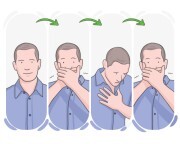
to make a sudden, involuntary sound caused by a spasm of the diaphragm, often as a result of eating or drinking too quickly
hoqueter, avoir le hoquet
Elle a hoqueté à plusieurs reprises, un signe qu'elle aurait pu manger trop vite.

to release air from the stomach through the mouth
roter, éructer
Roter est une façon naturelle pour le corps d'expulser l'excès d'air.
to expel gas audibly from the stomach through the mouth
roter, éructer
Après s'être adonnée aux boissons gazeuses, elle devait souvent roter.
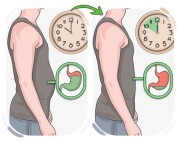
to break down food in the body and to absorb its nutrients and necessary substances
digérer
Il faut du temps à l'estomac pour digérer les glucides complexes.
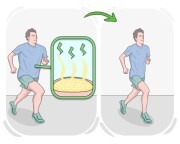
to break down substances like food or drugs to produce energy or support various bodily functions
métaboliser, transformer par métabolisme
Le foie joue un rôle crucial dans la métabolisation des médicaments, en veillant à ce qu'ils soient traités et utilisés efficacement par le corps.

to become red in the face, especially as a result of shyness or shame
rougir
La jeune fille a commencé à rougir lorsque son béguin lui a parlé.
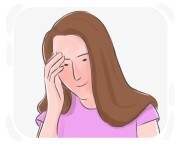
to become red, often in response to emotions like embarrassment, shame, or surprise
rougir
Je pouvais voir ses joues rougir quand quelqu'un a mentionné ses réalisations.
to become red in the face, especially because of embarrassment, anger, heat, or excitement
rougir, s'empourprer
to become red in the face, especially as a result of embarrassment or shame
rougir, devenir cramoisi
Le compliment inattendu l'a fait rougir, trahissant ainsi ses véritables sentiments.
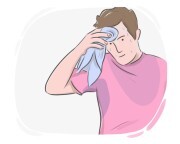
to produce sweat through the skin
suer, transpirer
to produce small drops of liquid on the surface of the skin, often as a result of physical exertion, anxiety, or heat
suer, transpirer
Après un entraînement intense, les athlètes transpirent souvent abondamment.

to open and close the eyes quickly and for a brief moment
cligner des yeux
Il a dû cligner des yeux plusieurs fois pour s'adapter à l'obscurité soudaine.

to release liquid waste from the body
pisser, uriner
Le petit garçon a demandé à sa maman s'il pouvait faire pipi avant d'aller se coucher.

to expel urine from the body
pisser, uriner
Il a pissé derrière les arbres quand il n'y avait pas de toilettes à proximité.
to release liquid waste from the body
uriner, faire pipi
Le chien a levé sa patte pour uriner sur la borne d'incendie.
