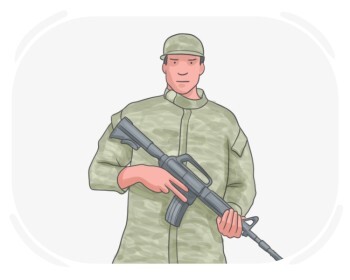

pattern

Навыки Слов SAT 6 - урок 19

Обзор

Флэш-карточки

формы

Правописание

Тест

Начать учиться
SAT Word Skills 6
blockade
blockade
[существительное]

an act of obstructing or closing off an area, route, or passage

блокада

блокада

Ex: Pirates erected a blockade at the mouth of the harbor , intercepting incoming ships and seizing their cargo .

Пираты установили блокаду у входа в гавань, перехватывая входящие корабли и захватывая их груз.

Закрыть
Войти
cadet
cadet
[существительное]

a student or trainee, especially one in a military academy or a program preparing for a career in the armed forces

курсант военного училища, кадет

курсант военного училища, кадет

Ex: Upon graduation , cadets are commissioned as officers and begin their service to their country in various branches of the military .

По окончании учебы курсанты получают звание офицеров и начинают служить своей стране в различных родах войск.

Закрыть
Войти
cavalcade
cavalcade
[существительное]

a procession or parade, typically consisting of a series of vehicles, horses, or people

кавалькада

кавалькада

Ex: The grand cavalcade of knights and nobles marked the beginning of the medieval festival , drawing spectators from far and wide .

Великолепная кавалькада рыцарей и знати ознаменовала начало средневекового фестиваля, привлекая зрителей со всех сторон.

Закрыть
Войти
citadel
citadel
[существительное]

a fortified stronghold, often situated in a commanding location for defense purposes

цитадель, крепость

цитадель, крепость

Ex: During times of war , the citadel served as a refuge for the city 's inhabitants , offering shelter and safety .

Во времена войны цитадель служила убежищем для жителей города, предлагая укрытие и безопасность.

Закрыть
Войти
facade
facade
[существительное]

the front of a building, particularly one that is large and has an elegant appearance

фасад

фасад

Ex: The urban neighborhood was characterized by its colorful row houses , each with a unique facade adorned with decorative trim and window boxes .

Городской квартал характеризовался своими красочными таунхаусами, каждый с уникальным фасадом, украшенным декоративными элементами и оконными ящиками.

Закрыть
Войти
renegade
renegade
[существительное]

someone who rejects conventional behavior or allegiance

отступник

отступник

Ex: The renegade deserted his unit and joined forces with the enemy , earning the disdain of his former comrades .

Ренегат покинул свою часть и присоединился к вражеским силам, заслужив презрение своих бывших товарищей.

Закрыть
Войти
tirade
tirade
[существительное]

a lengthy speech that uses harsh and angry language and intends to condemn or criticize

тирада

тирада

Ex: She was left speechless after his angry tirade about the recent changes .

Она осталась безмолвной после его гневной тирады о недавних изменениях.

Закрыть
Войти
combatant
combatant
[существительное]

an individual engaged in fighting or warfare, typically as a member of a military force or armed group

боец, участник боевых действий

боец, участник боевых действий

Ex: Non-governmental organizations worked tirelessly to provide humanitarian aid to civilians caught in the crossfire between warring combatants.

Неправительственные организации неустанно работали, чтобы предоставить гуманитарную помощь гражданским лицам, оказавшимся под перекрестным огнем между воюющими сторонами.

Закрыть
Войти
confidant
confidant
[существительное]

a person in whom one places trust and shares secrets or private thoughts and feelings

доверенное лицо

доверенное лицо

Ex: The politician's confidant leaked sensitive information to the press.

Доверенное лицо политика утекло конфиденциальной информацией в прессу.

Закрыть
Войти
covenant
covenant
[существительное]

a promise or a formal agreement, particularly one that involves regularly paying a sum of money to someone or an organization

договоренность

договоренность

Ex: He felt bound by the covenant he made to uphold the values of the organization .

Он чувствовал себя связанным заветом, который он дал, чтобы поддерживать ценности организации.

Закрыть
Войти
occupant
occupant
[существительное]

a person who resides or occupies a particular space, such as a building, room, or vehicle

обитатель, житель

обитатель, житель

Ex: The abandoned mansion stood silent and empty, its only occupants the memories of days gone by.

Заброшенный особняк стоял тихий и пустой, его единственные обитатели — воспоминания о прошедших днях.

Закрыть
Войти
penchant
penchant
[существительное]

a strong tendency to do something or a fondness for something

склонность

склонность

Ex: He has a penchant for wearing bright colors .

У него есть склонность носить яркие цвета.

Закрыть
Войти
pennant
pennant
[существительное]

a tapering flag on a ship, usually flown at the masthead to indicate a vessel in commission

вымпел

вымпел

Ex: Sailors carefully maintained the ship 's pennant.

Моряки тщательно поддерживали вымпел корабля.

Закрыть
Войти
savant
savant
[существительное]

a person with extraordinary skills or expertise in a particular domain, often alongside other cognitive or developmental challenges

ученый

ученый

Ex: The academic world recognized the linguistic savant for her remarkable fluency in multiple languages , surpassing even native speakers in proficiency .

Академический мир признал лингвистического саванта за её замечательную беглость во многих языках, превосходящую даже носителей языка.

Закрыть
Войти
suppliant
suppliant
[существительное]

someone who humbly and earnestly seeks or requests something, often in a pleading manner

просящий

просящий

Ex: In ancient times, supplicants would often visit temples, offering prayers and sacrifices as suppliant gestures to the gods in hopes of divine favor.

В древние времена молящие часто посещали храмы, предлагая молитвы и жертвы как жесты моления богам в надежде на божественную милость.

Закрыть
Войти
sycophant
sycophant
[существительное]

an individual who excessively flatters someone of importance to gain a favor or advantage

подхалим

подхалим

Ex: His behavior was typical of a sycophant, always agreeing with the powerful and flattering their egos .

Его поведение было типичным для подхалима, всегда соглашающегося с сильными и льстящего их эго.

Закрыть
Войти
tenant
tenant
[существительное]

an occupant residing in a place, typically a building or property

арендатор, жилец

арендатор, жилец

Ex: The tenant's residency in the apartment complex spanned several years , during which they witnessed significant changes and improvements to the surrounding environment .

Проживание арендатора в жилом комплексе длилось несколько лет, в течение которых он стал свидетелем значительных изменений и улучшений окружающей среды.

Закрыть
Войти
truant
truant
[существительное]

a student who does not have permission for not attending school

прогульщик

прогульщик

Ex: Being truant can lead to serious academic consequences and disciplinary actions.

Быть прогульщиком может привести к серьезным академическим последствиям и дисциплинарным мерам.

Закрыть
Войти
anecdote
anecdote
[существительное]

a short interesting story about a real event or person, often biographical

анекдот

анекдот

Ex: The book included several anecdotes from the author ’s travels around the world .

В книгу вошло несколько анекдотов из путешествий автора по миру.

Закрыть
Войти
alkali
alkali
[существительное]

any water-soluble compound that can turn litmus blue and reacts with an acid to form a salt and water

щелочь

щелочь

Ex: Mixing an alkali with vinegar produces a salt and water .

Смешивание щелочи с уксусом производит соль и воду.

Закрыть
Войти
LanGeek
Скачать приложение LanGeek