Four Corners 4 - Unit 6 Lesson D

Here you will find the vocabulary from Unit 6 Lesson D in the Four Corners 4 coursebook, such as "alternative", "scent", "therapy", etc.

review-disable

review

flashcard-disable

flashcard

spelling-disable

spelling

quiz-disable

quiz

start-learning
Four Corners 4
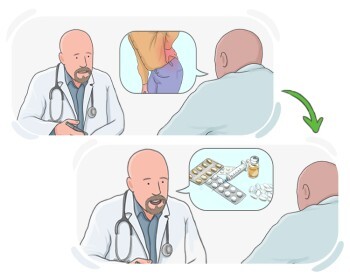
therapy [noun]

the systematic treatment of a disease, injury, or disorder through medical, rehabilitative, or remedial methods

Ex: Antibiotic therapy is essential for treating bacterial infections .

any of the available possibilities that one can choose from

Ex: You can either take the train or the bus , but there ’s no third alternative .

a type of treatment in which natural oils that smell sweet are rubbed on the body or their smell is breathed in to improve physical or mental health

Ex: Aromatherapy can be experienced through diffusers , massage oils , bath salts , and inhalation methods .
calm [adjective]

not showing worry, anger, or other strong emotions
Ex: The calm expression on her face masked any inner turmoil she might have felt .
scent [noun]

the smell that something releases, which can be detected by the nose

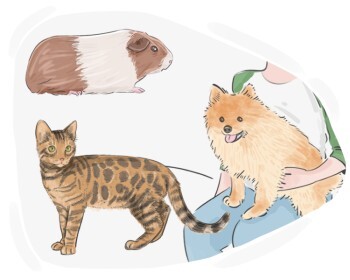
pet [noun]

an animal such as a dog or cat that we keep and care for at home
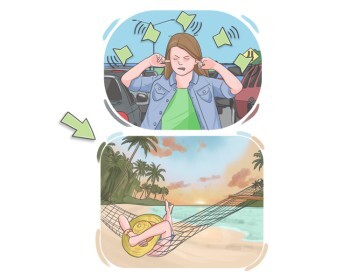
Ex: John wants to adopt a pet from the animal shelter .
pleasant [adjective]

bringing enjoyment and happiness

Ex: The holiday decorations create a pleasant atmosphere in the town .
amazingly [adverb]

in a way that is extremely well or impressive

Ex: The acrobat flipped and twirled amazingly in the air .
rabbit [noun]

an animal that is small, eats plants, has a short tail, long ears, and soft fur
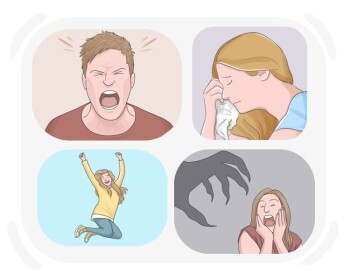
Ex: Rabbits are known for their ability to hop and jump .
emotion [noun]

a strong feeling such as love, anger, etc.
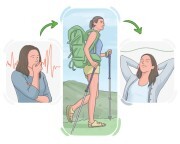
Ex: Love is a complex emotion that can bring immense joy and deep sorrow .

to cause a change in a person, thing, etc.
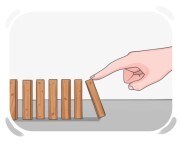
Ex: The economic downturn is expected to affect businesses across various sectors .

to decrease the amount of pain, stress, etc.
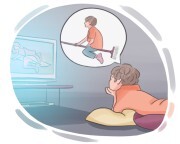
Ex: Medication has relieved the intensity of his chronic pain .

to have an effect on a particular person or thing

Ex: Educational experiences during childhood can significantly influence cognitive development .
humor [noun]

the ability to understand, enjoy, or communicate what is funny or amusing
Ex: The comedian 's humor resonated with the audience .

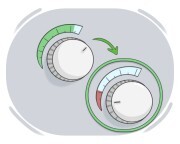
to make something smaller in amount, degree, price, etc.
Ex: The government implemented measures to reduce pollution in urban areas .
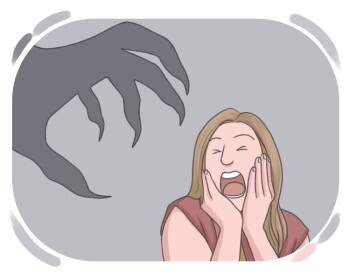
fear [noun]

a bad feeling that we get when we are afraid or worried

Ex: The fear of failure held him back from pursuing his dreams .
anger [noun]

a strong feeling that we have when something bad has happened, so we might be unkind to someone or harm them

Ex: The teacher 's anger was evident when she found out about the students ' misbehavior .
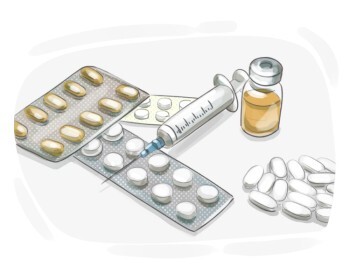
medicine [noun]

a substance that treats injuries or illnesses

Ex: The pharmacist explained how to use the medicine properly .