
El libro Insight - Pre-intermedio - Unidad 6 - 6A - Parte 2
Aquí encontrarás el vocabulario de la Unidad 6 - 6A - Parte 2 del libro de texto Insight Pre-Intermediate, como "expulsar", "inmoral", "detención", etc.
Revisión
Tarjetas de memoria
formas
Ortografía
Cuestionario

experiencing something bad due to bad luck

desafortunado, lamentable
La desafortunada derrota del equipo en el juego del campeonato dejó a los jugadores sintiéndose decepcionados después de una temporada de trabajo duro.
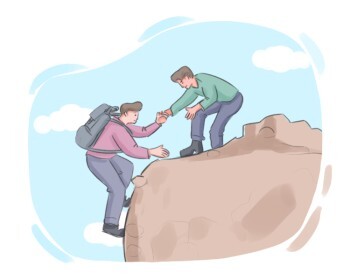
offering assistance or support, making tasks easier or problems more manageable for others
útil
La herramienta útil mejoró la productividad al simplificar las tareas.
not providing any assistance in making a situation better or easier
inútil, poco útil
La actitud poco útil del representante del servicio al cliente frustró aún más a los clientes.
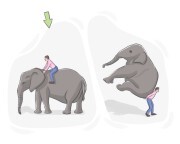
based on clear reasoning or sound judgment
lógico
Es lógico suponer que si practicas regularmente, tus habilidades mejorarán con el tiempo.
lacking sense or reason
ilógico, sin sentido
La regla era ilógica y no tenía sentido.
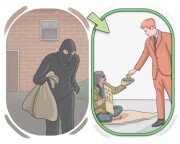
concerned with right and wrong behavior
moral
Enfrentó un dilema moral cuando le pidieron encubrir prácticas poco éticas.
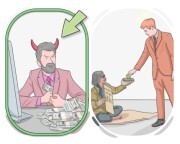
acting in a way that goes against accepted moral standards or principles
inmoral
El comportamiento inmoral del político escandalizó al público y dañó la confianza en el gobierno.
focused on actions and real-life use, rather than on just ideas or theories
práctico
La aplicación práctica de los principios de la física ayudó a mejorar los procesos de fabricación.
impossible to do or achieve
impráctico, irrealizable
Su plan de nadar a través del océano es altamente impráctico.
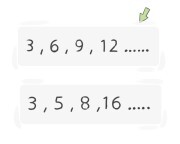
following a pattern, especially one with fixed or uniform intervals
regular
El procedimiento regular para presentar un informe asegura que toda la información se presente correctamente.
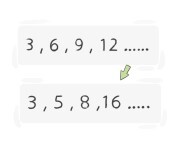
not conforming to established rules, patterns, or norms
irregular
Llegaba a intervalos irregulares a clase, lo que hacía difícil ponerse al día con las lecciones.
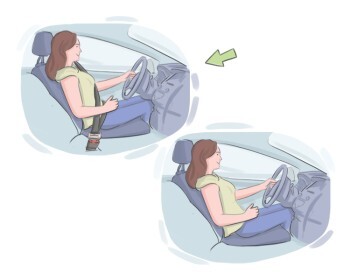
protected from any danger
sin peligro, seguro
La bóveda segura mantuvo los documentos valiosos a salvo del robo.
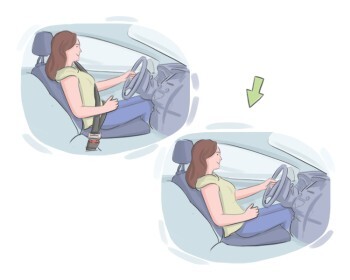
having a high degree of risk or danger
inseguro, peligroso
El antiguo campo de minas fue marcado como una zona peligrosa debido al riesgo de dispositivos sin explotar.

causing a feeling of shock, disbelief, or wonder
sorprendente
Es sorprendente lo rápido que ha pasado el tiempo.
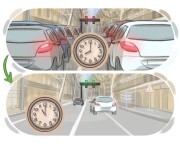
not causing surprise or unexpectedness, usually because it was already known or predicted
poco sorprendente, esperado
El resultado no fue sorprendente, dado cómo todo había estado progresando.

having a clean and well-organized appearance and state
ordenado, aseado
Apreció el diseño ordenado de la hoja de cálculo, con columnas y filas perfectamente alineadas.
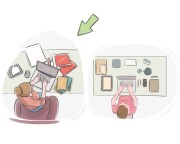
not properly organized or cared for
desordenado, descuidado
Su letra era tan descuidada que era difícil de leer.
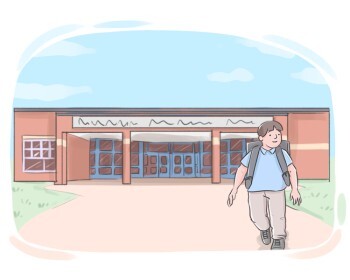
a place where children learn things from teachers
escuela, colegio
Ella toma el autobús para ir a la escuela todas las mañanas.
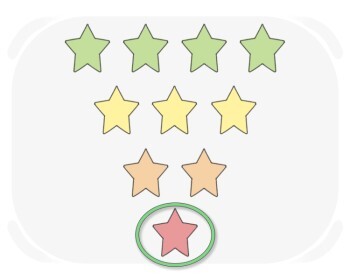
having a quality that is not satisfying
malo
Se disculpó por el mal chiste que hizo antes.
the way that someone acts, particularly in the presence of others
comportamiento
Me decepcionó su comportamiento en la cena familiar.
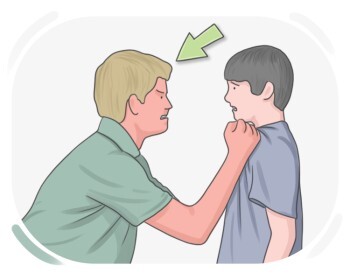
a person who likes to threaten, scare, or hurt others, particularly people who are weaker
matón, acosador
Los maestros deben abordar los casos de acoso identificando al acosador.
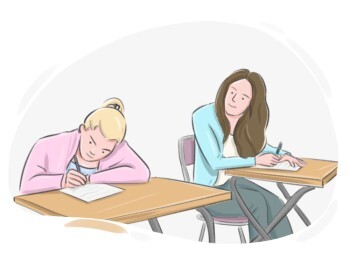
to win or gain an advantage in a game, competition, etc. by breaking rules or acting unfairly
hacer trampa
El equipo hace trampa en el juego comunicándose entre sí mediante señales secretas.
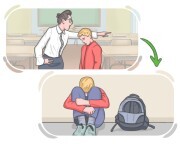
to force someone to leave a place, organization, etc.
expulsar
El profesor tiene la autoridad para expulsar a los estudiantes disruptivos del aula.
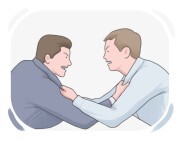
to take part in a violent physical action against someone
pelear, luchar
Los dos animales lucharon por el territorio, gruñendo fuertemente.
a type of punishment for students who have done something wrong and as a result, they cannot go home at the same time as others
castigo
Pasó su tiempo de castigo completando tareas en el aula.
a message or sign given to someone to indicate that something dangerous, harmful, or undesirable may happen
advertencia, alerta
El médico le dio una advertencia severa sobre los riesgos de continuar con sus hábitos poco saludables.
to skip school or work without permission or without a valid reason
to temporarily prevent someone from going to school as a punishment because they did something wrong
suspender
El director decidió suspenderlo por interrumpir la clase repetidamente.
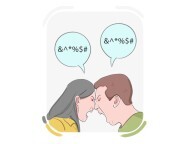
to use offensive or vulgar language in order to express strong emotions
jurar, blasfemar
Molesta por la noticia, no pudo evitar maldecir en voz baja.
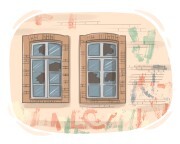
to intentionally damage something, particularly public property
destrozar
Las escuelas implementaron medidas de seguridad para evitar que los estudiantes vandalicen las instalaciones.
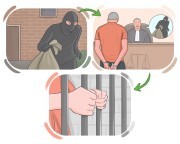
the act of making someone suffer because they have done something illegal or wrong
castigo
La escuela implementó una nueva política de justicia restaurativa, centrándose en la rehabilitación en lugar de en el castigo por el mal comportamiento de los estudiantes.
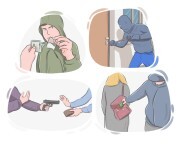
an unlawful act that is punishable by the legal system
crimen, delito
Las tasas de crimen han estado disminuyendo constantemente en la ciudad durante la última década.
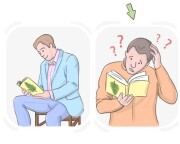
lacking the ability to read and write in any language
analfabeto
Los programas de alfabetización tienen como objetivo reducir el analfabetismo enseñando habilidades básicas de lectura y escritura a las poblaciones analfabetas.
experiencing good luck or favorable circumstances
afortunado, dichoso
Su afortunado descubrimiento de un tesoro escondido cambió sus vidas.
