
Mga Kasanayan sa Salita ng SAT 6 - Leçon 2
Réviser
Flashcards
formes
Orthographe
Quiz

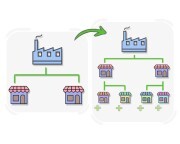
to cause something to be created, particularly in large numbers

engendrer
La franchise de films à succès a engendré une série de produits dérivés et de films dérivés.
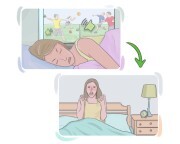
to cause someone to become extremely angry
rendre furieux, rendre furieuse
La trahison de son ami le plus proche l'a enragé.

to win decisively and thoroughly against opponents in a competition or fight
frapper avec un bâton, matraquer
Dans le match d'échecs intense, le grand maître a réussi à battre son challenger avec un mouvement stratégique.
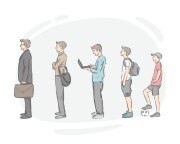
(of an animal, child, or plant) to grow with strength, health, or energy
prospérer
Sous un bon ensoleillement et avec de l'eau, les plantes prospèrent dans le jardin.
to boil or churn vigorously
bouillir
La nuit dernière, l'océan en colère bouillonnait avec des vagues s'écrasant contre le rivage pendant la tempête.
to spread or circulate news, rumors, or information widely
faire courir, faire circuler
Hier, elle a bruité la nouvelle de la fusion à venir à ses collègues, suscitant excitation et spéculation.
to dispose of or rid oneself of something, such as assets, possessions, or responsibilities
céder
Au fil des ans, ils se sont désinvestis des pratiques dépassées, adoptant de nouvelles technologies et méthodologies pour la croissance.
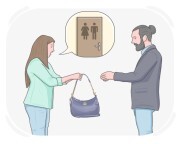
to give something to someone to take care of or keep safe
confier
L'artiste a confié plusieurs tableaux à la galerie pour une exposition à venir.

to abandon or desert someone, typically in a time of need or difficulty
abandonner, délaisser
Il abandonna son ami le plus proche quand elle avait le plus besoin de lui, optant plutôt pour l'auto-préservation.
to sharpen or stimulate, typically referring to one's appetite, curiosity, or interest
mettre en appétit
Hier soir, elle a aiguisé sa curiosité en plongeant dans les mystères des civilisations anciennes.
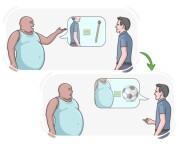
to reply quickly and sharply, often in a clever or aggressive manner
rétorquer, riposter
Au lieu de rester silencieux, Tom a répliqué avec une répartie intelligente après avoir été mis au défi par son collègue.
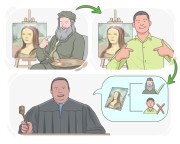
to obtain legal protection for an invention by securing a patent
breveter
to engage in lively, noisy, and often excessive drinking and celebration, especially in a social gathering or festive setting
faire la bringue
Dans l'atmosphère festive, tout le monde a commencé à faire la fête et à danser.
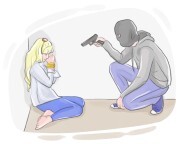
to illegally take someone away, especially by force or deception
enlever, kidnapper
Le kidnappeur a été accusé d'avoir tenté d'enlever un mineur pour une rançon.
to put an idea, proposition, theory, etc. forward for further consideration
proposer
Le philosophe a avancé une série de questions pour remettre en cause les croyances dominantes de son époque.
to grant freedom or release from slavery or servitude
affranchir
L'année dernière, le mouvement abolitionniste a réussi à affranchir des centaines d'individus réduits en esclavage, les libérant de leurs chaînes.
