
TOEFL을 위한 고급 어휘 - 의심과 확신

여기에서 TOEFL 시험에 필요한 "cinch", "scruple", "decisive" 등과 같은 의심과 확신에 관한 몇 가지 영어 단어를 배우게 될 것입니다.

review-disable

리뷰

flashcard-disable

플래시카드

spelling-disable

철자법

quiz-disable

퀴즈

학습 시작
TOEFL을 위한 고급 어휘
to admit of [동사]
اجرا کردن

허락하다

Ex: This plan admits of various approaches to problem-solving .

이 계획은 문제 해결을 위한 다양한 접근 방식을 허용한다.

to cinch [동사]
اجرا کردن

to secure, guarantee, or make certain of something

Ex: He cinched victory with a decisive last-minute goal .
to divine [동사]
اجرا کردن

to guess or deduce information using intuition or an inexplicable sense of inner knowledge

Ex: With a glance , he divined that something was wrong .
اجرا کردن

추정하다

Ex: We need to guesstimate how much time it will take to complete the project .

프로젝트를 완료하는 데 얼마나 걸릴지 추정해야 합니다.

to hazard [동사]
اجرا کردن

추측하다

Ex:

그는 프로젝트의 성공에 대해 추측을 내놓는 것을 망설였다.

to surmise [동사]
اجرا کردن

추측하다

Ex: Finding the office empty , she surmised that the meeting had been rescheduled without prior notice .

사무실이 비어 있는 것을 발견하고, 그녀는 미리 알림 없이 회의가 재조정되었다고 추측했다.

to warrant [동사]
اجرا کردن

정당화하다

Ex: The severity of the offense warranted a harsher punishment .

범죄의 심각성은 더 엄한 처벌을 정당화했다.

axiomatic [형용사]
اجرا کردن

명백한

Ex: The principle is axiomatic no one questions its validity .

그 원리는 자명하다—아무도 그 타당성을 의심하지 않는다.

ambiguous [형용사]
اجرا کردن

모호한

Ex: The phrase " I saw her duck " is ambiguous because it could mean seeing a bird or watching someone lower their head .

"나는 그녀의 오리를 봤다"라는 문구는 새를 봤다는 뜻이거나 누군가가 머리를 숙이는 것을 보았다는 뜻일 수 있기 때문에 모호합니다.

apocryphal [형용사]
اجرا کردن

외전의

Ex: The film 's depiction of historical events was criticized for relying on apocryphal sources .

그 영화의 역사적 사건 묘사는 외전적인 출처에 의존했다는 비판을 받았다.

bewildered [형용사]
اجرا کردن

당황한

Ex: The sudden changes in her schedule left her feeling bewildered and overwhelmed with uncertainty .

그녀의 일정에 갑작스러운 변화가 생기자 그녀는 당황하고 불확실성에 압도당했다.

categorical [형용사]
اجرا کردن

단호한

Ex: The scientist 's categorical statement confirmed the theory with certainty .

과학자의 단호한 진술은 그 이론을 확신을 가지고 확인했다.

decisive [형용사]
اجرا کردن

결정적인

Ex: A decisive person knows when to act and is never swayed by indecision or doubt .

결단력 있는 사람은 언제 행동해야 할지 알고 결코 우유부단함이나 의심에 흔들리지 않습니다.

dogmatic [형용사]
اجرا کردن

독단적인

Ex: The leader was known for his dogmatic speeches that left little room for alternative perspectives .

그 지도자는 대안적인 관점을 거의 고려하지 않는 독단적인 연설로 유명했습니다.

equivocal [형용사]
اجرا کردن

모호한

Ex: The clues in the puzzle were designed to be equivocal , adding to the challenge .

퍼즐의 단서는 모호하도록 설계되어 도전을 더했습니다.

halting [형용사]
اجرا کردن

망설이는

Ex:

오디션에서 배우의 망설이는 연기가 감독을 걱정하게 만들었다.

incontrovertible [형용사]
اجرا کردن

반박할 수 없는

Ex: The witness ’s testimony was incontrovertible , making the case airtight .

증인의 증언은 반박할 수 없는 것이었고, 사건을 확실하게 만들었다.

reputed [형용사]
اجرا کردن

평판이 좋은

Ex:

그녀가 그 사건을 혼자 해결했다고 알려져 있다.

robust [형용사]
اجرا کردن

강인한

Ex: The theories have been tested in robust ways .

이론들은 견고한 방법으로 테스트되었습니다.

certitude [명사]
اجرا کردن

확신

Ex: His decision was made with absolute certitude , leaving no room for doubt .

그의 결정은 절대적인 확신으로 내려졌으며, 의심의 여지가 없었다.

conjecture [명사]
اجرا کردن

추측

Ex: The judge warned against making conjecture without concrete evidence in the trial .

판사는 재판에서 구체적인 증거 없이 추측을 하는 것에 대해 경고했다.

diffidence [명사]
اجرا کردن

수줍음

Ex: The student 's diffidence was apparent during class presentations .

학생의 수줍음은 수업 발표 중에 분명했다.

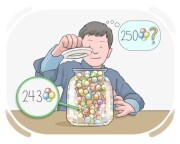
اجرا کردن

교육받은 추측

Ex: His educated guess about the market trends was supported by recent data .

시장 동향에 대한 그의 교육된 추측은 최근 데이터에 의해 뒷받침되었습니다.

اجرا کردن

피할 수 없는 결론

Ex: The academic 's research was so thorough that it made the success of her groundbreaking theory a foregone conclusion .

그 학자의 연구는 너무 철저해서 그녀의 획기적인 이론의 성공은 정해진 결론이 되었습니다.

quandary [명사]
اجرا کردن

딜레마

Ex: They found themselves in a quandary over which path to take .