
Расширенный словарный запас для GRE - Религия
Здесь вы выучите некоторые английские слова о обществе и религии, такие как "рассеивать", "догма", "литания" и т.д., которые необходимы для экзамена GRE.
Обзор
Флэш-карточки
Правописание
Тест


to make one feel isolated or hostile toward a person or group

отчуждать
Его грубые комментарии начали отчуждать его от коллег.

to part and move in different directions
расходиться
Когда прозвенел школьный звонок, ученики начали расходиться со двора в свои классы.

to ask or request humbly and earnestly, typically in a religious or devotional context
просить, молить
Она умоляла о руководстве перед принятием своего решения.

to feel or display a great amount of respect toward something or someone
благоговеть
Сообщество почитало мудрую старейшину за её мудрость и руководство.
the act of elevating a person's rank to that of a god
апофеоз
Апофеоз императора отмечался грандиозными церемониями и ритуалами.
an ancestral or ancient trait, feeling, outlook, activity, etc. that modern humans revert to
атавизм
Внезапная агрессия, которую он проявил, казалась атавизмом из первобытного прошлого.
someone who strongly believes that their gender, race, country, or group is superior
шовинист
Его назвали шовинистом за утверждение, что мужчины от природы лучшие лидеры.
a moment in which one comes to a sudden realization
прозрение
У нее было озарение о своем истинном призвании во время тихой прогулки.
an interpretation and thorough explanation of a piece of writing, particularly a religious one
экзегеза
Экзегеза профессора древнего текста предоставила новые взгляды на его значение.
an individual who acts according to the belief that pursuing pleasure is of the highest importance in life
гедонист
Гедонист проживал каждый день, ища новые впечатления и удовольствия.
a person who challenges or rejects established beliefs, customs, or values, often with the intent to provoke change or expose flaws
иконоборец
Философ был иконоборцем, подвергая сомнению все моральные предположения своего времени.
an individual who is not concerned with morality and overindulges in pleasure, particularly sexual pleasure
распутный
Главный герой романа был известным либертином, жившим жизнью излишеств и потворства.
a religious service that consists of the leading person saying some prayers followed by set responses from the people who are participating
литания
Священник вел общину в торжественной литании молитв и ответов.
the customs and values of a society that characterize it
нравы
Нравы традиционного общества часто диктуют строгие гендерные роли и ожидания поведения.
all that relates to the magical and supernatural, their events, practices, powers, etc.
оккультный
Она была очарована оккультизмом и провела годы, изучая древние магические тексты.
a statement meaning to predict or guess the events of the future
прогнозирование
Прогноз погоды был формой предсказания о надвигающемся шторме.
an individual who lives by themselves and avoids all sorts of contact with other people
отшельник
Глубоко в лесу отшельник жил затворником десятилетиями в маленькой хижине, которую построил своими руками.
an act that is considered to be impolite or unacceptable
синтаксическая ошибка
Солецизм актера, прервавшего режиссера, был отмечен как непрофессиональный.
a disposition or behavior that is extremely immoral or wicked
порочность
Скандал раскрыл низость поступков политика.

requiring specialized or secret knowledge to comprehend fully
таинственный
Тайный характер формулы затруднял её понимание для посторонних.
lacking in intellect, culture, knowledge, or morals
погруженный
Изолированная деревня считалась невежественной из-за отсутствия современного образования.
expressing or experiencing deep regret or guilt because of a wrong act that one has committed
раскаивающийся
Она написала раскаянное письмо, чтобы извиниться за свои ошибки.
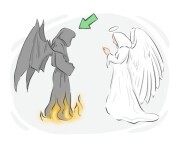
tremendously wicked or evil, just like the Devil
дьявольский
Дьявольский план злодея был направлен на то, чтобы вызвать хаос и страдания.
not connected in an orderly or coherent way
разрозненный
Его бессвязная речь затрудняла понимание его основной мысли.
extremely enthusiastic or obsessed about something
фанатичный
Город настороженно относился к фанатичным учениям группы и их интенсивным усилиям по вербовке.
(of people) delighted by the company of others
общительный
Сара известна своим общительным характером, всегда заводит друзей, куда бы ни пошла.
unbiased and not favoring one side
безразличный
Судья оставался равнодушным, принимая решение, основанное исключительно на доказательствах.

following established beliefs, traditions, or accepted standards
православный
Школа требовала от учащихся соблюдения ортодоксальных дресс-кодов, включая униформу и скромную одежду.
having strong faith in a religion and living according to it
благочестивый
Благочестивый человек пожертвовал значительную часть своего дохода на поддержку религиозных дел.
behaving in a manner that shows one's high moral standards
принципиальный
Она известна своей принципиальной позицией по экологическим вопросам, всегда выступая за устойчивые практики.
divided into groups that strongly disagree
поляризованный
Результаты выборов подчеркнули поляризованную нацию с резкими различиями в предпочтениях избирателей.
extremely important, to the point that it is not allowed to be condemned or changed
священный
Семейный ритуал был для нее священным, имея глубокое личное и культурное значение.

not concerned or connected with religion
светский
Школа светская, что означает, что она не пропагандирует какие-либо конкретные религиозные убеждения.
behaving in a manner that is impolite and not in accordance with the situation
неблаговидный
Неуместные комментарии, сделанные во время встречи, вызвали дискомфорт среди членов команды.
