
pattern

Basic Sciences - Physics & Energy

Study terms related to heat transfer, energy, electricity, magnetism, quantum physics, nuclear reactions, and radioactivity.

Обзор

Флэш-карточки

Правописание

Тест
Начать учиться
Words Related to Basic Sciences
thermal
thermal
[прилагательное]

related to heat or temperature, including how heat moves, how materials expand with temperature changes, and the energy stored in heat

тепловой

тепловой

Ex: As the temperature increased, the metal expanded due to thermal expansion. 
Закрыть
Войти
thermostatic
thermostatic
[прилагательное]

(technology) relating to a thermostat, a device that controls temperature automatically

Ex: The thermostatic valve adjusts the water temperature in the shower. 
Закрыть
Войти
emission
emission
[существительное]

(physics) the release of electrons from atoms or the discharge of energy in the form of radiation or particles

Закрыть
Войти
entropy
entropy
[существительное]

a thermodynamic measure of the degree of disorder or randomness in a system, denoted by S

энтропия, термодинамический беспорядок

энтропия, термодинамический беспорядок

Ex: When ice melts into water at a higher temperature, the entropy of the system increases. 
Закрыть
Войти
conduction
conduction
[существительное]

(physics) the transfer of heat, electricity, or sound through a material without the material itself moving

Ex: Conduction of heat through the metal handle made it too hot to touch. 
Закрыть
Войти
convection
convection
[существительное]

(physics) the transfer of heat through a liquid or gas by the movement of the fluid itself

Ex: Convection currents in the atmosphere create wind and weather patterns. 
Закрыть
Войти
heat capacity
heat capacity
[существительное]

(chemistry) the amount of heat required to raise the temperature of a substance by one degree

Ex: Water has a high heat capacity, which keeps ocean temperatures stable. 
Закрыть
Войти
absolute zero
absolute zero
[существительное]

(cryogenics) the lowest possible temperature, at which atoms and molecules have minimal motion, equal to 0 Kelvin or -273.15°C
Ex: At absolute zero, all molecular movement theoretically stops. 
Закрыть
Войти
thermostat
thermostat
[существительное]

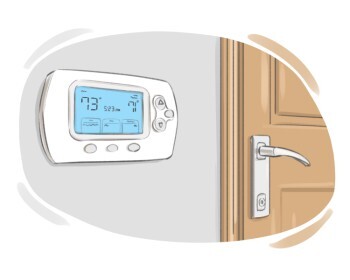
an instrument that automatically controls the temperature of a room, machine, etc.

термостат
термостат

Ex: The thermostat regulates the temperature in the house, ensuring comfort and energy efficiency. 
Закрыть
Войти
energy
energy
[существительное]

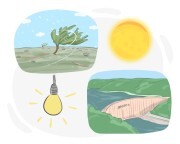
(physics) a source of power that is required to do any work that may exist in potential, kinetic, thermal and other forms

энергия
энергия

Ex: The energy required to lift the box depends on its weight and the height it is lifted. 
Закрыть
Войти
hydroelectric
hydroelectric
[прилагательное]

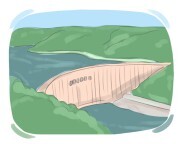
relating to the electric power which is generated by the flow of water

гидроэлектрический

гидроэлектрический

Ex: Many remote mountain towns rely on hydroelectric power generated from nearby rivers and waterfalls. 
Закрыть
Войти
potential energy
potential energy
[существительное]

(physics) stored energy that an object has due to its position or condition
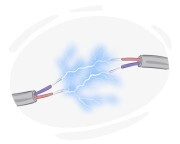
Ex: A drawn bow has potential energy that turns into motion when released. 
Закрыть
Войти
electricity
electricity
[существительное]

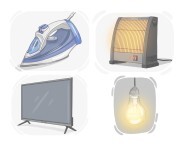
a source of power used for lighting, heating, and operating machines

электроэнергия
электроэнергия

Ex: During the storm, we lost electricity for a few hours. 
Закрыть
Войти
electric
electric
[прилагательное]

relating to, produced by, or using electricity

электрический

электрический

Ex: The electric lights in the room flickered as the storm outside intensified. 
Закрыть
Войти
charge
charge
[существительное]

the total amount of stored battery energy available to power a device or vehicle until depletion

заряд, уровень заряда батареи

заряд, уровень заряда батареи

Ex: A 10-minute fast charge adds 300 km of range. 
Закрыть
Войти
electric field
electric field
[существительное]

(physics) an invisible region of force around a charged object that affects other charged objects nearby

Ex: The electric field around a charged balloon can make your hair stand on end. 
Закрыть
Войти
static electricity
static electricity
[существительное]

a form of electricity generated by friction between two materials, resulting in an imbalance of electric charges on their surfaces

статическое электричество, электростатика

статическое электричество, электростатика

Ex: When you shuffle your feet on a carpet, static electricity builds up, causing a shock when you touch a doorknob. 
Закрыть
Войти
magnetism
magnetism
[существительное]

a phenomenon of attracting and repulsing forces that a moving electrical charge produces

магнетизм, магнитная сила

магнетизм, магнитная сила

Ex: Earth's magnetism guides compass needles toward the north pole. 
Закрыть
Войти
to magnetize
to magnetize
[глагол]

to make an object capable of attracting certain metals

намагничивать

намагничивать

Ex: Rubbing a magnet back and forth on an iron bolt is one way to manually magnetize the metal. 
Закрыть
Войти
pole
pole
[существительное]

either of the two regions at the ends of a magnet where magnetic force is strongest

полюс, магнитный полюс

полюс, магнитный полюс

Ex: The magnetic poles are marked for orientation. 
Закрыть
Войти
electromagnetism
electromagnetism
[существительное]

(physics) magnetism that is created by an electric current flowing through a conductor

Закрыть
Войти
quantum physics
quantum physics
[существительное]

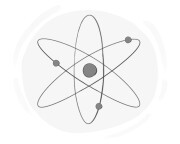
(physics) the branch of science that studies how matter and energy behave at the tiniest scales
Закрыть
Войти
nuclear
nuclear
[прилагательное]

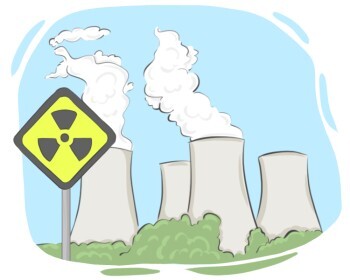
relating to, producing, or powered by nuclear energy

ядерный
ядерный

Ex: The country invested in nuclear power to reduce its dependence on fossil fuels. 
Закрыть
Войти
nuclear energy
nuclear energy
[существительное]

powerful energy that is produced when the core of an atom is splitted

ядерная энергия

ядерная энергия

Закрыть
Войти
nuclear reactor
nuclear reactor
[существительное]

(physics) a structure that harnesses the energy produced from a nuclear reaction and converts it into electricity

ядерный реактор

ядерный реактор

Закрыть
Войти
fissile
fissile
[прилагательное]

(physics) capable of splitting apart in a nuclear reaction, releasing a large amount of energy

Ex: Uranium-235 is a fissile material commonly used in nuclear reactors. 
Закрыть
Войти
fission
fission
[существительное]

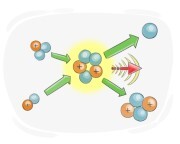
(chemistry) the splitting of a heavy and unstable atomic nucleus into lighter parts

разделение
разделение

Ex: Nuclear fission was discovered in the late 1930s and provided insight into the enormous energy released during the splitting of uranium atoms. 
Закрыть
Войти
fusion
fusion
[существительное]

(physics) a nuclear reaction by which the nuclei of atoms combine and form a heavier nucleus, producing nuclear energy

синтез
синтез

Ex: The sun's energy comes from hydrogen fusion into helium. 
Закрыть
Войти
radioactive
radioactive
[прилагательное]

containing or relating to a dangerous form of energy produced by nuclear reactions

радиоактивный
радиоактивный

Ex: Radioactive isotopes are used in medical imaging for diagnostic purposes. 
Закрыть
Войти
radiation
radiation
[существительное]

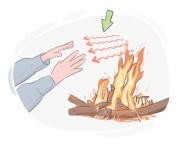
energy transmitted through space or matter in the form of waves or particles

излучение

излучение

Ex: The sun emits radiation that warms the Earth. 
Закрыть
Войти
half-life
half-life
[существительное]

the time required for half of a quantity of a substance to undergo a change or decay, typically in the context of radioactive decay or chemical reactions

период полураспада, время полураспада

период полураспада, время полураспада

Ex: The half-life of a radioactive isotope determines the time it takes for half of the initial amount to decay into a stable product. 
Закрыть
Войти
LanGeek
Скачать приложение LanGeek
