
Basic Sciences - Astronomy
Study terms related to celestial objects, galaxies, cosmic phenomena, lunar phases, eclipses, and astronomical observation.
Review
Flashcards
Spelling
Quiz

a scientist who studies or observes planets, stars, and other happenings in the universe
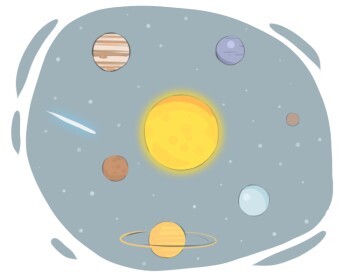
a large, nearly round object in space that moves in an orbit around a star

a planet that is outside the solar system
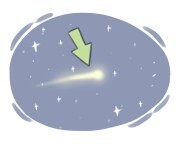
an object in space that is a mass of ice and dust and when it nears the sun it starts illuminating in the shape of a tail
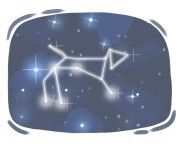
a specific group of stars that form a pattern and have a name related to their shape
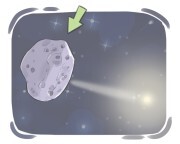
any of the rocky bodies orbiting the sun, ranging greatly in diameter, also found in large numbers between Jupiter and Mars
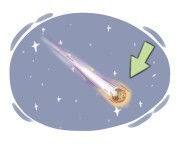
a usually small meteor that burns with a bright light when entering the earth's atmosphere
an exploding star that as a result is emitting a very large amount of light, more than the sun
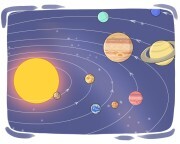
a natural object that moves in orbit around a planet or another larger celestial body
(astronomy) a small, cool, faint star that is much less massive than the Sun and burns its fuel very slowly
a small, dense, and faint stellar remnant that is left after a medium-sized star exhausts the nuclear fuel in its core and undergoes gravitational collapse
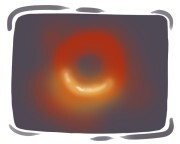
a place in the space with such high gravity that pulls in everything, even light
(physics) a theoretical tunnel through space-time that could connect two distant points in the universe
very small particles originally derived from stars, serving as raw material for forming planets, and existing between galaxies, stars, and other celestial bodies
(physics) an invisible substance that makes up most of the universe's mass, detectable only through its gravitational effects

a large number of star systems bound together by gravitational force
a pale band of light seen in the sky at night that contains the solar system and billions of other stars
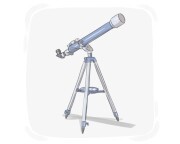
a piece of equipment by which the far objects, particularly those in space, are made clearly visible
the outer layer of the Sun's atmosphere, observable as a plasma halo during a solar eclipse
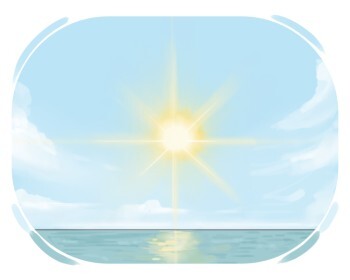
a single ray or beam of sunlight
the highest point that a certain celestial body reaches, directly above an observer
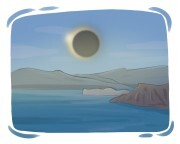
a period during which the sun or moon is temporarily obscured by the shadow of another celestial body

a curved shape with narrow points at the ends that appears wider in the middle, like the shape of the moon in its first and last quarters
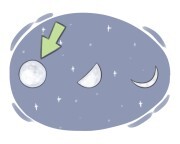
the complete and round-shaped moon as seen from the earth
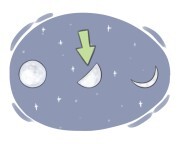
the moon when only half of its bright surface can be seen from the earth
the moon when only a small portion of its bright side is visible from the earth

relating to the moon
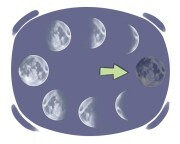
(of the moon) to gradually decrease in its visible illuminated surface as it progresses from full to new moon
(of the moon) to progressively display a larger illuminated section until it turns into a full moon
(astronomy) the distance light travels in one year, equal to about 5.88 trillion miles or 9.46 trillion kilometers
