pattern

Applied Science and Research - Electronics Engineering

Study terms related to electronic components, circuits, semiconductors, signal transmission, electrical properties, amplification, and soldering.

Review

Flashcards

Spelling

Quiz

Start learning
Words Related to Applied Science and Research
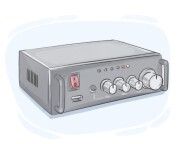
amplifier
amplifier
[noun]

an electronic device that strengthens electrical signals or causes sounds to get louder

Ex: The guitarist plugged his electric guitar into the amplifier to increase its volume. 
Close
Sign in
microelectronics

a branch of electronics that deals with the design and manufacture of extremely small electronic components and circuits, typically using semiconductor materials such as silicon
Ex: The field of microelectronics has revolutionized the design and production of compact electronic devices. 
Close
Sign in
circuit
circuit
[noun]

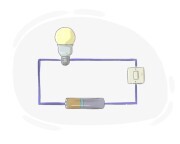
the complete circle through which an electric current flows, typically consists of the source of electric energy
Ex: The electrical circuit is designed to power the light bulb when the switch is turned on. 
Close
Sign in
circuit board

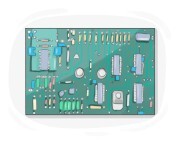
(electronics) a flat board that holds and connects electronic components to add or improve a computer's functions
Ex: The technician replaced the damaged circuit board to restore the computer's display. 
Close
Sign in
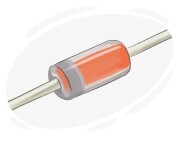
diode
diode
[noun]

(electronics) a semiconductor part that lets electricity flow in only one direction

Ex: The diode prevents current from flowing backward and damaging the circuit. 
Close
Sign in
electrode
electrode
[noun]

(electronics) a conductor that touches a circuit or device to let electricity enter or leave
Ex: The electrode in the battery connects the chemical reaction to the external circuit. 
Close
Sign in
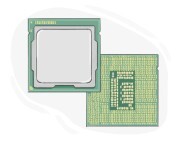
microchip
microchip
[noun]

a small piece of material that is a semiconductor, used to make an integrated circuit

Ex: The computer’s performance improved after upgrading its microchip. 
Close
Sign in
coaxial cable

a special type of wire that carries signals, like TV or Internet, using a central wire surrounded by a layer called insulation along with a metal covering to protect the signals from interference

Ex: The technician replaced the old coaxial cable to improve the signal strength for the television. 
Close
Sign in
semiconductor

(electronics) a material that conducts electricity moderately, with conductivity that changes with temperature or added impurities

Ex: Silicon is the most widely used semiconductor in computer chips. 
Close
Sign in
photoelectric
photoelectric
[Adjective]

(physics) relating to the electrical effects produced by light

Ex: The photoelectric effect explains how light can knock electrons out of a metal surface. 
Close
Sign in
integrated circuit

(electronics) a tiny semiconductor chip that contains many electronic parts working as one complete system

Ex: The integrated circuit in your smartphone contains billions of tiny transistors. 
Close
Sign in
terminal
terminal
[noun]

a point on an electrical device or circuit where an electrical connection is made

Ex: Connect the red wire to the positive terminal. 
Close
Sign in
relay
relay
[noun]

an electronic device that uses a small electrical current to control a larger current, acting like an automatic switch

Ex: The engineer installed a relay in the circuit to control the high-voltage switch safely. 
Close
Sign in
photodiode

a semiconductor device that converts light into an electrical current

Ex: The photodiode in the smoke detector senses light to trigger the alarm. 
Close
Sign in
impedance
impedance
[noun]

(electronics) a material's total resistance to the flow of electric current, measured in ohms

Ex: High impedance in a circuit reduces the amount of current that can flow. 
Close
Sign in
reactance
reactance
[noun]

(electronics) opposition to alternating current caused by inductance or capacitance, not by resistance

Ex: Reactance changes with frequency, unlike resistance which stays constant. 
Close
Sign in
capacitance

(electronics) the ability of a component or device to store an electric charge

Ex: The capacitance of a capacitor determines how much charge it can hold. 
Close
Sign in
inductance

(electronics) an electrical component, usually a coil of wire, that introduces inductance into a circuit

Ex: The technician installed an inductance in the power supply to filter out high-frequency noise. 
Close
Sign in
resistance

an electrical component designed to impede the flow of current

Ex: The technician replaced a burnt resistance on the circuit board. 
Close
Sign in
voltage gain

(electronics) the ratio of an amplifier's output voltage to its input voltage, indicating how much the signal is magnified

Ex: The amplifier has a voltage gain of 10, meaning the output is ten times the input. 
Close
Sign in
current gain

(electronics) the ratio of a transistor's output current to its input current, showing how much the signal is amplified

Ex: The transistor's current gain determines how effectively it amplifies a weak signal. 
Close
Sign in
LanGeek
Download LanGeek app