
pattern

SAT Word Skills 3 - Lesson 15

Review

Flashcards

Forms

Spelling

Quiz

Start learning
SAT Word Skills 3
to intersect

to meet or cross another path, line, etc. at a particular point

Ex: The two roads intersect at the traffic light. 
Close
Sign in
to intersperse

to mix things together in order to make them diverse

Ex: The architect interspersed modern elements with traditional design features in the building's facade. 
Close
Sign in
interstice

a space between or inside things

Close
Sign in
to intervene

to intentionally become involved in a difficult situation in order to improve it or prevent it from getting worse
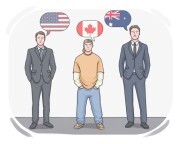
Ex: The teacher had to intervene when two students started arguing in the classroom. 
Close
Sign in
dialect
dialect
[noun]

the spoken form of a language specific to a certain region or people which is slightly different from the standard form in words and grammar

Ex: A dialect is a variety of a language spoken by a particular group of people, characterized by unique vocabulary, grammar, and pronunciation. 
Close
Sign in
dialectical
dialectical
[Adjective]

referring to the method of argumentation or discourse that involves the exchange of opposing ideas or viewpoints in order to reach a deeper understanding or resolution

Ex: The dialectical approach to reasoning involves engaging with opposing arguments to uncover underlying truths. 
Close
Sign in
dialectician

a person who is skilled in reasoning and discussing in order to reach the truth

Close
Sign in
dialogue
dialogue
[noun]

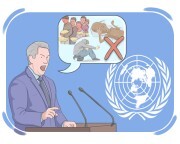
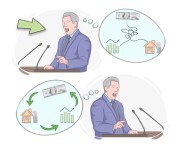
a discussion between two groups or states, particularly one intended to resolve a problem
Close
Sign in
incoherent
incoherent
[Adjective]

(of speech or written discourse) unclear or poorly organized in a way that is not comprehensible
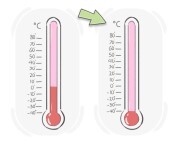
Ex: His speech became increasingly incoherent as he grew more nervous. 
Close
Sign in
incombustible
incombustible
[Adjective]

having a fireproof quality

Close
Sign in
inconceivable
inconceivable
[Adjective]

too unlikely to believe or imagine

Ex: The idea of flying cars becoming common in the near future seemed inconceivable just a few decades ago. 
Close
Sign in
advocacy
advocacy
[noun]

supporting an action, idea, party, etc. often publicly

Close
Sign in
to advocate

to publicly support or recommend something
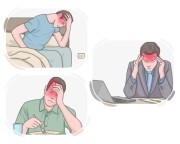
Ex: The environmentalist passionately advocates for sustainable living practices. 
Close
Sign in
chronic
chronic
[Adjective]

(of an illness) difficult to cure and long-lasting
Ex: Mary's chronic asthma requires daily medication to control her symptoms. 
Close
Sign in
to chronicle

to record a series of historical events in a detailed way by a chronological order

Ex: The historian chronicles the rise and fall of ancient civilizations in her latest book. 
Close
Sign in
chronicler

a person who records influential or historical events by writing them down in the exact order that they happened

Close
Sign in
chronology

an arrangement of dates or events based on the order they took place

Close
Sign in
chronometer

a timepiece that shows the time in a very exact way, especially one used at sea

Ex: The chronometer's accuracy was tested regularly to maintain its reliability for professional use. 
Close
Sign in
LanGeek
Download LanGeek app