
Humanités ACT - Communication
Apprenez le vocabulaire des sciences humaines de l'ACT pour la communication, y compris la parole, l'écriture, les messages, la persuasion, l'explication, l'interprétation et l'échange d'idées et d'informations.
Réviser
Flashcards
formes
Orthographe
Quiz


to mention or express something in few words

mentionner, exprimer
to explain something by providing examples, doing experiments, etc.
démontrer, illustrer
to clarify and make something clear
élucider, expliciter
L'expert a éclairci les implications des nouvelles découvertes de la recherche.
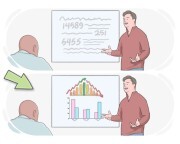
to explain something in greater detail or provide more information about it
donner plus de détails sur
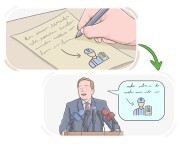
to clearly define or state specific details, characteristics, or requirements
préciser, spécifier
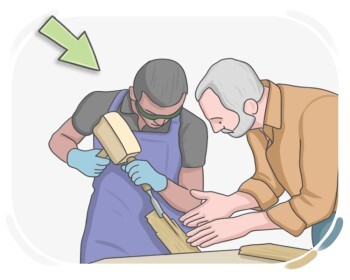
to explain or show the meaning of something using examples, pictures, etc.
illustrer
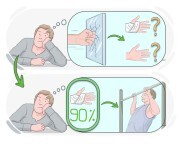
to propose or assume something as true or factual, serving as the foundation for further reasoning or argumentation
postuler, poser comme principe
Le scientifique a décidé de poser l'existence d'une particule non découverte pour expliquer les anomalies dans les données expérimentales.
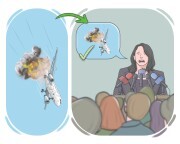
to openly accept something as true or real
reconnaître

to officially agree to a plan, proposal, etc.
approuver

to speak with excessive pride about one's achievements, possessions, abilities, or qualities
se vanter, fanfaronner
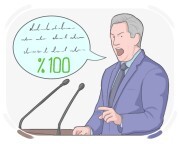
to state confidently and firmly that something is true
affirmer
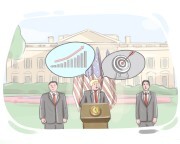
to announce or declare something publicly or officially
proclamer
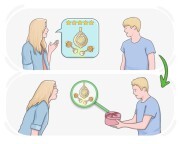
to suggest or communicate something indirectly rather than state it clearly
faire allusion à, laisser entendre

to represent something in a short and brief manner
résumer, synthétiser
Le résumé exécutif résume les principales conclusions de l'étude de marché approfondie.

to talk rapidly and incoherently, making it hard for others to understand what is being said
déblatérer, divaguer
L'excitation débordait alors qu'elle délirait de manière incohérente à propos de l'aventure palpitante qu'elle avait vécue.
to give an explanation of something by talking about it in great detail
expliquer (en détail)
Elle a pris le temps d'exposer le contexte historique derrière le roman.

to admit, often reluctantly, that something is true or correct
concéder, admettre, reconnaître
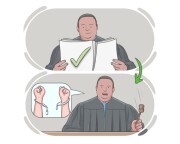
to mention something as an example, reason, or evidence in support of a statement or argument
citer, faire référence à

to give someone a message, instruction, etc. by making a sound or movement
faire signe à
to draw back from what was said publicly before; often by force
rétracter, se rétracter
Elle a présenté des excuses publiques et rétracté ses commentaires antérieurs.
to give a brief description of something excluding the details
exposer
to suggest or assume the existence or truth of something as a basis for reasoning, discussion, or belief
postuler, postuler
Avant de mener la recherche, le chercheur a dû postuler les hypothèses clés qui guideraient l'enquête.
to make something so simple that it loses its original meaning, intention, or key facts
simplifier à l'excès, réduire à l'excès
Le professeur a averti les élèves de ne pas trop simplifier leurs explications des phénomènes scientifiques.

to express strong disapproval of someone or something, especially publicly
condamner, désapprouver
to publicly express one's disapproval of something or someone
dénoncer, condamner
La communauté internationale a dénoncé l'utilisation d'armes chimiques dans le conflit.
to reject or disown something previously accepted or claimed, often in a formal or public manner
renier
Après mûre réflexion, il a choisi de renoncer à ses erreurs passées et de recommencer à zéro.

to show that something is false or incorrect
réfuter
Son alibi a été réfuté par les images des caméras de sécurité.
to take back a statement or belief, especially publicly
rétracter
Le professeur rétracte ses opinions sur le sujet à la lumière des récentes découvertes de la recherche.

to say something from memory, such as a poem or speech
réciter, déclamer
Elle a récité les paroles de la chanson sans manquer un mot.

to convey or tell something again, like a story, event, or experience
raconter à nouveau, relater
Le professeur a demandé aux élèves de raconter les principaux événements du roman.
to insert a comment, remark, or question abruptly into a conversation
intercaler, interposer
Elle interjeta une question rapide avant que l'orateur ne passe à autre chose.
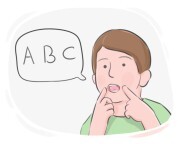
to pronounce or utter something in a clear and precise way
bien s'exprimer, exprimer
to clearly and correctly articulate words
articuler, s'exprimer clairement
Lors de l'enseignement d'une langue, il est essentiel de articuler chaque syllabe afin que les élèves puissent imiter la prononciation correcte.
to say the sound of a letter or word correctly or in a specific way
prononcer
Il a prononcé le nom étranger parfaitement après des heures de pratique.

to speak or say something in a very quiet, low voice
murmurer

to say words or phrases repeatedly and in a rhythmic manner
chanter, scander
Dans le cadre de leur pratique de méditation, le groupe se réunissait pour chanter des mantras apaisants.
(linguistics) to express a concept, thought, or idea in a foreign language
chiffrer, crypter
Elle a étudié les nuances de la langue étrangère pour encoder efficacement ses propres pensées et idées lors de l'écriture.
a formal or explicit statement expressing a fact, opinion, intention, or belief
déclaration, proclamation
an assertive and direct statement of objection or disapproval
protestation, objection
La protestation des travailleurs contre la nouvelle politique a résonné dans les couloirs du bâtiment.
a loud, forceful, or bombastic speech or outburst delivered with strong emotion, often critical or angry
diatribe, tirade
Le diatribe du politicien contre l'opposition a suscité des applaudissements de la part de ses partisans.
the act of using the voice to produce sounds or speech
vocalisation, émission vocale
Sa vocalisation pendant la présentation était claire et confiante.
the act of strongly and persistently expressing or demanding something, often refusing to accept contrary opinions or suggestions
insistance
a low, sorrowful sound typically made in response to pain, distress, or despair
gémissement, plainte
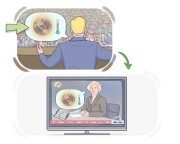
an official announcement regarding something specific
déclaration
a heartfelt often vocal expression of deep sorrow or grief
lamentation, plainte
Son lament pour les soldats tombés était sincère et émouvant.
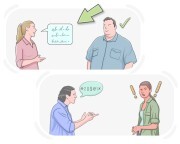
able to speak or write clearly and effortlessly
courant, fluide
Son récit fluide a maintenu l'engagement de tout le monde.
relating to the everyday language spoken by ordinary people in a particular region or country
vernaculaire
Elle a prononcé un discours captivant dans le dialecte vernaculaire de sa ville natale, créant une connexion profonde avec le public.
(of people) unable to express oneself clearly or easily
incapable de s'exprimer, qui s’exprime mal
Il se sentait frustré par son explication inarticulée, incapable d'exprimer clairement ses idées.
intended to explain and present information in a detailed manner
descriptif
Sa conférence était expositive, présentant la théorie étape par étape.
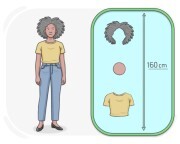
providing detailed information about how something looks, feels, sounds, or behaves
descriptif
Le guide touristique a donné un compte rendu très descriptif de l'histoire et de l'architecture du château.
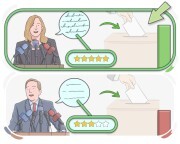
able to utilize language to convey something well, especially in a persuasive manner
éloquent
Connu pour ses compétences en communication éloquente, il excelle dans le débat et la prise de parole en public.

in a manner that is direct and clear
explicitement, clairement
Elle a explicitement énoncé ses attentes pour le projet.
in a clear and explicit manner, leaving no room for misunderstanding or confusion
expressément, clairement
Elle a expressément demandé que la réunion soit reprogrammée.
| Humanités ACT | |||
|---|---|---|---|
| Communication | Interaction | ||
