
Cambridge IELTS 19 - Académique - Test 4 - Lecture - Passage 3 (1)
Learn vocabulary from the first part of Cambridge IELTS 19 Academic, Test 4 Reading Passage 3, with useful words and expressions from the text.
Réviser
Flashcards
formes
Orthographe
Quiz

showing concern for the needs and happiness of others over one's own interests or benefits

désintéressé, altruiste
Il a pris une décision désintéressée en donnant ses économies à une œuvre caritative.

focused on oneself and one's own needs, often disregarding the needs or feelings of others
égocentrique, centré sur soi
Son comportement égocentrique a agacé ses collègues.
an idea or belief that one thinks is true without having a proof
supposition, hypothèse

used to convey that something seems to be true based on the available evidence or information
apparemment
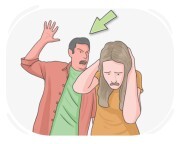
showing no mercy or compassion towards others in pursuit of one's goals
impitoyable, sans pitié
Le dictateur impitoyable a réprimé la dissidence par la violence et l'intimidation.
a sudden strong urge or desire to do something, often without thinking or planning beforehand
impulsion, envie soudaine
to try to achieve a better result compared to that of other people or things
se battre, rivaliser
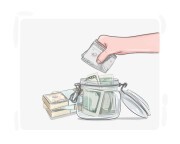
to collect an increasing amount of something over time
accumuler, amasser

the ability to control or have an effect on things or people
pouvoir
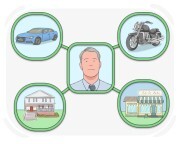
(usually plural) anything that a person has or owns at a specific time
bien, affaire
used to refer to the reciprocal relationship or action between multiple people or things
les uns les autres, l'un l'autre
Les invités à la fête se sont présentés et ont échangé entre eux.
existing beyond what is readily apparent or visible, often intentionally hidden or concealed
caché
Ses compliments semblaient sincères au début, mais elle a ensuite réalisé qu'il avait des intentions cachées et essayait de la manipuler.

a reason, intention, or desire that causes someone to act in a particular way
motif, raison
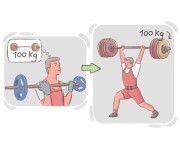
to go beyond a particular limit, quality, or standard, often in an exceptional way
transcender, dépasser
Le film tente de transcender les conventions typiques du genre, offrant un récit unique et stimulant.
the quality or state of being extremely cruel or violent
brutalité
(of situations) not giving any or much hope or encouragement
peu réjouissant, morne, peu prometteur
Leurs chances de gagner le match semblaient sombres après la blessure.
the shared psychological attributes of humankind that are assumed to be shared by all human beings
nature humaine, essence humaine
in an affectionate or emotionally intimate way
étroitement, affectueusement
Elle est restée étroitement connectée avec ses amis d'enfance.
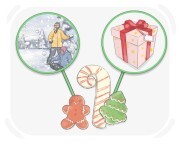
to make a connection between someone or something and another in the mind
associer
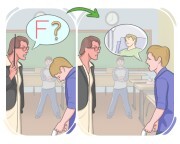
to provide a valid reason or explanation for an action, decision, or belief, usually something that others consider wrong
justifier
the fundamental values and beliefs that influence and guide the behavior and attitudes of a person, group, or organization
l'éthos, les valeurs fondamentales
Son leadership reflète l'éthos d'honnêteté et de dévouement.
showing a strong tendency to think, act, or express oneself independently
individualiste, individualiste
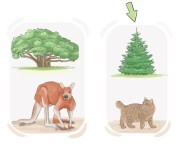
widespread or commonly occurring at a particular time or in a particular place
répandu, prévalent
L'utilisation des réseaux sociaux est répandue parmi les adolescents dans la société d'aujourd'hui.
used to indicate that something is being mentioned or discussed in relation to a particular subject, source, or context
en référence à, concernant
Le rapport fournit une analyse détaillée en référence à les tendances du marché et le comportement des consommateurs.

an area of activity or a subject of study
domaine
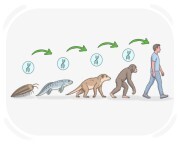
related to evolution or the slow and gradual development of something
évolutif

to formulate a hypothesis to explain something, often as a starting point for further investigation or study
émettre l'hypothèse, élaborer la théorie
Les économistes théorisent que des taux d'intérêt plus élevés pourraient aider à ralentir l'inflation sans nuire à la croissance.
existing or occurring in the current period
actuel, contemporain
Le roman explore des thèmes qui sont encore pertinents pour la société contemporaine.
a distinguishing quality or characteristic, especially one that forms part of someone's personality or identity
trait, caractéristique
Sa gentillesse est un trait que tout le monde apprécie.

relating or belonging to the time before history was recorded
préhistorique
Les humains préhistoriques vivaient dans des grottes et utilisaient des outils en pierre pour chasser.
a distinct period of history or culture, or a specific moment or duration of time
époque, temps
Le livre explore les époques culturelles du XIXe siècle.
to describe something using a specific word or phrase
désigner, qualifier
to regard someone or something in a specific way
voir
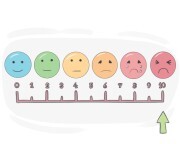
very extreme or great
intense
La chaleur intense du désert rendait la respiration difficile.

the act of trying to achieve a goal by doing better than others who are also aiming for the same goal
compétition, concurrence
unpleasant or harsh in a way that is difficult to endure
brutal, impitoyable
L'honnêteté brutale de ses paroles l'a laissée sans voix.
a tendency or disposition to behave in a hostile, threatening, or forceful way
agressivité
the quality of being merciless, cruel, or lacking pity
cruauté, impitoyabilité

certain or extremely likely to happen or be true
forcément, c'est obligé, c'est forcé, devoir
an open clash or struggle between opposing groups or individuals
conflit

a person or entity competing against another for the same objective or superiority in a field
rival, concurrent

(genetics) a basic unit of heredity and a sequence of nucleotides in DNA that is located on a chromosome in a cell and controls a particular quality
gène
the ability or quality of being able to adjust or change to fit different situations or environments
adaptabilité, capacité d'adaptation
Sa capacité d'adaptation aux nouvelles cultures l'a aidée à prospérer à l'étranger.
| Cambridge IELTS 19 - Académique | |||
|---|---|---|---|
| Test 4 - Lecture - Passage 2 (2) | Test 4 - Lecture - Passage 2 (3) | Test 4 - Lecture - Passage 2 (4) | Test 4 - Lecture - Passage 3 (1) |
| Test 4 - Lecture - Passage 3 (2) | Test 4 - Lecture - Passage 3 (3) | Test 4 - Lecture - Passage 3 (4) | |
