Cambridge IELTS 19 - Academic "Test 4 - Reading - Passage 3 (1)" Vocabulary

Here you can find the vocabulary from Test 4 - Reading - Passage 3 (1) in the Cambridge IELTS 19 - Academic coursebook, to help you prepare for your IELTS exam.

review-disable

review

flashcard-disable

flashcard

spelling-disable

spelling

quiz-disable

quiz

start-learning
Cambridge IELTS 19 - Academic
unselfish [adjective]

showing concern for the needs and happiness of others over one's own interests or benefits

Ex: She is known for her unselfish dedication to helping others .
self-centred [adjective]

focused on oneself and one's own needs, often disregarding the needs or feelings of others

Ex: Teenagers can be self-centred at times .

an idea or belief that one thinks is true without having a proof

Ex: She made the assumption that he would handle the project alone .
apparently [adverb]

used to convey that something seems to be true based on the available evidence or information
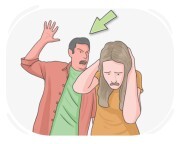
Ex: Apparently , the train is delayed due to technical issues .
ruthless [adjective]

showing no mercy or compassion towards others in pursuit of one's goals

Ex: The ruthless landlord evicted tenants without warning , caring only about profits .
impulse [noun]

a sudden strong urge or desire to do something, often without thinking or planning beforehand

Ex: The sudden impulse to travel led them to book a last-minute flight .

to try to achieve a better result compared to that of other people or things

Ex: The new brand is ready to compete with the established giants in the market .

to collect an increasing amount of something over time

Ex: Throughout their lives , some people accumulate a variety of experiences that shape their perspectives .
power [noun]

the ability to control or have an effect on things or people
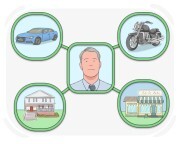
Ex: They gained power through years of hard work and dedication .

(usually plural) anything that a person has or owns at a specific time

Ex: The thief was caught red-handed with stolen possessions in his backpack .
one another [pronoun]

used to refer to the reciprocal relationship or action between multiple people or things

Ex: The employees in the office support one another during busy times .
ulterior [adjective]

existing beyond what is readily apparent or visible, often intentionally hidden or concealed

Ex: The politician 's promises were met with skepticism , as many believed he had ulterior agenda and was seeking reelection .
motive [noun]

a reason or purpose behind someone's actions or behavior
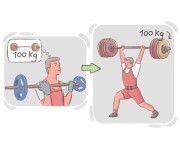
Ex: His motive for quitting the job was to pursue a better opportunity .

to go beyond a particular limit, quality, or standard, often in an exceptional way

Ex: The athlete 's performance on the field has the potential to transcend records and redefine expectations .
innate [adjective]

(of a quality or skill) gained from the moment that one was born

bleak [adjective]

(of situations) not giving any or much hope or encouragement

Ex: The end of the movie left a bleak impression with its tragic conclusion .

the shared psychological attributes of humankind that are assumed to be shared by all human beings

closely [adverb]

in an affectionate or emotionally intimate way

Ex: They grew up closely and still talk daily .

to make a connection between someone or something and another in the mind
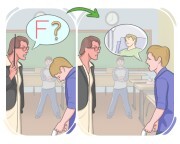
Ex: Some students associate the library with a quiet and focused environment for studying .

to provide a valid reason or explanation for an action, decision, or belief, usually something that others consider wrong

Ex: The company had to justify its decision to lay off employees by explaining the financial challenges it was facing .
ethos [noun]

the fundamental values and beliefs that influence and guide the behavior and attitudes of a person, group, or organization
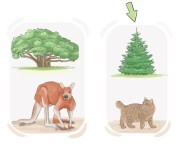
Ex: The university fosters an ethos of academic excellence and integrity .
prevalent [adjective]

widespread or commonly occurring at a particular time or in a particular place

Ex: Gender inequality remains prevalent in many workplaces despite efforts to promote diversity .
with reference to [preposition]

used to indicate that something is being mentioned or discussed in relation to a particular subject, source, or context

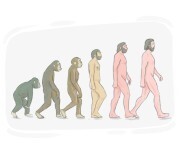
Ex: The speaker made several important points with reference to climate change and its impact on coastal regions .
field [noun]

an area of activity or a subject of study

Ex: Advances in the field of medicine have saved countless lives .
evolutionary [adjective]

related to evolution or the slow and gradual development of something

Ex: The evolutionary history of humans traces back millions of years to ancestral primates .

to formulate a hypothesis to explain something, often as a starting point for further investigation or study

Ex: Based on market trends , the company has theorized that launching a new product line would attract a wider customer base .
present-day [adjective]

existing or occurring in the current period

Ex:
trait [noun]

a distinguishing quality or characteristic, especially one that forms part of someone's personality or identity

Ex: Strong communication is a key trait for success in business .
prehistoric [adjective]

relating or belonging to the time before history was recorded

Ex: The museum exhibit showcased prehistoric fossils of dinosaurs and other ancient creatures .
times [noun]

a distinct period of history or culture, or a specific moment or duration of time
Ex: The times have changed , and so have our priorities .
to term [verb]

to describe something using a specific word or phrase

Ex: The economist termed the current economic situation stagflation due to slow growth and high inflation .

the era in human history from which we have no written record

to see [verb]

to regard someone or something in a specific way
Ex: Let 's see the situation as an opportunity for growth and learning .
intense [adjective]

very extreme or great

Ex: The movie 's intense action scenes kept viewers on the edge of their seats .

the act of trying to achieve a goal by doing better than others who are also aiming for the same goal

Ex: In the fashion industry , designers face stiff competition to stay ahead of trends and capture consumer attention .
brutal [adjective]

unpleasant or harsh in a way that is difficult to endure

Ex: The brutal noise of the construction site made it impossible to concentrate .
bound [adjective]

likely to happen or sure to experience something

Ex:
conflict [noun]

an open clash or struggle between opposing groups or individuals

Ex:
rival [noun]

a person or entity competing against another for the same objective or superiority in a field

gene [noun]

(genetics) a basic unit of heredity and a sequence of nucleotides in DNA that is located on a chromosome in a cell and controls a particular quality

Ex:

the ability or quality of being able to adjust or change to fit different situations or environments

Ex:
Cambridge IELTS 19 - Academic
Test 1 - Listening - Part 1 Test 1 - Listening - Part 2 Test 1 - Listening - Part 3 (1) Test 1 - Listening - Part 3 (2)
Test 1 - Listening - Part 4 (1) Test 1 - Listening - Part 4 (2) Test 1 - Reading - Passage 1 (1) Test 1 - Reading - Passage 1 (2)
Test 1 - Reading - Passage 2 (1) Test 1 - Reading - Passage 2 (2) Test 1 - Reading - Passage 2 (3) Test 1 - Reading - Passage 3 (1)
Test 1 - Reading - Passage 3 (2) Test 1 - Reading - Passage 3 (3) Test 2 - Listening - Part 1 Test 2 - Listening - Part 2 (1)
Test 2 - Listening - Part 2 (2) Test 2 - Listening - Part 3 (1) Test 2 - Listening - Part 3 (2) Test 2 - Listening - Part 4 (1)
Test 2 - Listening - Part 4 (2) Test 2 - Reading - Passage 1 (1) Test 2 - Reading - Passage 1 (2) Test 2 - Reading - Passage 1 (3)
Test 2 - Reading - Passage 2 (1) Test 2 - Reading - Passage 2 (2) Test 2 - Reading - Passage 2 (3) Test 2 - Reading - Passage 3 (1)
Test 2 - Reading - Passage 3 (2) Test 2 - Reading - Passage 3 (3) Test 3 - Listening - Part 1 Test 3 - Listening - Part 2 (1)
Test 3 - Listening - Part 2 (2) Test 3 - Listening - Part 3 (1) Test 3 - Listening - Part 3 (2) Test 3 - Listening - Part 4 (1)
Test 3 - Listening - Part 4 (2) Test 3 - Reading - Passage 1 (1) Test 3 - Reading - Passage 1 (2) Test 3 - Reading - Passage 1 (3)
Test 3 - Reading - Passage 2 (1) Test 3 - Reading - Passage 2 (2) Test 3 - Reading - Passage 2 (3) Test 3 - Reading - Passage 3 (1)
Test 3 - Reading - Passage 3 (2) Test 3 - Reading - Passage 3 (3) Test 3 - Reading - Passage 3 (4) Test 4 - Listening - Part 1 (1)
Test 4 - Listening - Part 1 (2) Test 4 - Listening - Part 2 (1) Test 4 - Listening - Part 2 (2) Test 4 - Listening - Part 3 (1)
Test 4 - Listening - Part 3 (2) Test 4 - Listening - Part 4 (1) Test 4 - Listening - Part 4 (2) Test 4 - Listening - Part 4 (3)
Test 4 - Reading - Passage 1 (1) Test 4 - Reading - Passage 1 (2) Test 4 - Reading - Passage 1 (3) Test 4 - Reading - Passage 2 (1)
Test 4 - Reading - Passage 2 (2) Test 4 - Reading - Passage 2 (3) Test 4 - Reading - Passage 2 (4) Test 4 - Reading - Passage 3 (1)
Test 4 - Reading - Passage 3 (2) Test 4 - Reading - Passage 3 (3) Test 4 - Reading - Passage 3 (4)