
Linguistica - Ortografia e Tipografia
Qui imparerai alcune parole inglesi relative all'ortografia e alla tipografia come "ortografia", "corsivo" e "italico".
Revisione
Flashcard
Ortografia
Quiz

the act or the ability of putting letters in the correct order to form a word
ortografia
the use of uppercase letters in writing or printing
maiuscola, capitalizzazione

the use of marks such as a period, comma, etc. in writing to divide sentences and phrases to better convey meaning
punteggiatura
L'editore ha segnalato diversi errori di punteggiatura nella bozza che dovevano essere corretti.
a set of symbols or characters used to represent language in a visual or tangible form, allowing communication and the recording of information
sistema di scrittura, metodo di scrittura
a writing system that represents the sounds of a language using consistent and predictable symbols or characters, allowing for a direct correspondence between written and spoken forms
ortografia fonemica, sistema di scrittura fonemico
a style of handwriting in which the letters are joined together in a flowing manner, often written with continuous strokes and without lifting the pen or pencil from the paper
corsivo, scrittura legata
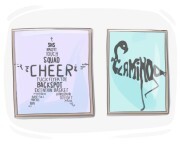
the art and technique of organizing written text in a visually appealing and readable manner
tipografia, arte tipografica
Nel mondo della pubblicità, una tipografia efficace può fare o rompere una campagna, poiché i brand si sforzano di trasmettere il loro messaggio con chiarezza e impatto attraverso font e layout accuratamente selezionati.

a self-contained part of discourse that consists of one or more sentences dealing with a particular topic, indicated by indentation
paragrafo
the degree of consistency between the spelling and pronunciation of words in a writing system, with shallow orthographies having a high degree of consistency such as in Spanish and deep orthographies having a lower consistency such as in English
profondità ortografica, profondità dell'ortografia
the small letters in a writing system, contrasting with uppercase, and commonly used in regular text
minuscolo, lettera minuscola
Il requisito della password includeva almeno una lettera minuscola e una maiuscola.
the set of capital or large letters in the Latin alphabet or other writing systems, typically used at the beginning of a sentence, for proper nouns, and for emphasis
maiuscola, lettera maiuscola
a linguistic or writing technique that uses pictures, symbols, or combinations of letters to represent words or sounds, often based on their phonetic similarity or association, creating visual puns or wordplay
principio del rebus, tecnica del rebus
a set of basic written symbols, representing the sounds of a language, which if put into correct orders form the words
alfabeto
Il grafico dell'alfabeto sul muro della classe ha aiutato gli studenti a ricordare l'ordine delle lettere.
a written character or symbol that represents an entire word or concept, rather than representing individual sounds or phonetic elements, as seen in some writing systems such as Chinese characters or Egyptian hieroglyphs
logogramma, ideogramma
the small decorative strokes or flourishes that extend from the ends of the main strokes of letters in a typeface, giving them a more traditional or formal appearance
grazia, serif
a particular design or style of lettering, including the shape, size, and characteristics of the characters, that make up a complete set of fonts within a specific font family
carattere tipografico, font
a different physical or visual representation of the same grapheme or character in a writing system
allografo, variante grafica
the smallest unit of a writing system that represents a distinct sound or phoneme in a language, such as a single letter, combination of letters, or symbol
grafema, unità grafica minima
a style of type in which letters are thicker and darker than ordinary text
grassetto, neretto
a cursive script with slanted letters that are connected and flowing in appearance
corsivo, scrittura corsiva
a typeface or font that does not have small decorative strokes or serifs at the ends of the main letterforms, giving it a clean and modern appearance
senza grazie
the typographic variation of the digit "0" in which a diagonal slash is added across the zero to distinguish it from the letter "O" and indicate that it represents the numerical zero
zero barrato, zero con barra obliqua
a typographic term that refers to the combination of two or more letters or characters into a single interconnected glyph, often used to enhance readability or aesthetic appeal in certain typefaces or scripts
legatura, glifo combinato
(linguistics) a mark that is written below or above a letter indicating a difference in pronunciation
diacritico
a diacritic used in various languages and writing systems to indicate different linguistic features such as stress, pitch, or vowel quality
accento acuto
a written mark used to indicate stress, pronunciation, or another phonetic feature
accento
the symbol ~ put over the letter n in Spanish, or a and o in Portuguese to indicate nasalization
tilde
the mark that appears as a small hook put under the letter 'c' indicating that it has a /s/ sound, rather than a /k/ sound
cedilla
the mark ^, placed over a vowel in some languages indicating contraction, length, etc.
circonflex
a diacritic mark (`) placed over a vowel in certain languages to indicate a particular pronunciation or other phonetic distinction
grave
the mark ¨, put over a vowel indicating an articulation with rounding or fronting
dieresi
a historical Germanic letter of runic origin
thorn
Le incisioni su pietra a volte presentano la runa thorn.
a graphic symbol that signifies a word, phrase, physical object, etc.
pittogramma
a symbol or graphic representation that directly represents a concept or idea, often without relying on specific sounds or language, commonly used in pictographic or logographic writing systems
ideogramma, simbolo grafico
a letter in a word that is not pronounced when the word is spoken, although it may still affect the pronunciation or meaning of the word
lettera muta, lettera silenziosa
a letter used in some languages, such as Old English and Icelandic, to represent the voiced "th" sound, and is derived from the runic letter "d"
una lettera usata in alcune lingue, come l'inglese antico e l'islandese
a diacritic mark used in some writing systems, such as Devanagari and Indic scripts, to indicate the absence of a vowel sound following a consonant, effectively suppressing the inherent vowel
virama, segno diacritico utilizzato in alcuni sistemi di scrittura

the art of producing beautiful handwriting using special writing instruments such as a dip or brush pen
calligrafia
I calligrafi moderni spesso mescolano tecniche tradizionali con design contemporanei per creare opere d'arte mozzafiato.
a style of Chinese calligraphy that emerged during the Han Dynasty and was commonly used for official documents and bureaucratic purposes, characterized by its simplified and standardized form with square-shaped characters and clear strokes
scrittura clericale, stile clericale
an ancient style of writing used in China during the late Zhou Dynasty and the Qin Dynasty, characterized by its pictographic and abstract forms, with characters often featuring intricate and flowing lines
scrittura sigillare, script sigillare
a standardized style of Chinese calligraphy characterized by its balanced and uniform strokes, widely used for its readability and simplicity
scrittura regolare, stile regolare
a semi-cursive style of Chinese calligraphy that exhibits a fluid and connected writing with simplified strokes, striking a balance between the cursive and regular scripts
stile semicorsivo di calligrafia cinese, scrittura corsiva parziale cinese
the logographic characters adopted from Chinese characters and used in the Japanese writing system
kanji, caratteri kanji
a fundamental component of the Japanese writing system, comprising 46 characters that represent syllables and are utilized for native Japanese words, grammatical purposes, and verb endings
hiragana, un componente fondamentale del sistema di scrittura giapponese
a component in the Japanese writing system, consisting of 46 characters that represent syllables and are primarily used for borrowed words, foreign names, onomatopoeia, and emphasis
katakana, un componente del sistema di scrittura giapponese
the Chinese characters that are used in the Korean writing system, representing both meaning and sound and used in conjunction with the Korean alphabet, Hangul, to write words of Chinese origin or to clarify the meaning of Korean words
i caratteri cinesi utilizzati nel sistema di scrittura coreano, che rappresentano sia il significato che il suono e sono usati insieme all'alfabeto coreano
