Adjectives of Abstract Human Attributes - Adjectives of Neutral Temporary Mental States

These adjectives describe emotional experiences that are neither overtly positive nor negative, encompassing feelings of neutrality or indifference.

review-disable

review

flashcard-disable

flashcard

spelling-disable

spelling

quiz-disable

quiz

start-learning
Adjectives of Abstract Human Attributes
aware [adjective]

having an understanding or perception of something, often through careful thought or sensitivity

Ex: He was n't aware of the consequences of his actions until it was too late .
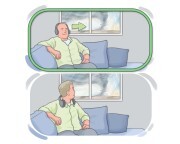
unaware [adjective]

lacking knowledge or realization of a fact or situation

Ex: The children were unaware of the surprise party planned for their mother .
reluctant [adjective]

not welcoming or willing to do something because it is undesirable

Ex: The company was reluctant to invest in new technology due to concerns about cost and implementation .
sure [adjective]

(of a person) feeling confident about something being correct or true

Ex: He was sure that his favorite team would win the championship .
hesitant [adjective]

uncertain or reluctant to act or speak, often due to doubt or indecision

Ex: The hesitant driver cautiously approached the intersection , unsure of the right of way .
alert [adjective]

able to notice things or think quickly

Ex: The alert hiker noticed the subtle changes in the weather and decided to head back before the storm hit .
wary [adjective]

feeling or showing caution and attentiveness regarding possible dangers or problems

Ex: The company was wary of entering into partnerships without thorough research .
indifferent [adjective]

not showing any concern in one's attitude or actions toward a particular person, situation, or outcome

Ex: The politician 's indifferent response to the community 's concerns angered many constituents .
intent [adjective]

having a strong resolve or determination to achieve a particular goal or outcome

Ex: The students were intent on winning the science fair competition .
ambivalent [adjective]

having contradictory views or feelings about something or someone

Ex: The public 's response to the new policy was ambivalent , with some supporting it and others opposing it .
undecided [adjective]

unable to make a decision or form a definite opinion about a matter

Ex: The group was undecided about where to go for vacation , unable to agree on a destination .
responsive [adjective]

reacting to people and events quickly and in a positive way

Ex: The new manager proved to be responsive to the team 's suggestions , implementing changes to enhance productivity .
willing [adjective]

interested or ready to do something

Ex: The volunteers were willing to donate their time to help those in need .
unwilling [adjective]

reluctant or resistant to do something

Ex: The students were unwilling to accept the new school rules without discussion .
unsuspecting [adjective]

not aware of potential danger or harm

Ex: The company 's security system was breached by an unsuspecting employee who clicked on a phishing email .
conscious [adjective]

aware of and responsive to one's surroundings

Ex: She was barely conscious after the long illness .
unconscious [adjective]

lacking awareness or perception of something

Ex: The child was unconscious of the time passing as she played with her toys .
cognizant [adjective]

having knowledge or awareness about something

Ex: The team was cognizant of the need for clear communication to succeed .