Relational Adjectives - Adjectives of Biology

These adjectives relate to the field of biology, which encompasses the study of living organisms, their structure, function, behavior, etc.

review-disable

review

flashcard-disable

flashcard

spelling-disable

spelling

quiz-disable

quiz

start-learning
Relational Adjectives
reproductive [adjective]

relating to processes and behaviors involved in the creation of offspring within a species

Ex: Reproductive cycles in females involve ovulation and menstruation .
metabolic [adjective]

relating to the chemical processes that occur within a living organism to maintain life

Ex:
pathogenic [adjective]

capable of causing disease

Ex: Some fungi , such as Candida albicans , can be pathogenic , leading to infections like thrush .
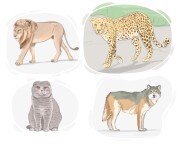
carnivorous [adjective]

(of plants or animals) feeding on the meat or flesh of other animals
Ex: Wolves are carnivorous mammals that hunt in packs for larger prey like deer and elk .
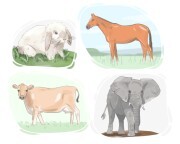
herbivorous [adjective]

(of an animal) solely feeding on plants

Ex: Deer are herbivorous animals commonly found in forests and grasslands , feeding on leaves , twigs , and grasses .
biological [adjective]

relating to the science that explores living organisms and their functions

Ex: The biological classification system categorizes organisms into various groups based on their characteristics .
botanical [adjective]

concerning or involving the study of plants, their structure, genetics, classification, etc.

Ex: Botanical conservation efforts aim to protect endangered plant species and their habitats .
organic [adjective]

relating to a carbon-based compound that has a biological origin

Ex: Organic matter in soil contributes to its fertility and supports plant growth .
multicellular [adjective]

having more than one cell

Ex: Plants are multicellular organisms that have specialized cells for photosynthesis .
fungal [adjective]

relating to or characteristic of fungi, which are a diverse group of organisms including molds, mushrooms, and yeasts

Ex:
symbiotic [adjective]

involving a mutually beneficial relationship between two different organisms
Ex: Lichen is a symbiotic association between fungi and algae , where the fungus provides structure and protection while the algae produce food through photosynthesis .
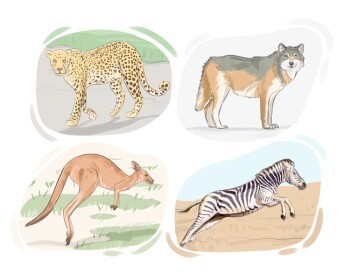
mammalian [adjective]

relating to mammals, animals that give birth to live young and nurse them with milk

Ex: Dogs and cats are also mammalian animals , recognizable by their warm-blooded nature and fur-covered bodies .
photosynthetic [adjective]

able to use sunlight to make food from carbon dioxide and water

Ex: Algae in ponds and lakes are photosynthetic and play a crucial role in aquatic ecosystems .
sapiens [adjective]

having characteristics associated with modern humans, including advanced cognitive abilities and complex social structures

Ex:
reptilian [adjective]

relating to reptiles, which are cold-blooded animals with scaly skin and usually lay eggs

Ex: Reptilian skin is covered in scales that provide protection and prevent water loss .
parasitic [adjective]

relating to organisms that live on or inside other organisms, benefiting at the expense of their hosts

Ex: Fleas are parasitic insects that feed on the blood of mammals and birds .
herbal [adjective]

relating to or made from herbs, which are plants valued for their medicinal, aromatic, or culinary properties

Ex: Herbal supplements , derived from plants like ginseng and echinacea , are popular for promoting wellness .
aerobic [adjective]

needing oxygen or air to function or survive

Ex: Plants engage in aerobic photosynthesis , converting carbon dioxide and water into oxygen and glucose .
somatic [adjective]

related only to the body, distinct from mental or emotional aspects
Ex: Somatic reflexes are automatic responses controlled by the spinal cord rather than the brain .
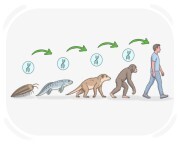
evolutionary [adjective]

related to evolution or the slow and gradual development of something

Ex: The evolutionary history of humans traces back millions of years to ancestral primates .
aquatic [adjective]

related to or adapted for living or functioning in water
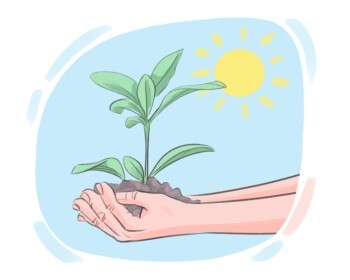
Ex: Aquatic plants , such as algae and seaweed , thrive in freshwater and marine environments .
environmental [adjective]

relating to the natural world and effects of human actions on it

Ex: Environmental conservation efforts aim to protect ecosystems and reduce human impact on the planet .
marine [adjective]

related to the sea and the different life forms that exist there

Ex: Marine conservation efforts aim to protect endangered species and preserve marine habitats .
agricultural [adjective]

related to the practice or science of farming

Ex: Agricultural land is often characterized by vast fields of crops such as corn , wheat , and soybeans .
ecological [adjective]

related to the connection between animals, plants, and humans and their environment

Ex: Ecological restoration projects seek to rehabilitate ecosystems that have been degraded or damaged .
glacial [adjective]

relating to a large mass of compressed ice like those near the poles or on mountains

Ex: Glacial meltwater feeds into many of the world 's rivers .
genetic [adjective]

connected to the parts of the DNA in cells, called genes, that determine hereditary traits

Ex: Understanding genetic inheritance patterns is crucial for predicting the likelihood of certain traits being passed from one generation to the next .
inorganic [adjective]

not possessing the characteristics or properties associated with living organisms

Ex: Synthetic materials like plastics are typically inorganic in nature .
mitochondrial [adjective]

relating to or characteristic of mitochondria, which are organelles found in cells responsible for energy production

Ex: Mitochondrial dysfunction can lead to various health issues , including neurological disorders and muscle weakness .
genomic [adjective]

relating to the complete set of genes or genetic material present in an organism

Ex: Genomic medicine uses genetic information to tailor treatments and therapies for individual patients .
ketogenic [adjective]

relating to or characteristic of a metabolic state known as ketosis, where the body produces ketone bodies as an alternative energy source

Ex: Ketogenic metabolism shifts the body 's primary energy source from glucose to ketone bodies , which are produced in the liver .