pattern

Vocabulary for IELTS (General) - Persuasion and Involvement

Here you will learn some English words about persuasion and involvement, such as "outline", "proof", "establish", etc. that are needed for the IELTS exam.

Review

Flashcards

Forms

Spelling

Quiz

Start learning
Words for General IELTS
to advocate

to publicly support or recommend something

Ex: The environmentalist passionately advocates for sustainable living practices. 
Close
Sign in
to acknowledge

to openly accept something as true or real

Ex: For the therapy to be effective, one must first acknowledge their feelings and emotions. 
Close
Sign in
to assert
to assert
[Verb]

to behave in a confident way to cause people to recognize one's authority or right

Ex: The coach asserted his authority on the field, demanding discipline from his players. 
Close
Sign in
dispute
dispute
[noun]

a disagreement or argument, often involving conflicting opinions or interests
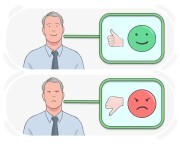
Ex: The dispute between the two neighbors was settled after a lengthy mediation session. 
Close
Sign in
to imply
to imply
[Verb]

to suggest without explicitly stating
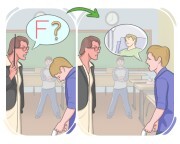
Ex: The politician's statement seemed to imply that there was more to the story than what was being revealed. 
Close
Sign in
to justify

to provide a valid reason or explanation for an action, decision, or belief, usually something that others consider wrong

Ex: She had to justify her choice to pursue a career in the arts to her parents, emphasizing her passion and long-term goals. 
Close
Sign in
to object
to object
[Verb]

to express disapproval of something

Ex: During the meeting, several members objected to the proposed changes in the company policy. 
Close
Sign in
to outline

to give a brief description of something excluding the details

Ex: Before writing the essay, the student outlined the main ideas to organize the structure. 
Close
Sign in
to question

to have or express uncertainty about something

Ex: She questioned the validity of the research findings due to inconsistencies in the data. 
Close
Sign in
to debate
to debate
[Verb]

to formally discuss a matter, usually in a structured setting

Ex: The candidates took the stage to debate their views on important issues in front of a live audience 
Close
Sign in
discussion

a conversation with someone about a serious subject

Ex: The team had a lengthy discussion about the company's future strategies. 
Close
Sign in
drawback
drawback
[noun]

a disadvantage or the feature of a situation that makes it unacceptable

Ex: The main drawback of working from home is the lack of social interaction. 
Close
Sign in
evidence
evidence
[noun]

anything that proves the truth or possibility of something, such as facts, objects, or signs

Ex: The prosecution presented compelling evidence, including DNA analysis and eyewitness testimony, to support their case. 
Close
Sign in
proof
proof
[noun]

information or evidence that proves the truth or existence of something

Ex: The DNA results acted as proof that the suspect was at the scene of the crime. 
Close
Sign in
recital
recital
[noun]

the act or process of giving a long and detailed account of something

Close
Sign in
drama
drama
[noun]

a situation or event involving a lot of action and excitement, rooted in contrasting elements or forces

Close
Sign in
amateur
amateur
[Adjective]

(of objects or works) lacking the precision or quality one would expect from a paid professional

Ex: The garage band produced only amateur pop songs before gaining industry experience. 
Close
Sign in
classical
classical
[Adjective]

following a long-established, highly regarded, and standard form, style, or set of ideas

Ex: The classical concept of beauty emphasizes symmetry and balance. 
Close
Sign in
to assemble

(of people) to gather in a place for a particular purpose

Ex: The team will assemble in the boardroom for the project briefing. 
Close
Sign in
to attend
to attend
[Verb]

to go to school, university, church, etc. periodically

Ex: Students are expected to attend all classes to ensure academic success. 
Close
Sign in
to broadcast

to cause something, especially a secret, to be known by a lot of people

Ex: She accidentally broadcast the surprise party plans to everyone in the group chat. 
Close
Sign in
to establish

to prove the fact of a situation

Ex: The detective gathered evidence to establish the suspect's presence at the crime scene. 
Close
Sign in
to observe

to make a written or spoken remark

Ex: During the meeting, she observed that the proposed budget allocation seemed disproportionate. 
Close
Sign in
to organize

to bring different parts together and arrange them so they work together as a complete and effective system

Ex: They organized the data into a report that made sense to the stakeholders. 
Close
Sign in
to participate

to join in an event, activity, etc.

Ex: She decided to participate in the charity run to support a good cause. 
Close
Sign in
to resign
to resign
[Verb]

to officially announce one's departure from a job, position, etc.

Ex: She decided to resign from her position as CEO. 
Close
Sign in
encouragement

the act of supporting and giving someone confidence to do something

Ex: The encouragement from her mentor gave her the confidence to pursue her dreams. 
Close
Sign in
stimulus
stimulus
[noun]

something that triggers a reaction in various areas like psychology or physiology

Ex: In a lab experiment, the researchers applied a visual stimulus to study participants to observe and measure their neurological responses. 
Close
Sign in
push
push
[noun]

a determined effort to achieve or do something

Close
Sign in
LanGeek
Download LanGeek app