Cambridge IELTS 18 - Academic - Test 1 - Reading - Passage 3 (1)

Here you can find the vocabulary from Test 1 - Reading - Passage 3 (1) in the Cambridge IELTS 18 - Academic coursebook, to help you prepare for your IELTS exam.

review-disable

review

flashcard-disable

flashcard

spelling-disable

spelling

quiz-disable

quiz

start-learning
Cambridge IELTS 18 - Academic

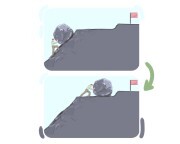
to overcome a challenge or obstacle

Ex: Leaders aim to conquer adversity by guiding their teams through difficult situations .

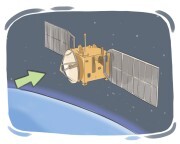
an object sent into space to travel around the earth and send or receive information

Ex: The satellite 's camera captured detailed images of the planet ’s surface for environmental monitoring .
shard [noun]

a sharp piece of broken material, such as glass or pottery

Ex: They found an ancient shard of pottery during the excavation .

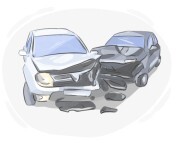
(physics) the act of two or more moving items crashing into each other

Ex: The collision of the two particles produced a burst of energy and new subatomic particles .
debris [noun]

the scattered pieces of waste, remains, or broken objects, often left after destruction or an accident

Ex: Crews worked to clear the debris from the fallen bridge .

to put into use or action

Ex: The government plans to deploy drones to monitor illegal activity in remote areas .

an organized grouping or arrangement of parts, elements, or ideas
Ex: A constellation of factors contributed to the company 's success .
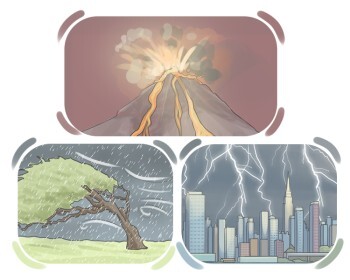
disaster [noun]

a sudden and unfortunate event that causes a great amount of death and destruction

Ex: The city faced a disaster after a severe storm hit the area .
iridium [noun]

a heavy brittle metallic element of the platinum group; used in alloys; occurs in natural alloys with platinum or osmium

to smash [verb]

to forcefully come into contact with an object or surface

Ex: The wrecking ball smashed through the old building , demolishing it in seconds .
cosmos [noun]

the universe, particularly when it is thought of as a systematic whole

Ex: Astronomers use telescopes to observe distant phenomena in the cosmos .
orbit [noun]

the path an object in the space follows to move around a planet, star, etc.

Ex: Understanding the orbit of distant exoplanets helps astronomers study their potential habitability .
threat [noun]

something that poses danger or the possibility of harm

Ex: The police quickly responded to the bomb threat called in at the downtown office building .
civil [adjective]

connected to the government or public life, rather than religion or the military
Ex: Civil duties include paying taxes and serving on a jury .

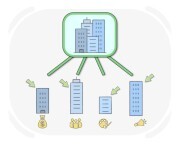
a part of an organization such as a university, government, etc. that deals with a particular task
Ex:
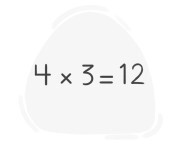
times [preposition]

used to multiply a number by another

Ex:
average [noun]

a value that represents the central or typical point in a set of data, often calculated as the mean, median, or mode

Ex: The average for the week ’s temperature was higher than usual .
to rise [verb]

to grow in number, amount, size, or value

Ex: Her salary rose significantly after the promotion .
sharply [adverb]

with a sudden and significant change; dramatically

Ex: She turned sharply to avoid the oncoming car .
leading [adjective]

greatest in significance, importance, degree, or achievement

Ex:
shrapnel [noun]

fragments from an explosion, causing damage to surroundings

Ex: The artillery shell exploded , releasing shrapnel that damaged nearby vehicles and structures .

to indicate a potential danger or risk to someone or something

Ex: The predator 's presence in the area threatened the smaller animals .
zone [noun]

a specific area with unique characteristics

Ex: Entry into the restricted zone requires special permission .

to cover a significant distance or expanse

Ex: The forest stretches deep into the wilderness , home to a diverse range of plant and animal species .
altitude [noun]

the angular distance of a celestial object above the horizon

Ex: Altitude and azimuth are used to locate celestial objects .
roughly [adverb]

without being exact

Ex: The cake should be baked at roughly 180 degrees Celsius .
operator [noun]

a person who controls or works an apparatus, machine, or system
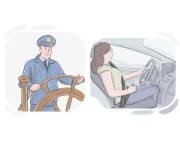
Ex:
to steer [verb]

to control the direction of a moving object, such as a car, ship, etc.

Ex: In adverse weather conditions , the captain faced the challenge of steering the sailboat safely back to harbor .
crash [noun]

an accident in which a vehicle, plane, etc. hits something else
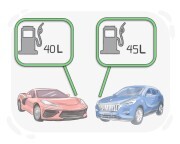
Ex: The report detailed the causes of the crash and the extent of the damage to the vehicles involved .

to use a supply of energy, fuel, etc.

Ex: As the population grows , cities continue to consume vast amounts of water for residential , industrial , and agricultural needs .
otherwise [adverb]

in a manner different from the one that has been mentioned

Ex: The sign says the store is open , but the locked door says otherwise .

a vehicle designed to travel in space

Ex: The documentary showcased the development and launch of a new spacecraft designed for deep-space exploration .

to trace the existence or origin of something to a specific point in time
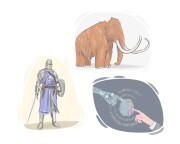
Ex: The company 's commitment to sustainability goes back for decades .
era [noun]

a period of history marked by particular features or events

Ex: The Industrial Revolution ushered in an era of rapid technological and economic change .

to examine something scientifically, typically to discover facts or evidence

Ex: The government agency will investigate the safety of a new medication before approving it for public use .

to begin dealing with a problem or task in a focused and energetic manner

Ex: The group attacked the problem from multiple angles to find the best solution .

to form a judgment on the quality, worth, nature, ability or importance of something, someone, or a situation
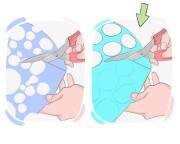
Ex: The therapist assesses the patient 's mental health to determine the best treatment plan .
efficiently [adverb]

with minimum waste of resources or energy

Ex: The factory adopted new technologies to produce goods more efficiently and sustainably .

to gather information in order to produce a book, report, etc.

Ex: He is compiling statistics and data analysis to present findings in his academic paper .
massive [adjective]

exceptionally large or extensive in scope, degree, or impact

Ex: The new policy led to massive changes in how the organization handles customer service .
data [noun]

information or facts collected to be used for various purposes

Ex: Weather forecasters rely on data from satellites and weather stations to predict future conditions .
taxonomy [noun]

a classification of organisms into groups based on similarities of structure or origin etc
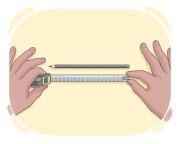
to find out the exact size of something or someone
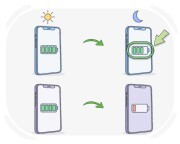
Ex: Right now , the engineer is measuring the dimensions of the building .
property [noun]

a feature or quality of something

Ex: Location is often cited as the most important property factor when buying real estate .

any of the available possibilities that one can choose from

Ex: You can either take the train or the bus , but there ’s no third alternative .
unthinkable [adjective]

beyond what is acceptable or reasonable to imagine

Ex: The idea of quitting his job was unthinkable to him .
uncontrolled [adjective]

lacking regulation, restraint, or governance, resulting in chaos, disorder, or wildness
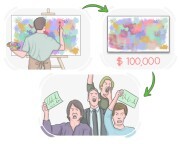
Ex: The uncontrolled anger of the driver resulted in reckless driving behavior and road rage incidents .

to cause or give rise to something

Ex: Last year , the new initiative generated a substantial increase in revenue .

to be the first cause of a chain of events, actions, or reactions that unfold unexpectedly

Ex: The politician 's remarks during the speech set off a flurry of criticism in the media .
cascade [noun]

a large, continuous flow or outpouring of something, such as light, hair, or even emotions, falling or spreading downward in abundance

Ex: Tears ran down his face in a silent cascade .
fragment [noun]

a small piece or part that has broken off from a larger whole, often referring to objects or materials

Ex: The mechanic replaced the fragment of the broken mirror with a new piece .

to cause something to develop into a particular state, condition, or quality

Ex: The unexpected turn of events rendered her speechless with disbelief .
unusable [adjective]

not able to be used or accessed effectively, typically due to damage, malfunction, or impracticality
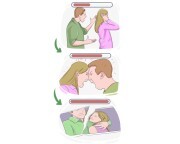
Ex: The outdated software became unusable after the system upgrade .

the time when it becomes impossible for one to return to a previous place or state or to make a different decision
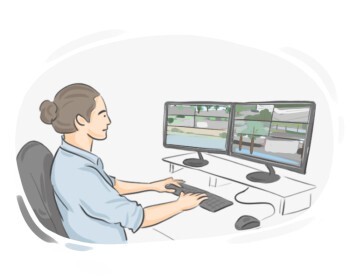
Ex: When they boarded the plane , they knew it was the point of no return ; there was no going back .

to keep someone or something under observation, typically for safety or security purposes

Ex: The company hired private investigators to monitor the activities of a suspected corporate spy .

to work with someone else in order to create something or reach the same goal

Ex: We need to collaborate with our colleagues to finalize the project proposal .
shared [adjective]

available to or involving all parties

Ex: The two families enjoyed a shared interest in gardening .
agency [noun]

a business or organization that provides services to other parties, especially by representing them in transactions

Ex:

the act or process of organizing different parts of something so that they can properly work as a whole

Ex: The military relies on precise coordination during operations .

a group of people appointed or elected to perform a specific function, task, or duty
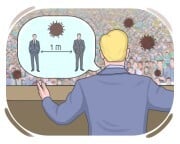
Ex: The United Nations established a committee to address climate change and environmental sustainability .

a principle or instruction based on which a person should behave or act in a particular situation

Ex: The government issued new guidelines for safe social distancing in public places .

the capacity to be maintained for a long time and causing no harm to the environment

Ex: Urban planners focus on sustainability to reduce cities ' carbon footprints .
to vent [verb]

to let something, like air or gas, escape through an opening or passage
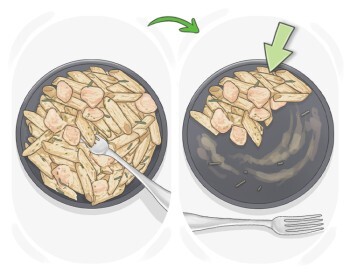
Ex:
leftover [adjective]

remaining after the main part has been used or taken away
Ex: He used the leftover materials to build a small birdhouse .

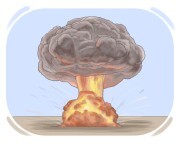
a sudden, forceful release of energy due to a chemical or nuclear reaction, causing rapid expansion of gases, loud noise, and often destruction

Ex: The explosion shattered windows in nearby buildings and caused extensive damage .

pieces of old satellites, rockets, or other objects that are left floating in space and no longer serve any useful purpose

Ex: The collision created even more space junk around the Earth .
astrodynamical [adjective]

related to the study or science of how objects move in space, especially under the influence of gravity

Ex: Astrodynamical research helps improve the accuracy of space missions .
pressurized [adjective]

containing air or gas that is kept at a controlled, higher-than-normal pressure to allow safe or proper operation in certain environments

Ex:
Cambridge IELTS 18 - Academic
Test 1 - Listening - Part 1 Test 1 - Listening - Part 2 (1) Test 1 - Listening - Part 2 (2) Test 1 - Listening - Part 3 (1)
Test 1 - Listening - Part 3 (2) Test 1 - Listening - Part 4 (1) Test 1 - Listening - Part 4 (2) Test 1 - Reading - Passage 1 (1)
Test 1 - Reading - Passage 1 (2) Test 1 - Reading - Passage 2 (1) Test 1 - Reading - Passage 2 (2) Test 1 - Reading - Passage 3 (1)
Test 1 - Reading - Passage 3 (2) Test 2 - Listening - Part 1 Test 2 - Listening - Part 2 (1) Test 2 - Listening - Part 2 (2)
Test 2 - Listening - Part 3 (1) Test 2 - Listening - Part 3 (2) Test 2 - Listening - Part 4 Test 2 - Reading - Passage 1 (1)
Test 2 - Reading - Passage 1 (2) Test 2 - Reading - Passage 1 (3) Test 2 - Reading - Passage 2 (1) Test 2 - Reading - Passage 2 (2)
Test 2 - Reading - Passage 2 (3) Test 2 - Reading - Passage 3 (1) Test 2 - Reading - Passage 3 (2) Test 2 - Reading - Passage 3 (3)
Test 3 - Listening - Part 1 Test 3 - Listening - Part 2 Test 3 - Listening - Part 3 Test 3 - Listening - Part 4
Test 3 - Reading - Passage 1 (1) Test 3 - Reading - Passage 1 (2) Test 3 - Reading - Passage 2 (1) Test 3 - Reading - Passage 2 (2)
Test 3 - Reading - Passage 3 (1) Test 3 - Reading - Passage 3 (2) Test 4 - Listening - Part 1 Test 4 - Listening - Part 2
Test 4 - Listening - Part 3 Test 4 - Listening - Part 4 Test 4 - Reading - Passage 1 (1) Test 4 - Reading - Passage 1 (2)
Test 4 - Reading - Passage 2 (1) Test 4 - Reading - Passage 2 (2) Test 4 - Reading - Passage 3 (1) Test 4 - Reading - Passage 3 (2)