Cambridge IELTS 18 - Academic - Test 2 - Reading - Passage 1 (2)

Here you can find the vocabulary from Test 2 - Reading - Passage 1 (2) in the Cambridge IELTS 18 - Academic coursebook, to help you prepare for your IELTS exam.

review-disable

review

flashcard-disable

flashcard

spelling-disable

spelling

quiz-disable

quiz

start-learning
Cambridge IELTS 18 - Academic

an explanation based on limited facts and evidence that is not yet proved to be true

Ex: Before conducting the study , the team proposed a hypothesis about the effects of the new drug .
supersized [adjective]

larger or more significant than the standard or typical size

Ex: Supersized soda cups have contributed to debates about public health .

a unified whole created by joining or mixing two or more distinct elements or parts together

Ex: The cocktail was a delightful combination of fruity and tangy flavors .
wicker [noun]

slender flexible branches or twigs (especially of willow or some canes); used for wickerwork

a type of rolling-element bearing that uses balls to maintain the separation between the bearing races, reducing friction and enabling smooth rotation

Ex: Aerospace applications utilize ball bearings in aircraft engines , landing gear systems , and control surfaces .
grooved [adjective]

having one or more long, narrow, and usually parallel channels, furrows, or ridges

Ex:
plank [noun]

a long, flat, and rectangular piece of wood or other materials, typically used in construction, flooring, or as a structural element in various applications
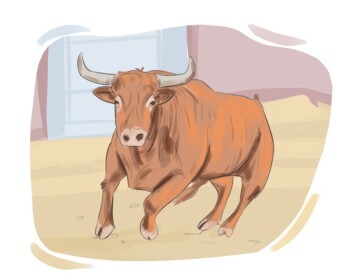
ox [noun]

a bull used on farms to carry heavy loads, which its sex organs are partly removed

a scientist who studies the Earth's structure, composition, processes, and history, including rocks, minerals, fossils, and geological phenomena

Ex: A career as a geologist often involves fieldwork in remote and challenging environments .
voice [noun]

a specific opinion on something

Ex: In the boardroom , diverse voices were heard as members discussed the company 's future direction and strategy .
debate [noun]

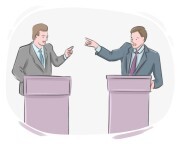
a discussion about a particular issue between two opposing sides, mainly held publicly

Ex: A heated debate erupted in the council meeting over the proposed budget cuts .
image [noun]

the general impression a person, organization, or product presents to the public
Ex: Celebrities often manage their image carefully .
industrious [adjective]

hard-working and productive

Ex: Despite the challenges , she remained industrious throughout the long hours .
to cart [verb]

to move or convey a heavy object with effort

Ex: The firefighter carted the hoses to the location of the fire .
to roll [verb]

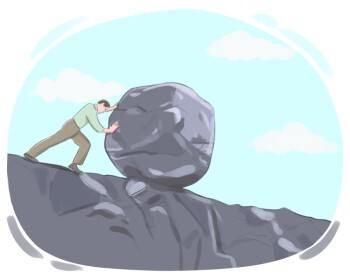
to make something move by turning it over and over or from side to side repeatedly
Ex: He needed to roll the heavy barrel to the other side of the warehouse .
glacier [noun]

a large mass of ice that forms over long periods of time, especially in polar regions or high mountains
Ex: Mountaineers face numerous challenges when attempting to traverse icy crevasses on glaciers .
skeptical [adjective]

having doubts about something's truth, validity, or reliability
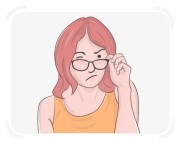
Ex: As a scientist , Alex approached the extraordinary discovery with a skeptical mindset until further evidence was provided .

to want to know about something particular
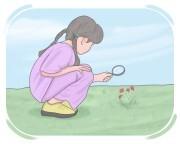
Ex: The detective could n't help but wonder who the mysterious figure in the photograph could be .

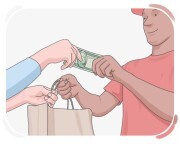
to bring and give a letter, package, etc. to a specific person or place

Ex: Last week , the courier delivered a package containing the new product .
needed [adjective]

required or necessary for a specific purpose

Ex:

latest part of the Stone Age beginning about 10,000 BC in the Middle East (but later elsewhere)

a secular designation used to represent dates in the Gregorian calendar before the traditional reference point of the birth of Jesus Christ

phase [noun]

a distinct period or stage in a sequence of events or development

Ex: The moon enters a different phase each month .

to occur at a specific time or location

Ex: The debate competition took place at the school auditorium .
point [noun]

a specific, identifiable instant in time, often marking a significant moment or event

Ex: The light turned green at just the right point for him to cross the intersection .
slab [noun]

a thick and flat piece of hard material, such as a stone, metal, wood, etc. that is usually in the shape of a square or rectangle

crescent [noun]

a curved shape with narrow points at the ends that appears wider in the middle, like the shape of the moon in its first and last quarters
Ex: She watched the crescent slowly grow each night as the moon waxed towards fullness .

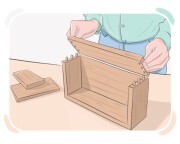
to make something by putting separate parts of something together

Ex:
iconic [adjective]

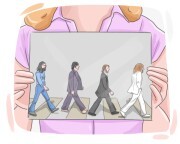
widely recognized and regarded as a symbol of a particular time, place, or culture
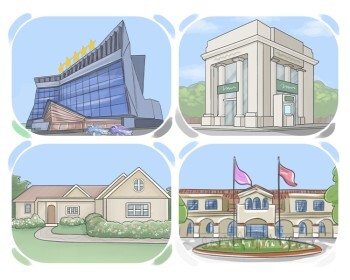
Ex: The iconic Beatles album cover for " Abbey Road " is iconic in music history .

anything that is built from several parts, such as a house, bridge, etc.

Ex: A beehive is a remarkable natural structure created by bees .
to stand [verb]

(of a building) to remain upright and structurally sound
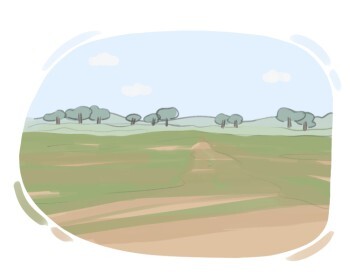
Ex: The tower is still standing but leans dangerously after the landslide .
site [noun]

an area of land on which something is, was, or will be constructed
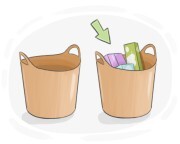
Ex:

to have or hold something within or include something as a part of a larger entity or space

Ex: The cupboard contains dishes , cups , and other kitchenware .

a method used by scientists to determine the age of organic materials by measuring the amount of carbon-14 they contain
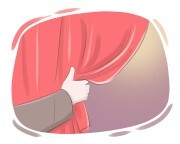
Ex: Radiocarbon dating confirmed the authenticity of the manuscript by dating the parchment it was written on .

to make information that was previously unknown or kept in secrecy publicly known

Ex: After years of speculation , the archaeologists finally revealed the hidden chamber beneath the pyramid .

used to specify or emphasize a particular aspect or detail within a broader context

Ex: The book covers various topics , but the chapter on sustainability in particular is thought-provoking .
claim [noun]

a statement about the truth of something without offering any verification or proof
Ex: She made a claim that the painting was an original Van Gogh , but she could n't prove it .
druid [noun]

a pre-Christian priest among the Celts of ancient Gaul and Britain and Ireland

judicial [adjective]

belonging or appropriate for a court, a judge, or the administration of justice

Ex:
celtic [adjective]

relating to or characteristic of the Celts

to make something widely known and accepted by the general public, often by adjusting it to fit popular preferences or trends

Ex: The government initiated programs to popularize eco-friendly practices for sustainable living .

to dig the ground and discover something

Ex: Excavating the site , researchers unearthed a buried city from centuries ago .
grave [noun]

a hole made in the ground for burying a dead body in

Ex: He felt a sense of peace while sitting near his grandmother 's grave .

to define oneself as belonging to a particular category, group, or label

Ex: He identifies as genderfluid , meaning his gender identity can change over time .
solstice [noun]

either of the two times of the year when the sun reaches its farthest or closest distance from the equator

Ex:
celt [noun]

a member of a European people who once occupied Britain and Spain and Gaul prior to Roman times

to reside in a specific place

Ex: The indigenous people have inhabited this land for centuries .
sarsen [noun]

a large, hard stone or boulder, often found standing alone or used in ancient stone circles and structures

Ex: The archaeologists cleaned the surface of the sarsen carefully .

a structure made of two large vertical stones supporting a horizontal stone across the top, forming a kind of doorway

Ex: Archaeologists discovered a new trilithon hidden in the forest .
Cambridge IELTS 18 - Academic
Test 1 - Listening - Part 1 Test 1 - Listening - Part 2 (1) Test 1 - Listening - Part 2 (2) Test 1 - Listening - Part 3 (1)
Test 1 - Listening - Part 3 (2) Test 1 - Listening - Part 4 (1) Test 1 - Listening - Part 4 (2) Test 1 - Reading - Passage 1 (1)
Test 1 - Reading - Passage 1 (2) Test 1 - Reading - Passage 2 (1) Test 1 - Reading - Passage 2 (2) Test 1 - Reading - Passage 3 (1)
Test 1 - Reading - Passage 3 (2) Test 2 - Listening - Part 1 Test 2 - Listening - Part 2 (1) Test 2 - Listening - Part 2 (2)
Test 2 - Listening - Part 3 (1) Test 2 - Listening - Part 3 (2) Test 2 - Listening - Part 4 Test 2 - Reading - Passage 1 (1)
Test 2 - Reading - Passage 1 (2) Test 2 - Reading - Passage 1 (3) Test 2 - Reading - Passage 2 (1) Test 2 - Reading - Passage 2 (2)
Test 2 - Reading - Passage 2 (3) Test 2 - Reading - Passage 3 (1) Test 2 - Reading - Passage 3 (2) Test 2 - Reading - Passage 3 (3)
Test 3 - Listening - Part 1 Test 3 - Listening - Part 2 Test 3 - Listening - Part 3 Test 3 - Listening - Part 4
Test 3 - Reading - Passage 1 (1) Test 3 - Reading - Passage 1 (2) Test 3 - Reading - Passage 2 (1) Test 3 - Reading - Passage 2 (2)
Test 3 - Reading - Passage 3 (1) Test 3 - Reading - Passage 3 (2) Test 4 - Listening - Part 1 Test 4 - Listening - Part 2
Test 4 - Listening - Part 3 Test 4 - Listening - Part 4 Test 4 - Reading - Passage 1 (1) Test 4 - Reading - Passage 1 (2)
Test 4 - Reading - Passage 2 (1) Test 4 - Reading - Passage 2 (2) Test 4 - Reading - Passage 3 (1) Test 4 - Reading - Passage 3 (2)