
Cambridge IELTS 19 - Académique - Test 1 - Lecture - Passage 2 (1)
Apprenez le vocabulaire de la première partie du Cambridge IELTS 19 Academic, Test 1, Reading Passage 2, avec des mots et expressions utiles du texte.
Réviser
Flashcards
formes
Orthographe
Quiz

to roam about without a specific purpose

rôder, errer
Il rôdait souvent dans les rues, perdu dans ses pensées.
to enter a place in order to steal or take things from it, especially quickly or by force
piller, cambrioler
a vessel designed for transporting goods and merchandise as part of commercial trade
navire marchand, bateau de commerce
Pendant le voyage, le navire marchand a rencontré des mers agitées mais a livré sa cargaison en toute sécurité.
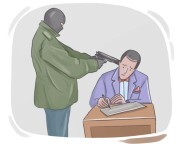
to indicate a potential danger or risk to someone or something
menacer
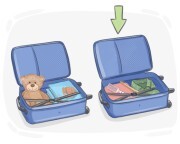
absolutely necessary and of great importance
vital, indispensable, essentiel
a regularly used path or route across the sea, often for the exchange of goods and services between different places or countries
route commerciale, voie de commerce
Les Caraïbes étaient un centre majeur pour les routes commerciales pendant la période coloniale.

a country under the control of one government
état
the act of attacking or robbing ships at sea, often for financial gain
piraterie, course
Le gouvernement a augmenté les patrouilles pour lutter contre la piraterie le long de la côte.
something that benefits or advantages someone or something, often in a specific situation
intérêt, avantage
a state or country where power is held by the people or their elected representatives, typically with an elected head of state rather than a monarch
république, état républicain
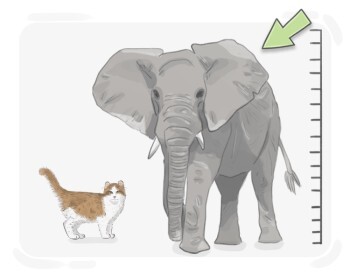
extremely large or heavy
énorme
La baleine était une créature massive, pesant plusieurs tonnes et mesurant plus de 50 pieds de longueur.
a group of naval vessels organized to operate together as a military unit
flotte
to completely remove, destroy, or get rid of something
éliminer, faire disparaître
being subject to the rule, authority, or governance of something or someone
sous, sous la gouvernance de
Le pays est sous régime militaire.
a military unit, area, or operation that is under the control and direction of one officer or leader
commandement, unité
related to ancient Rome, its citizens, or empire
romain
a high-ranking officer in the army, air force, or marines
général
to completely destroy something, particularly a problem or threat
éliminer, éradiquer
Les agriculteurs ont mis en œuvre des mesures de lutte antiparasitaire pour éradiquer les espèces envahissantes qui menaçaient leurs cultures.

to change the form, appearance, character, or nature of someone or something significantly
transformer

to store information in a way that can be used in the future
enregistrer
the period during which a particular monarch rules
règne
a title used for ancient Egyptian rulers
pharaon
La tombe du pharaon Toutankhamon, découverte dans la Vallée des Rois, contenait des trésors et des artefacts qui ont permis de mieux comprendre la culture égyptienne antique.
demonstrating sensible judgment or fairness in decision-making
raisonnable, équitable
Il est raisonnable de s'attendre à ce que les employés terminent leurs tâches assignées dans le délai imparti.

a person who attacks and robs ships at sea, typically for personal gain
pirate, corsaire
L'équipage a bravement combattu contre les pirates qui ont abordé leur navire.
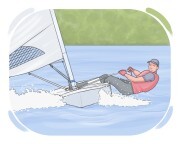
to travel on water using the power of wind or an engine
naviguer, voguer
a person or thing that chases, follows, or tries to catch something or someone
poursuivant, chasseur
L'officier de police était le poursuivant dans la poursuite à haute vitesse.
(of an idea or thought) to suddenly be remembered or thought of
venir à l'esprit, revenir en tête
Aucune solution ne nous est venue à l'esprit, alors nous avons mis la discussion en pause.

all the people who work on a ship, aircraft, etc.
équipage
a person or thing that is out of place or does not conform to the norms or expectations of a particular group, environment, or situation
inadapté, marginal
Le nouvel employé était un inadapté dans l'équipe, ayant du mal à s'adapter à la culture de l'entreprise.

someone who is reckless and likes putting themselves in danger
casse-cou, risque-tout
Elle a été étiquetée comme une casse-cou après avoir escaladé le plus haut gratte-ciel de la ville.
a boat that uses large pieces of cloth called sails to catch the wind and move across the water
navire à voiles, bateau à voiles
Le bateau à voile a navigué sur l'océan en utilisant uniquement le vent.
a region of islands and territories in the Caribbean Sea known for its tropical climate, diverse cultures, and natural beauty
Caraïbes, Antilles
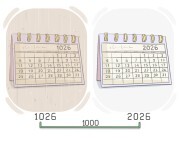
a period of one thousand years, usually calculated from the year of the birth of Jesus Christ
millénium
L'invention de l'imprimerie a été un développement crucial au cours du deuxième millénaire.
a daring or adventurous person, who engages in brave or reckless activities
bretteur, aventurier
Il était connu comme un aventurier, toujours à la recherche d'aventure et de danger.
to exist or occur at an earlier time than something else
précéder, antidater
L'invention de la roue précède le langage écrit.
a society that has developed its own culture and institutions in a particular period of time or place
civilisation
La civilisation moderne dépend fortement de la technologie et de la communication mondiale.
to a specific extent or degree
en partie
Il n'était que partiellement convaincu par leur explication.
as a result of a specific cause or reason
à cause de
L'événement a été annulé en raison de circonstances imprévues.

in a manner that consists mostly of a specific kind, quality, etc.
majoritairement, principalement
La population de la ville est majoritairement jeune, avec un pourcentage élevé de résidents de moins de 30 ans.
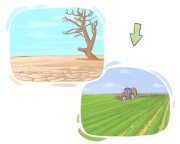
(of land or soil) able to produce crops or plants well
fertile
Les agriculteurs appréciaient la terre fertile le long de la rivière pour sa capacité à soutenir diverses cultures.
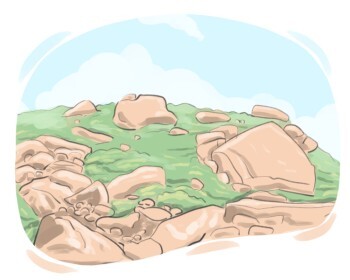
(of land or terrain) rough, uneven, and often difficult to navigate, with features such as steep slopes or rocky surfaces
accidenté, escarpé
Le sentier serpentait à travers le terrain accidenté, rendant la randonnée difficile.

having many hills
vallonné
La route était étroite et vallonnée, ce qui rendait la conduite difficile.
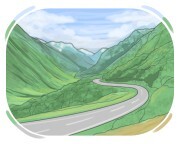
(of an area) having a lot of mountains
montagneux
Ils ont traversé un paysage montagneux lors de leur voyage en voiture.
a person or animal that lives in a particular place
habitant
to depend on someone or something for support and assistance
compter sur, se reposer sur
Il ne peut pas compter sur les transports en commun pour arriver à l'heure au travail, alors il a acheté une voiture.
to a great or considerable extent
lourdement
Elle est fortement impliquée dans le travail communautaire.
of, relating to, found in, or living in the sea
marin
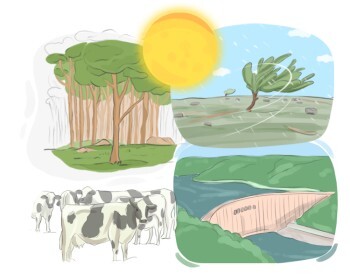
(usually plural) a country's gas, oil, trees, etc. that are considered valuable and therefore can be sold to gain wealth
ressource
to have a particular quality, attribute, knowledge, or skill
posséder
concerning or involving travel by sea, especially for work or adventure
maritime, navigant
Ils ont été formés aux compétences maritimes, y compris la navigation et la construction navale.
not exceeded by anything or anyone else
inégalé, incomparable
La dévotion de l'athlète à l'entraînement a conduit à une performance inégalée, établissant des records qui sont restés inégalés pendant des années.
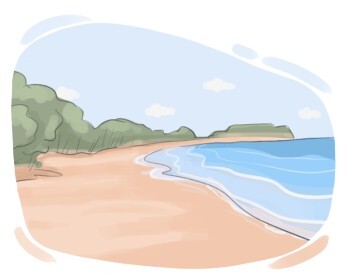
the boundary between land and water, particularly as seen on a map or from above
côte, littoral
La tempête a provoqué une érosion le long de la côte.

used to introduce a result based on the information or actions that came before
donc
to begin doing something harmful, like crime or drugs, often as a response to feeling unhappy
se tourner vers, se mettre à
Elle a pris la mauvaise direction, finissant par se tourner vers la drogue pour se consoler.
indicating a large number of something
nombreux
Elle a reçu de nombreuses invitations à des événements sociaux cette semaine.
a small curved area of land that partly encloses a specific part of the sea
crique, anse
Les marins ont ancré leurs bateaux dans la crique abritée pour éviter la tempête.
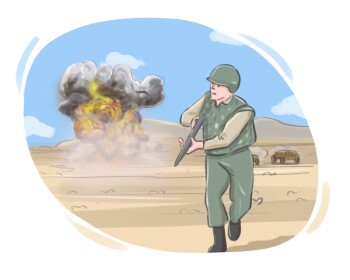
to launch a planned and forceful attack against an enemy or target
frapper
not discovered, noticed, or detected, often referring to something that was searched or looked for
non détecté, inaperçu
Sa maladie est restée non détectée pendant des années.
designed or capable of traveling on the open sea, especially over long distances
océanique, hauturier
Ils ont embarqué sur le navire hauturier pour leur long voyage à travers l'Atlantique.
any body of water that is not contained within a defined or enclosed area
eau libre, étendue d'eau ouverte
(of a sea or other area of water) deep or wide enough for ships or boats to travel through
navigable
Les ingénieurs ont travaillé pour maintenir le canal navigable pour le commerce.

to load or put cargo on board a ship
charger, embarquer
L'équipage du cargo a chargé diligemment diverses marchandises.
the influence, control, or power that comes from status, money, or position
puissance, force
a small, fast sailing ship used in the past mainly by the Portuguese and Spanish
caravelle, navire rapide
Une caravelle pouvait parcourir de longues distances à travers l'océan.
used typically before a date to show that it is not exact
vers, aux alentours de
Le bâtiment a été construit circa 1850.
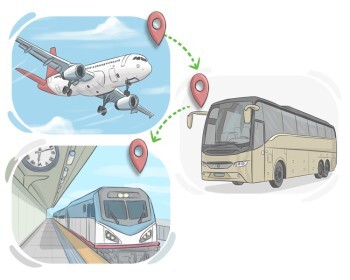
a fixed way between two places, along which a bus, plane, ship, etc. regularly travels
parcours
to have information, meaning, or condition
réserver
