
Științe Naturale SAT - Fizică
Aici vei învăța câteva cuvinte în engleză legate de fizică, cum ar fi "sonar", "prismă", "difuz" etc., de care vei avea nevoie pentru a trece cu bine de SAT-urile tale.
Revizuire
Fișe de studiu
Ortografie
Chestionar

(physics) the maximum distance a vibrating material, sound wave, etc. such as a pendulum travels from its first position

amplitudine, mărime
În fizică, amplitudinea se referă la deplasarea maximă a unei unde față de poziția sa de echilibru.
relating to the science of studying sounds or the way people hear things
acustic, legat de acustică
Cercetătorii au efectuat experimente acustice pentru a înțelege cum se propagă undele sonore prin diferite materiale.
a technology that uses sound waves to detect objects underwater or measure distances underwater
sonar, detecție acustică
Submarinul navighează folosind sonarul pentru a cartografia fundul oceanului și a detecta obstacolele potențiale.
a solid geometric shape, typically with a triangular base and rectangular sides, that refracts light into its component colors or alters the path of light
prismă, cristal cu fețe
Lumina care trece prin prismă s-a refractat într-un spectru de culori: roșu, portocaliu, galben, verde, albastru, indigo și violet.
electromagnetic radiation with longer wavelengths than visible light, used for applications such as thermal imaging and remote sensing
infraroșu, radiație infraroșie
Infrarosul emis de obiectele calde poate fi detectat de camere specializate pentru a crea imagini termice.
a type of electromagnetic radiation with shorter wavelengths than visible light, often associated with sunlight and used in various applications
ultraviolet, radiație ultravioletă
Protejează-ți pielea de razele ultraviolet prin purtarea cremei de protecție solară.
the emission of light by a substance that has absorbed light or other electromagnetic radiation
fluorescență, luminiscență
Fluorescența este observată în mod obișnuit la anumite minerale care emit o lumină strălucitoare sub lumină ultravioletă (UV).
a scientific instrument used to measure and analyze the properties of light over a specific range of wavelengths
spectrometru
Omul de știință a folosit un spectrometru pentru a analiza compoziția substanței necunoscute pe baza absorbției luminii.
a fundamental particle of light that carries electromagnetic energy and exhibits both particle-like and wave-like properties
foton, cuantă de lumină
Fotonii sunt cuantele radiației electromagnetice, inclusiv lumina vizibilă, undele radio și razele X.
(of physics) to change the direction of light, sound, or energy when it passes through something
refracta, devia
the bending, spreading, and interference of waves as they encounter obstacles or pass through narrow openings, often observed in the behavior of light, sound, or other waves
difracție, difracția undelor
Difracția luminii produce modele de regiuni întunecate și luminoase alternante atunci când întâlnește o fantă îngustă sau trece printr-un obstacol.
the fraction or percentage of light or electromagnetic radiation that passes through a substance or medium
transmitanță, transmisie
Transmitanța sticlei a permis ca cea mai mare parte a luminii solare să treacă în cameră.
a measure of how strongly a substance absorbs light at a particular wavelength
absorptivitate molară, coeficient de absorbție molar
a range of wavelengths of electromagnetic radiation absorbed by a substance, typically represented as a graph showing absorption intensity versus wavelength
spectru de absorbție, spectru absorbant
Oamenii de știință folosesc un spectru de absorbție pentru a identifica elementele chimice și compușii prin analiza lungimilor de undă specifice ale luminii pe care o absorb.
the branch of physical science that deals with the relationships between heat, work, and energy, particularly the principles governing the conversion of various forms of energy
termodinamică
Prima lege a termodinamicii, cunoscută și ca legea conservării energiei, afirmă că energia nu poate fi creată sau distrusă, doar transferată sau convertită dintr-o formă în alta.
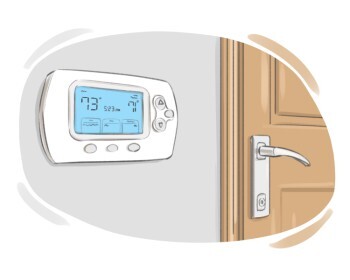
an instrument that automatically controls the temperature of a room, machine, etc.
termostat
Cu un termostat programabil, puteți seta temperaturi specifice pentru diferite momente ale zilei pentru a optimiza consumul de energie.
a device used to measure the heat released or absorbed during a chemical reaction or physical change, typically by measuring temperature changes in a surrounding medium
calorimetru, dispozitiv de măsurare a căldurii
Chimiștii folosesc un calorimetru pentru a determina căldura de ardere a unei substanțe prin măsurarea schimbării de temperatură în apa care înconjoară un vas de reacție.
a tool designed to measure the temperature of the surrounding air or environment
termometru, termometru de mediu
Meteorologul a plasat termometrul în adăpostul umbrit pentru a obține o citire precisă a temperaturii aerului.
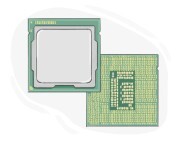
a small piece of material that is a semiconductor, used to make an integrated circuit
microcip, cip
Performanța computerului s-a îmbunătățit după actualizarea microcipului său.

the distance between a point on a wave of energy and a similar point on the next wave
lungime de undă, lungimea unei unde
a theory that explains the relationship between motion, space, and time
relativitate
Relativitatea explică de ce sateliții GPS trebuie să-și ajusteze ceasurile din cauza gravitației Pământului.
(physics) matter consisting of elementary particles that are the antiparticles of those of regular matter
antimaterie, materie antimaterie
Antimateria este compusă din antiparticule, care au aceeași masă cu particulele corespunzătoare, dar sarcină electrică opusă.
the process of solidification or freezing, typically of a liquid or a substance turning into a solid state due to a decrease in temperature
congelare, solidificare
Înghețarea apei în gheață are loc atunci când temperaturile scad sub punctul de îngheț.
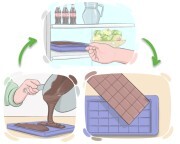
to transform from a liquid or flexible state into a stable, firm, or compact form
solidifica, se solidifica
Pe măsură ce temperatura scădea, ceara topită a început să se solidifice, formând lumânări cu o suprafață netedă.
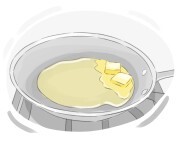
to change from a solid state and become fluid or liquid
lichifia, topi
Pe măsură ce temperatura creștea, zăpada de pe pământ a început să se lichefie.
relating to particles or forces that exist within atoms, including particles smaller than atoms themselves or the interactions between these particles
subatomic, infraatomic
Particulele subatomice interacționează prin forțe fundamentale, cum ar fi electromagnetismul și forțele nucleare puternice și slabe.
a very small, electrically neutral particle that rarely interacts with matter
neutrino, particulă neutrino
Neutrinii sunt particule subatomice cu masă foarte mică.
extremely small, typically between 1 and 100 billionths of a meter, where materials show unique properties
nanometric, la scară nanometrică
Structura nanometrică a materialelor poate schimba modul în care conduc electricitatea.
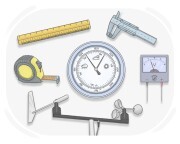
the scientific study of measurement, including the development of measurement standards and techniques
metrologie, știința măsurătorilor
Laboratoarele de metrologie testează și certifică instrumentele de măsurare.
a scientist who applies principles and methods of physics to study biological systems and phenomena, aiming to understand life processes at the molecular and cellular levels
biofizician, om de știință în biofizică
Biofizicianul a folosit modelarea computațională pentru a simula dinamica plierii proteinelor în celule.
describing light that spreads evenly from a broad source or surface, creating soft illumination without harsh shadows
difuz, împrăștiat
Camera era iluminată ușor cu lumină difuză de la lustra de tavan.
used nuclear fuel that is no longer efficient for producing energy in a reactor
combustibil uzat, combustibil nuclear uzat
the rate at which pressure changes over a certain distance in a particular direction
gradient de presiune, variație de presiune
the spatial frequency of a wave, representing the number of wavelengths per unit distance
număr de undă, frecvență spațială
Numărul de undă al unei unde luminoase în vid este calculat ca inversul lungimii sale de undă.
a tiny particle with whole-number spin, such as photons or the Higgs boson, often associated with carrying fundamental forces or giving mass to other particles
boson, particulă cu spin întreg
Fotonii, particulele de lumină, sunt exemple de bosoni care transportă forța electromagnetică.
a type of particle accelerator where two opposing beams of particles are directed to collide with each other at high speeds, allowing scientists to study fundamental particles and forces
colider, accelerator de particule cu coliziune frontală
Marele Colizor Hadron (LHC) este cel mai mare și mai puternic colizor din lume, utilizat pentru a explora fizica particulelor.
a simple type of antenna made of two metal rods, connected in the middle, that is half the wavelength of the signal it transmits or receives
dipol, antenă dipol
Postul de radio folosește o antenă dipol pentru a transmite semnale pe o zonă largă.
a fundamental particle with half-integer spin, including electrons and their heavier counterparts, as well as neutrinos
lepton, particulă elementară cu spin semiîntreg
Leptonii sunt particule elementare care includ electroni, muoni, particule tau și neutrinoii asociați acestora.
