pattern

Cambridge English: PET (B1 Preliminary) - Animals & Animal Parts

Review

Flashcards

Spelling

Quiz

Start learning
Cambridge English: PET (B1 Preliminary)
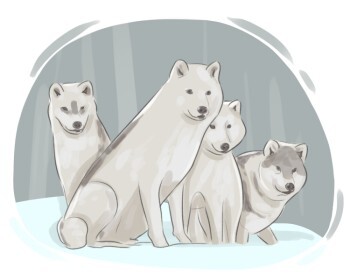
Arctic wolf

a subspecies of the gray wolf adapted to survive in the harsh Arctic regions of North America
Close
Sign in
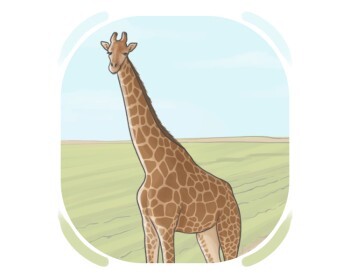
giraffe
giraffe
[noun]

a tall animal with a very long neck and long legs that has brown spots on its yellow fur
Ex: The giraffe gracefully stretched its long neck to reach the tender leaves at the top of the tree. 
Close
Sign in
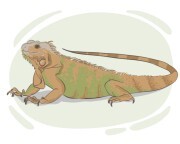
iguana
iguana
[noun]

a large herbivorous reptilian of the lizard family with a dorsal crest, which lives in tropical areas of America
Close
Sign in
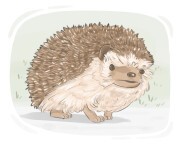
hedgehog
hedgehog
[noun]

a small mammal that is active at night, which is covered with spines and can roll itself while attacked
Close
Sign in
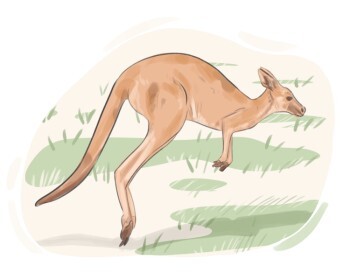
kangaroo
kangaroo
[noun]

a large Australian animal with a long tail and two strong legs that moves by leaping, female of which can carry its babies in its stomach pocket which is called a pouch
Ex: The kangaroo bounded effortlessly across the Australian outback, its powerful legs propelling it forward. 
Close
Sign in
orangutan
orangutan
[noun]

a large ape with a red coat and long arms that lives in the rainforests of Southeast Asia, the male of which develops a throat pouch
Close
Sign in
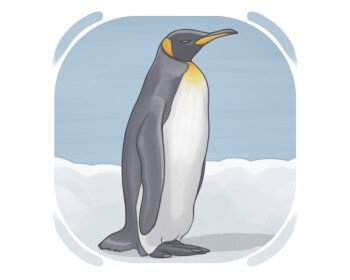
penguin
penguin
[noun]

a large black-and-white seabird that lives in the Antarctic, and can not fly but uses its wings for swimming
Ex: During their trip to the aquarium, they witnessed penguins diving gracefully in the water. 
Close
Sign in
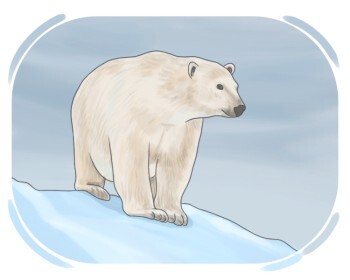
polar bear

a large white bear which lives in the North Pole and is well-adapted to its icy environment

Ex: The polar bear's white fur helps it blend into its icy surroundings, making it a stealthy predator. 
Close
Sign in
red deer
red deer
[noun]

a large and majestic deer species found in various habitats across Europe, Asia, and North Africa

Close
Sign in
red squirrel

a small mammal with a reddish-brown coat, tufted ears, and a long, bushy tail, known for its agility and arboreal lifestyle
Close
Sign in
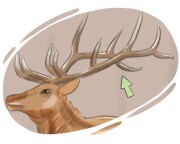
antler
antler
[noun]

any of the pair of branched horns that grow annually on the head of an adult animal, typically a male one, from the deer family
Close
Sign in
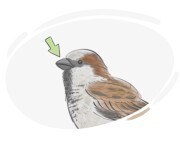
beak
beak
[noun]

the hard or pointed part of a bird's mouth
Ex: The parrot used its beak to crack open the nuts. 
Close
Sign in
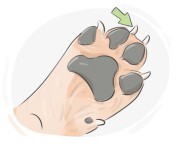
claw
claw
[noun]

a sharp and curved nail on the toe of an animal or a bird
Ex: The cat extended its sharp claws to defend itself. 
Close
Sign in
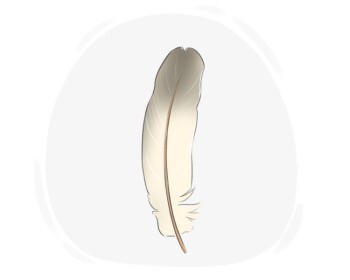
feather
feather
[noun]

any of the light and soft parts covering the body of a bird

Ex: The ancient Egyptians used feathers as quills to write on papyrus scrolls. 
Close
Sign in
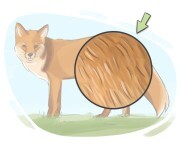
fur
fur
[noun]

the thick, soft hair that grows on the body of some animals such as cats, dogs, etc.

Ex: The kitten's fur was so soft and silky to the touch. 
Close
Sign in
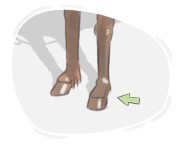
hoof
hoof
[noun]

the horny and hard part at the end of a limb of a mammal, such as a horse
Ex: He noticed a small stone stuck in the horse's hoof while brushing it. 
Close
Sign in
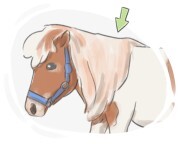
mane
mane
[noun]

hair that grows on the neck of an animal such as a horse, lion, etc.

Close
Sign in
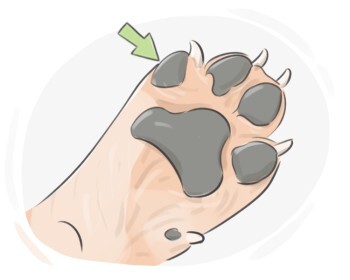
paw
paw
[noun]

an animal's foot that typically has a combination of nails, claws, fur, and pads
Ex: The kitten playfully batted at the toy mouse with her tiny paws. 
Close
Sign in
tail
tail
[noun]

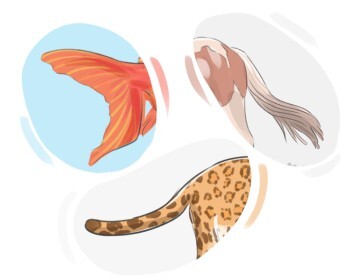
the part of the body of an animal, a bird or a fish that sticks out at the back, which can move
Ex: My cat has a long and bushy tail. 
Close
Sign in
tusk
tusk
[noun]

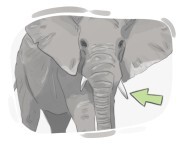
each of the curved pointy teeth of some animals such as elephants, boars, etc., especially one that stands out from the closed mouth
Ex: The elephant displayed its majestic tusks, gleaming in the sunlight as it roamed the savanna. 
Close
Sign in
whisker
whisker
[noun]

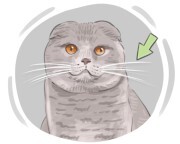
any of the long, stiff hairs that grow on the face of a cat, mouse, etc.
Ex: The cat's whiskers twitched as it watched a bird outside the window. 
Close
Sign in
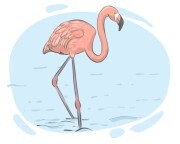
flamingo
flamingo
[noun]

a large aquatic bird with long legs and neck, pink plumage and a broad bill curved downward that lives near warm waters
Close
Sign in
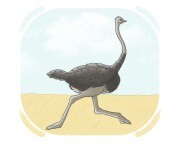
ostrich
ostrich
[noun]

a fast and large bird that is flightless and has long legs and a long neck, native to Africa
Ex: The ostrich can run up to 40 miles per hour to escape predators. 
Close
Sign in
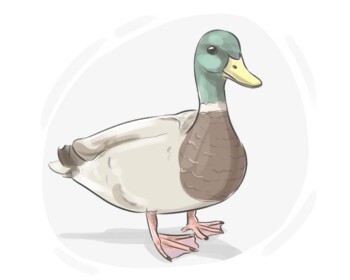
duck
duck
[noun]

a bird with short legs and a wide beak that naturally lives near or on water or is kept by humans for its eggs, meat, or feathers

Close
Sign in
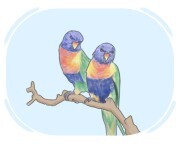
parrot
parrot
[noun]

a tropical bird with bright colors and a curved beak that can be trained to mimic human speech
Ex: The parrot perched on the tree, squawking loudly. 
Close
Sign in
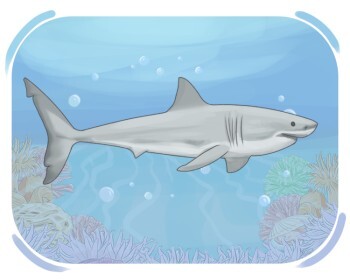
shark
shark
[noun]

‌a large sea fish with a pointed fin on its back and very sharp teeth
Ex: During the boat tour, they saw a group of sharks feeding on fish. 
Close
Sign in
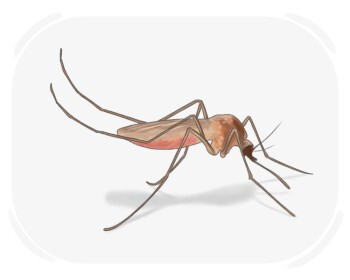
mosquito
mosquito
[noun]

a flying insect that bites people and animals and feeds on their blood
Ex: I have some red, itchy marks on my arm from mosquito bites. 
Close
Sign in
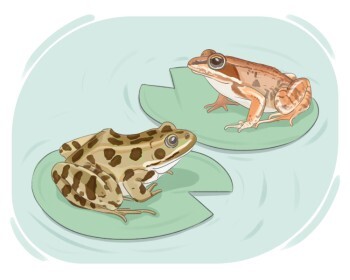
frog
frog
[noun]

a small green animal with smooth skin, long legs for jumping and no tail, that lives both in water and on land
Ex: The frog jumped from one lily pad to another. 
Close
Sign in
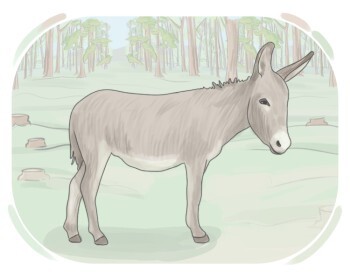
donkey
donkey
[noun]

an animal that is like a horse but has shorter legs and longer ears, and is used for carrying things and riding
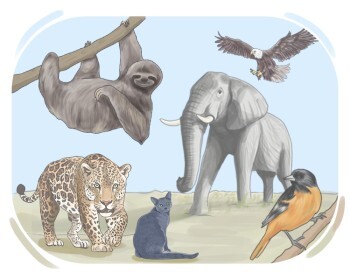
Ex: The farmer relied on his sturdy donkey to carry heavy loads from the fields. 
Close
Sign in
species
species
[noun]

a group that animals, plants, etc. of the same type which are capable of producing healthy offspring with each other are divided into

Ex: The Galapagos finches are a classic example of how different species can evolve from a common ancestor. 
Close
Sign in
wildlife
wildlife
[noun]

all wild animals, considered as a whole, living in the natural environment

Ex: The national park is home to a variety of wildlife, including bears and wolves. 
Close
Sign in
LanGeek
Download LanGeek app