

pattern

Law and Regulation - Legal Procedures & Instruments

Review

Flashcards

Forms

Spelling

Quiz

Start learning
Words Related to Law and Regulation
boilerplate

standard text or language that is used repeatedly in legal documents or official writing

Ex: The contract included some boilerplate clauses. 
Close
Sign in
clause
clause
[noun]

a separate part of a legal document that requires or talks about something specific

Ex: The rental agreement includes a clause specifying the responsibilities of both the landlord and the tenant. 
Close
Sign in
conveyance

a legal document that transfers a right or property from one person to another

Ex: Her lawyer prepared a conveyance to finalize the transfer of the estate. 
Close
Sign in
to grant
to grant
[Verb]

to officially give someone ownership or rights to something through a formal agreement or document

Ex: The deed granted him full ownership of the property. 
Close
Sign in
to co-sign

to sign a document in addition to another person's signature to guarantee a loan or financial obligation

Ex: She agreed to co-sign her friend's car loan. 
Close
Sign in
to countersign

to add a second signature to a document or agreement to verify its authenticity; serving as a form of validation of the primary signature
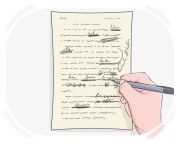
Ex: The manager asked her assistant to countersign the contract for final approval. 
Close
Sign in
draft
draft
[noun]

a preliminary version of a written text, subject to revision before being finalized

Ex: She emailed the first draft of her essay. 
Close
Sign in
to draw up

to create a plan, document, or written agreement, often in a formal or official context

Ex: The lawyer was hired to draw up a contract outlining the terms of the business partnership. 
Close
Sign in
fixed-term
fixed-term
[Adjective]

lasting for a set period of time and ending at a specific date

Ex: She signed a fixed-term contract for one year. 
Close
Sign in
will
will
[noun]

a legal document that a person writes to decide what happens to their belongings after their death

Ex: She updated her will to include her grandchildren as beneficiaries. 
Close
Sign in
indictment

a formal accusation of a crime

Ex: The indictment revealed a complex web of illegal activities involving drug trafficking and money laundering. 
Close
Sign in
intestacy
intestacy
[noun]

the condition of dying without a valid will, leaving the distribution of one's estate to be determined by the laws of intestate succession rather than specific instructions in a will

Ex: In the absence of a will, the deceased's estate will be subject to intestacy, and the distribution will follow legal guidelines. 
Close
Sign in
intestate
intestate
[Adjective]

dying without having left a will behind

Ex: To avoid dying intestate, many people choose to draft a will early in life. 
Close
Sign in
probate
probate
[noun]

a legal certificate which validates a will and allows its executor to manage the properties

Ex: The executor presented the probate to the bank to access the deceased’s accounts. 
Close
Sign in
provision
provision
[noun]

an agreed-upon condition or requirement outlined in an agreement, law, or document

Ex: The contract includes a provision for early termination with a penalty. 
Close
Sign in
search warrant

an official document that allows police to search a place for evidence or suspects

Ex: The police obtained a search warrant for the house. 
Close
Sign in
subclause
subclause
[noun]

an additional part of a legal document

Ex: The contract included a subclause about payment terms. 
Close
Sign in
subsection

a smaller part of a section in a legal document or text

Ex: The rule is explained in subsection three. 
Close
Sign in
to sign
to sign
[Verb]

to write one's name or mark on a document to indicate acceptance, approval, or endorsement of its contents

Ex: The author regularly signs copies of her books at book signings. 
Close
Sign in
signatory
signatory
[noun]

a person, organization, or country that has signed a formal agreement

Ex: The signatories of the treaty agreed to uphold the terms outlined in the document. 
Close
Sign in
summons
summons
[noun]

an official order requiring someone to appear in court

Ex: He received a summons to appear in court. 
Close
Sign in
testimony
testimony
[noun]

a formal statement saying something is true, particularly made by a witness in court

Ex: The witness provided compelling testimony that corroborated the victim's account. 
Close
Sign in
waiver
waiver
[noun]

an official statement according to which one gives up their legal right or claim

Ex: He signed a waiver to participate in the extreme sports event. 
Close
Sign in
warrant
warrant
[noun]

an order issued by a judge that authorizes the police to take specific actions

Ex: The suspect's criminal history and behavior provided enough grounds to issue a search warrant. 
Close
Sign in
writ
writ
[noun]

a formal written order issued by a court requiring someone to do or stop doing something

Ex: The lawyer filed a writ to halt construction. 
Close
Sign in
terms and conditions

the rules and requirements you must accept when agreeing to a contract or official deal

Ex: Read the terms and conditions before signing. 
Close
Sign in
to notarize

to officially certify a document as a notary public

Ex: She went to the bank to notarize the contract. 
Close
Sign in
to nullify

to legally invalidate an agreement, decision, etc.

Ex: The judge decided to nullify the marriage due to fraudulent claims. 
Close
Sign in
annulment
annulment
[noun]

a legal process of declaring a marriage or any type of official contract null and void as if it had never existed
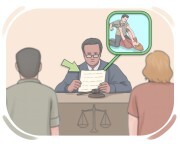
Ex: The annulment of the official document was required to correct the administrative error. 
Close
Sign in
brief
brief
[noun]

a short document stating the facts provided by one side of a case to be presented to a court or judge

Ex: The lawyer submitted a detailed brief to support her client's position. 
Close
Sign in
challenge
challenge
[noun]

the act of questioning, disputing, or demanding justification for a statement or claim

Ex: The scientist faced a challenge to her conclusions. 
Close
Sign in
to claim
to claim
[Verb]

to demand something as one's rightful possession

Ex: She claimed her inheritance after her father's passing. 
Close
Sign in
closing argument

the final speech a lawyer gives in court to summarize the case and persuade the jury
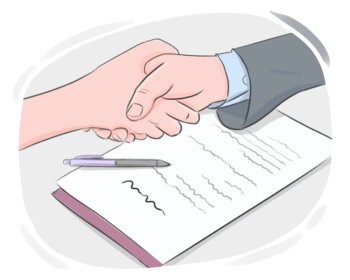
Ex: The lawyer delivered a strong closing argument. 
Close
Sign in
to contract

to enter or make an official arrangement with someone

Ex: The company contracted with a local supplier to provide raw materials for their manufacturing process. 
Close
Sign in
to vest in
to vest in
[phrase]

(of power, property, or rights) to legally belong to someone or something

Ex: The property will vest in the heir. 
Close
Sign in
to void
to void
[Verb]

to announce that something is no longer legally valid or binding

Ex: The court voided the contract due to a breach of terms by the seller. 
Close
Sign in
fine print

the small, detailed part of a contract or agreement that contains important conditions or rules

Ex: Always read the fine print before signing a contract. 
Close
Sign in
LanGeek
Download LanGeek app