
pattern

SAT Word Skills 1 - Lesson 41

Review

Flashcards

Forms

Spelling

Quiz

Start learning
SAT Word Skills 1
to impugn
to impugn
[Verb]

to question someone's honesty, quality, motive, etc.

Ex: The article impugns the motives behind the mayor's new policy, suggesting it serves his own interests more than the public's. 
Close
Sign in
intuition
intuition
[noun]

the ability to understand or know something immediately, without conscious reasoning or evidence

Ex: She had an intuition that the plan would succeed. 
Close
Sign in
intuitive
intuitive
[Adjective]

based on or derived from instinct rather than rational analysis

Ex: She had an intuitive understanding of how people felt. 
Close
Sign in
credence
credence
[noun]

belief in the truth of something

Ex: His story gained credence after the witness confirmed it. 
Close
Sign in
credible
credible
[Adjective]

able to be believed or relied on

Ex: After all the evidence was presented, her alibi seemed more credible than before. 
Close
Sign in
creditable
creditable
[Adjective]

deserving of approval or respect, though not very exceptional

Ex: While not a masterpiece, the artist's early work is still creditable and shows potential. 
Close
Sign in
credulity
credulity
[noun]

the willingness to believe or trust too readily

Ex: Despite the absurdity of the rumor, it spread quickly due to the credulity of the townsfolk. 
Close
Sign in
credulous
credulous
[Adjective]

believing things easily even without much evidence that leads to being easy to deceive

Ex: It's surprising how even educated people can be so credulous when it comes to superstitions. 
Close
Sign in
creed
creed
[noun]

a set of fundamental beliefs or guiding principles

Ex: Followers of different religious traditions often have their unique creeds that define their faith. 
Close
Sign in
terrestrial
terrestrial
[Adjective]

related to or living on land, rather than in the sea or air

Ex: The exploration team is studying both marine and terrestrial ecosystems on the island. 
Close
Sign in
territorial
territorial
[Adjective]

regarding a specific region or territory
Ex: The territorial boundaries of the national park are clearly marked on the map. 
Close
Sign in
to proliferate

to grow in amount or number rapidly

Ex: As technology improved, the number of smartphone users began to proliferate. 
Close
Sign in
prolific
prolific
[Adjective]

(of an author, artist, etc.) having a high level of productivity or creativity, especially in producing a large quantity of work or ideas

Ex: The prolific writer published several novels in a single year. 
Close
Sign in
causal
causal
[Adjective]

related to the relationship between two things in which one is the cause of the other

Ex: The experiment aims to determine whether there is a causal connection between diet and heart disease. 
Close
Sign in
caustic
caustic
[Adjective]

the ability to chemically corrode or eat away materials, typically referring to strong acids

Ex: Extreme caution must be exercised when handling caustic materials to avoid accidents and injury. 
Close
Sign in
to cauterize

to burn or seal a wound or tissue, typically to prevent infection and stop bleeding

Ex: In traditional medicine, they often cauterize wounds to prevent infection. 
Close
Sign in
to expand
to expand
[Verb]

to spread out or stretch in various directions
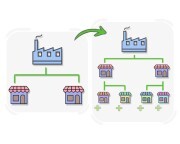
Ex: The foam mattress expanded to its full size after being removed from its packaging. 
Close
Sign in
expanse
expanse
[noun]

a vast, open area or surface

Ex: The wide expanse of the ocean seemed to go on forever. 
Close
Sign in
expansion
expansion
[noun]

an increase in the amount, size, importance, or degree of something

Ex: The expansion of the business into international markets was successful. 
Close
Sign in
LanGeek
Download LanGeek app