Total English - Starter - Unit 7 - Reference

Here you will find the vocabulary from Unit 7 - Reference in the Total English Starter coursebook, such as "puzzle", "dance", "cycling", etc.

review-disable

review

flashcard-disable

flashcard

spelling-disable

spelling

quiz-disable

quiz

start-learning
Total English - Starter
aerobics [noun]

a type of exercise that is designed to make one's lungs and heart stronger, often performed with music
Ex: After a few weeks of regular aerobics , she noticed increased stamina and energy levels .
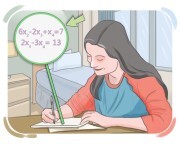
exercise [noun]

a mental or physical activity that helps keep our mind and body healthy
Ex: The doctor recommended more cardio exercise in my routine .
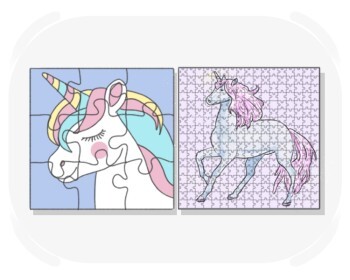
puzzle [noun]

a game that needs a lot of thinking in order to be finished or done
Ex: The mystery puzzle game presented players with a series of clues to decipher in order to uncover the solution .
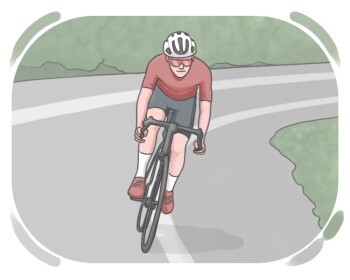
cycling [noun]

the sport or activity of riding a bicycle
Ex: The annual cycling event attracted participants from all over the country .
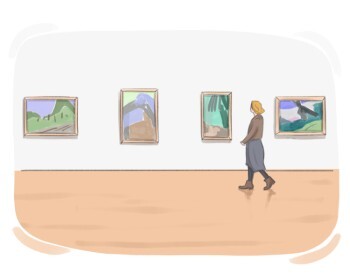
gallery [noun]

a place in which works of art are shown or sold to the public

Ex: The gallery 's latest installation focuses on contemporary issues , using art as a medium for social commentary .
chess [noun]

a strategic two-player board game where players move pieces with different abilities across a board with the objective of capturing the opponent's king
Ex: Playing chess regularly can improve cognitive skills such as problem-solving and decision-making .
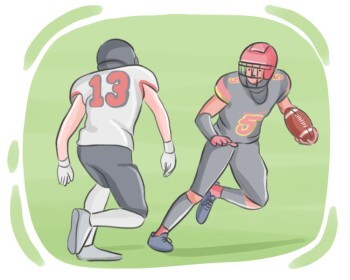
football [noun]

a sport, played by two teams of eleven players who try to score by carrying or kicking an oval ball into the other team's end zone or through their goalpost

Ex:
tennis [noun]

a sport in which two or four players use rackets to hit a small ball backward and forward over a net

Ex: She won the tennis tournament and received a trophy .
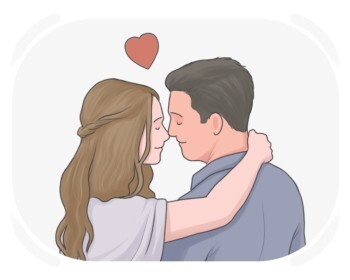
to love [verb]

to have very strong feelings for someone or something that is important to us and we like a lot and want to take care of
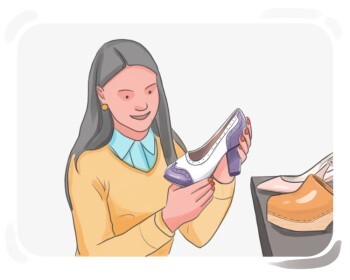
Ex: She knew he was the one she loved when he supported her through a difficult time .
to like [verb]

to feel that someone or something is good, enjoyable, or interesting
Ex: I like the idea of living in a big city .
quite [adverb]

to the highest degree

Ex: She 's quite talented in painting .
to mind [verb]

(often used in negative or question form) to be upset, offended, or bothered by something
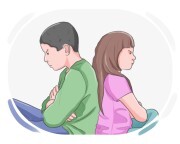
Ex: He does n't mind if people disagree with him ; he welcomes different perspectives .
to hate [verb]

to really not like something or someone
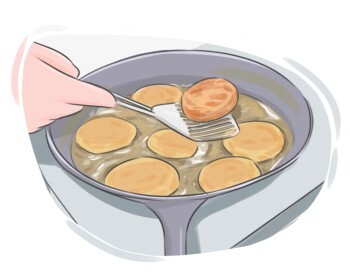
Ex: I hate spicy food because it burns my mouth .
to cook [verb]

to make food with heat

Ex: The chef cooks a delicious meal in the restaurant .
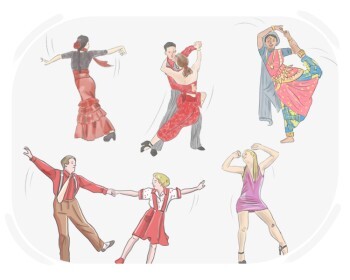
to dance [verb]

to move the body to music in a special way
Ex:
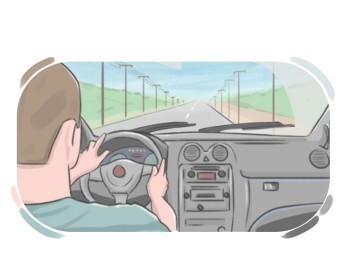
to drive [verb]

to control the movement and the speed of a car, bus, truck, etc. when it is moving
Ex: I like to drive along scenic routes to enjoy the countryside .
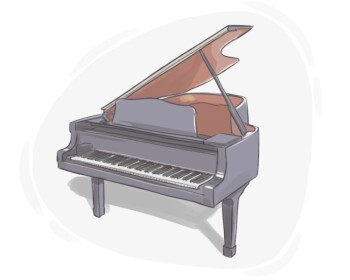
piano [noun]

a musical instrument we play by pressing the black and white keys on the keyboard

Ex: She played a soft lullaby on the piano to put the baby to sleep .
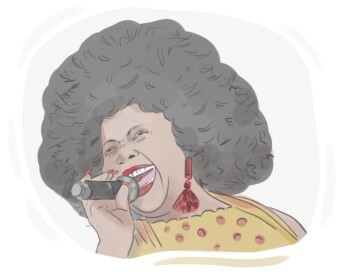
to sing [verb]

to use one's voice in order to produce musical sounds in the form of a tune or song

Ex: He sings a duet with his sister at the family gathering .
to speak [verb]

to use one's voice to express a particular feeling or thought
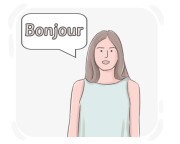
Ex: She was so nervous she could hardly speak .
French [noun]

the main language of France that is also spoken in parts of other countries such as Canada, Switzerland, Belgium, etc.

Ex: Her dream is to read Victor Hugo 's novels in the original French .
computer [noun]

an electronic device that stores and processes data

Ex: She customized the desktop wallpaper on her computer .

a set of instructions written in code that a computer follows to perform specific tasks or functions
Ex: She installed a new computer program to manage her finances .
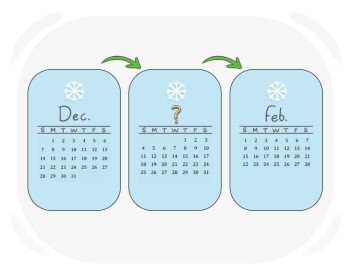
January [noun]

the first month of the year, after December and before February
Ex: The winter weather in January brings frosty mornings and cozy evenings by the fireplace , perfect for hot cocoa and warm blankets .
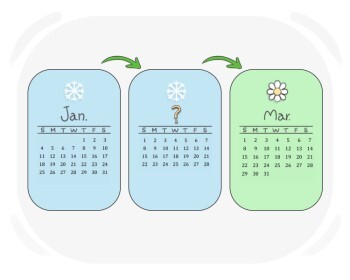
February [noun]

the second month of the year, after January and before March
Ex: In some countries , February is known as the month of love and romance .
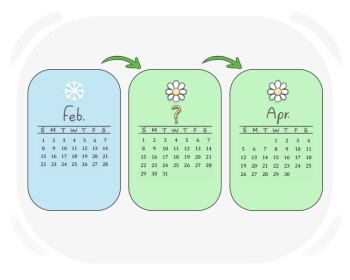
March [noun]

the third month of the year, after February and before April
Ex:
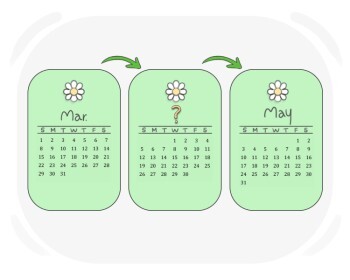
April [noun]

the fourth month of the year, after March and before May
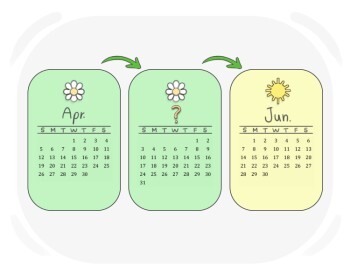
Ex: April showers bring May flowers , a saying that reflects the unpredictable weather patterns of this transitional month .
May [noun]

the fifth month of the year, after April and before June
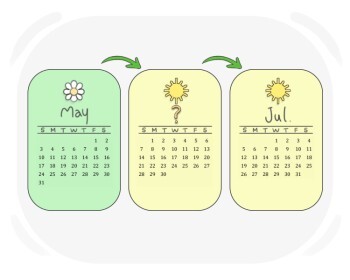
Ex:
June [noun]

the sixth month of the year, after May and before July
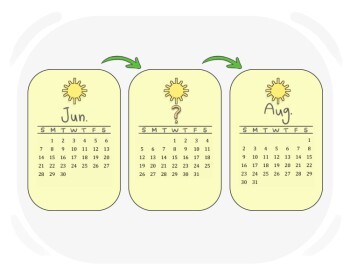
Ex: June marks the official start of summer in the Northern Hemisphere , bringing longer days , warmer temperatures , and outdoor activities like beach outings and barbecues .
July [noun]

the seventh month of the year, after June and before August
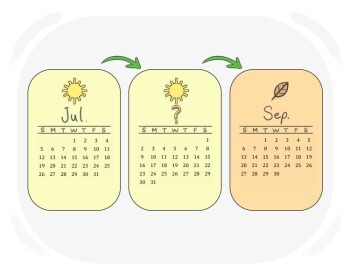
Ex: July is a peak month for summer vacations , with families traveling to beaches , resorts , national parks , and other destinations for relaxation and adventure .
August [noun]

the eighth month of the year, after July and before September
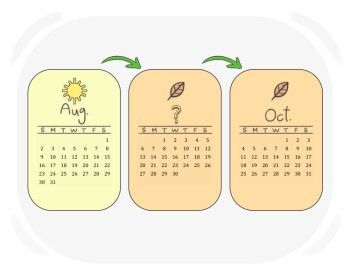
Ex:

the ninth month of the year, after August and before October
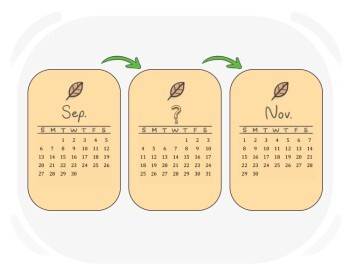
Ex: Many students return to school in September , and parents and teachers prepare for the academic year ahead , organizing classrooms , purchasing textbooks , and planning curriculum .
October [noun]

the tenth month of the year, after September and before November
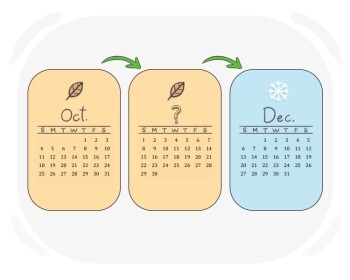
Ex: October is known for its vibrant autumn foliage , as trees across many regions turn shades of red , orange , and yellow , creating picturesque landscapes .
November [noun]

the 11th month of the year, after October and before December
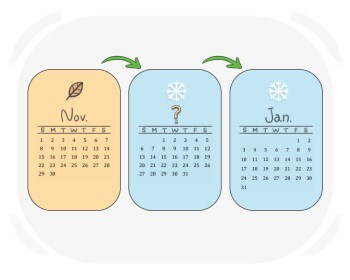
Ex: As temperatures drop , November marks the beginning of the holiday season , with many people starting to decorate their homes and prepare for festive celebrations .
December [noun]

the 12th and last month of the year, after November and before January

Ex: Some people set resolutions for the new year in December , hoping to make positive changes .
first [adjective]

(of a person) coming or acting before any other person

Ex:
second [adjective]

being number two in order or time

Ex:
third [adjective]

coming after the second in order or position

Ex: The third chapter of this book introduces a new character .
fourth [adjective]

coming or happening just after the third person or thing

Ex: In the parade , the fourth float showcased a vibrant display of colors .
fifth [adjective]

coming or happening just after the fourth person or thing

Ex: In the relay race , Sarah anchored the team during the fifth leg .
sixth [adjective]

coming or happening right after the fifth person or thing

Ex: The museum tour highlighted the artifacts from the sixth century .
seventh [adjective]

coming or happening just after the sixth person or thing

Ex: On their seventh wedding anniversary , Maria and David celebrated with a romantic dinner .
eighth [adjective]

coming or happening right after the seventh person or thing

Ex: In the school orchestra , Emma plays the violin and holds the position of the eighth chair .
ninth [adjective]

coming or happening just after the eighth person or thing

Ex:
tenth [adjective]

coming or happening right after the ninth person or thing

Ex: The museum exhibit showcased rare artifacts , including a magnificent sculpture dating back to the tenth century .
eleventh [determiner]

coming or happening right after the tenth person or thing

Ex:
twelfth [adjective]

coming or happening right after the eleventh person or thing

Ex: The twelfth chapter of the novel delves into the protagonist 's inner conflicts and struggles .
thirteenth [determiner]

coming or happening right after the twelfth person or thing

Ex:
fourteenth [determiner]

coming or happening right after the thirteenth person or thing

Ex:
fifteenth [determiner]

coming or happening right after the fourteenth person or thing

Ex:
sixteenth [determiner]

coming or happening right after the fifteenth person or thing

Ex:
seventeenth [determiner]

coming or happening right after the sixteenth person or thing

Ex:
eighteenth [determiner]

coming or happening right after the seventeenth person or thing

Ex:
nineteenth [determiner]

coming or happening right after the eighteenth person or thing

Ex:
twentieth [adjective]

coming or happening right after the nineteenth person or thing
Ex: The twentieth chapter of the textbook discusses the impact of climate change on global ecosystems .
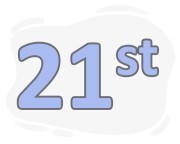
twenty-first [adjective]

coming or happening right after the twentieth person or thing

Ex: He ranked twenty-first in the competition , which was an improvement from last year ’s performance .