
pattern

SAT Word Skills 4 - Lesson 43

Review

Flashcards

Forms

Spelling

Quiz

Start learning
SAT Word Skills 4
to foment
to foment
[Verb]

to encourage or provoke something, especially trouble or conflict

Ex: His words began to foment anger in the crowd. 
Close
Sign in
fly-by-night

an unreliable person or company that is only interested in making money and is likely to avoid paying its debts back

Ex: The contractor turned out to be a fly-by-night, disappearing after receiving the advance payment. 
Close
Sign in
epic
epic
[Adjective]

very impressive in scale or scope

Ex: The construction of the Great Wall of China is considered an epic feat of engineering. 
Close
Sign in
to enumerate

to mention things individually

Ex: The professor took a moment to enumerate the key points of the lecture for the students. 
Close
Sign in
egregious
egregious
[Adjective]

bad in a noticeable and extreme way

Ex: Her egregious behavior at the party embarrassed everyone who attended. 
Close
Sign in
dike
dike
[noun]

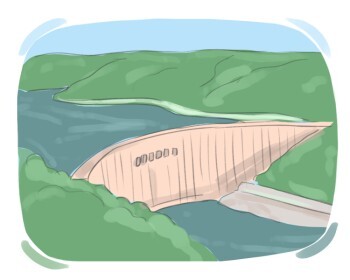
a wall built in order to stop water, especially from the sea, from entering an area

Ex: The villagers relied on the dike to protect their homes from the rising sea levels. 
Close
Sign in
darwinism
darwinism
[noun]

the theory of Charles Darwin that claims the evolution of species happens by natural selection

Ex: Darwinism explains how species adapt to their environments through natural selection over time. 
Close
Sign in
celerity
celerity
[noun]

the quality of being fast and swift in movement

Ex: The athlete’s celerity on the track earned him a gold medal. 
Close
Sign in
brevity
brevity
[noun]

the quality of being fleeting or short-lived
Ex: The brevity of the summer storm surprised everyone, as it ended almost as soon as it began. 
Close
Sign in
to belittle

to make something or someone seem less important

Ex: He often belittles his coworkers' contributions, making them feel undervalued. 
Close
Sign in
intrepid
intrepid
[Adjective]

very courageous and not afraid of situations that are dangerous

Ex: The intrepid journalist ventured into conflict zones to report the truth. 
Close
Sign in
context
context
[noun]

the surrounding discourse that provides clarity and understanding to a language unit, helping to determine its interpretation

Ex: Without context, the sentence "He went to the bank" could mean different things. 
Close
Sign in
consul
consul
[noun]

an official appointed by a government to represent that government in a foreign city

Ex: The consul is currently negotiating with local authorities to protect the citizens. 
Close
Sign in
qualm
qualm
[noun]

a feeling of doubt or uneasiness, often related to one's conscience or sense of right and wrong

Ex: She had no qualms about speaking her mind, even if her opinions were unpopular. 
Close
Sign in
pyx
pyx
[noun]

a container to keep a holy bread in a Christian ceremony

Ex: Yesterday, the pyx was carried with reverence to the altar. 
Close
Sign in
to berth
to berth
[Verb]

to stop a ship in a place where it can stay
Ex: Yesterday, the vessel was berthed at the busiest dock in the port. 
Close
Sign in
to confront

to face or deal with a problem or difficult situation directly

Ex: The manager decided to confront the team's productivity issues and implement new strategies. 
Close
Sign in
cauldron
cauldron
[noun]

a large pot, often made of metal and equipped with handles, used for boiling liquids like water or soup

Ex: The witches brewed their potions in a large cauldron over a crackling fire. 
Close
Sign in
to disrupt

to cause something to break apart or come undone

Ex: The strong winds disrupted the tree, causing it to rupture and fall. 
Close
Sign in
LanGeek
Download LanGeek app