Vocabulary for IELTS General Training (Band 5) - Adverbs of Degree

Here, you will learn some Adverbs of Degree that are necessary for the General Training IELTS exam.

review-disable

review

flashcard-disable

flashcard

spelling-disable

spelling

quiz-disable

quiz

start-learning
Vocabulary for IELTS General Training (Band 5)
quite [adverb]

to the highest degree

Ex: She 's quite talented in painting .
too [adverb]

more than is acceptable, suitable, or necessary

Ex: He was driving too fast down the highway .
enough [adverb]

to a degree or extent that is sufficient or necessary
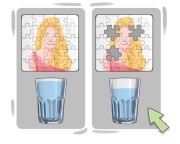
Ex: I hope you have eaten enough for lunch .
almost [adverb]

used to say that something is nearly the case but not completely

Ex: The store was almost empty , with just a few customers browsing the aisles .
nearly [adverb]

to a degree that is close to being complete
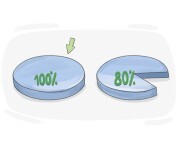
Ex: The concert tickets were nearly sold out , with only a few remaining .
absolutely [adverb]

in a total or complete way

Ex: They absolutely believed in the cause .
completely [adverb]

to the greatest amount or extent possible
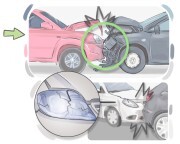
Ex: My view of the stage was completely blocked by a tall man .
seriously [adverb]

in a manner that suggests harm, damage, or threat is substantial
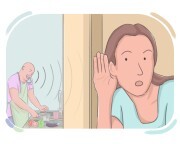
Ex: Poor maintenance can seriously weaken the structure .
truly [adverb]

used for emphasizing a specific feature or quality

Ex: I truly believe that honesty is the best policy .
hardly [adverb]

to a very small degree or extent

Ex: There 's hardly any milk left in the bottle .
rather [adverb]

to a somewhat notable, considerable, or surprising degree
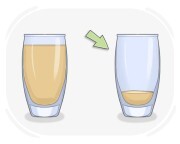
Ex: The instructions were rather unclear , causing some confusion .
little [adverb]

to a small extent or degree

Ex: She ate very little at dinner .
pretty [adverb]

to a degree that is high but not very high
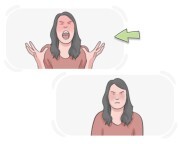
Ex: It was pretty late when they finally got home .
very [adverb]

to a great extent or degree

Ex: She was very excited to start her new job .
altogether [adverb]

used to give a general judgment, often after weighing details
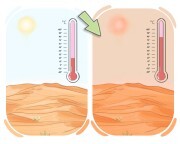
Ex: Altogether , the situation could have been much worse .
deeply [adverb]

used to express strong emotions, concerns, or intensity of feeling

Ex: He felt deeply ashamed of his actions .
much [adverb]

to a large extent or degree

Ex: He cared much about the outcome .
somewhat [adverb]

to a moderate degree or extent

Ex: She looked somewhat tired after the long trip .
so [adverb]

very much or to a great amount

Ex: My head aches so much after the long day .
totally [adverb]

in a complete and absolute way

Ex: The city was totally different from what I remembered .
entirely [adverb]

to the fullest or complete degree

Ex: The concept was entirely new to the scientific community .
fully [adverb]

to the highest extent or capacity

Ex: The terms of the contract were not fully explained .
perfectly [adverb]

used to emphasize something

Ex: I 'm perfectly capable of handling this task on my own .
highly [adverb]

in a favorable or approving manner

Ex: Her proposal is highly recommended by the board .
terribly [adverb]

used to add emphasis to a statement, apology, or description
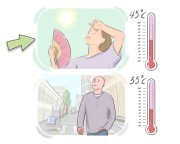
Ex: It 's terribly important that we arrive on time .
awfully [adverb]

to a very great or extreme extent or degree
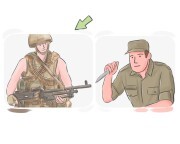
Ex: The workload for the project became awfully overwhelming .
heavily [adverb]

to a great or considerable extent

Ex: The company is heavily invested in renewable energy .
obviously [adverb]

in a way that is easily understandable or noticeable

Ex: The traffic light turned red , so obviously , we had to stop the car .
Vocabulary for IELTS General Training (Band 5)
Size and Scale Dimensions Weight and Steadiness Increase in Amount
Decrease in Amount High Intensity Low Intensity Space and Area
Shapes Speed Significance Influence and Strength
Uniqueness Complexity Value Quality
Challenges Wealth and Success Poverty and Failure Appearance
Age Body Shape Wellness Textures
Intelligence Positive Human Traits Negative Human Traits Moral Traits
Emotional Responses Emotional States Social Behaviours Tastes and Smells
Sounds Temperature Probability Relational Actions
Body Language and Gestures Postures and Positions Opinions Thoughts and Decisions
Knowledge and Information Encouragement and Discouragement Request and Suggestion Regret and Sadness
Respect and Approval Attempt and Prevention Touching and Holding Physical Actions and Reactions
Movements Commanding and Giving Permissions Engaging in Verbal Communication Understanding and Learning
Perceiving The Senses Resting and Relaxing Eating and Drinking Changing and Forming
Creating and Producing Organising and Collecting Preparing Food Hobbies and Routines
Shopping Finance and Currency Office Life Specialised Careers
Manual Labour Careers Service and Support Careers Creative and Artistic Careers House
Human Body Health Sports Sports Competitions
Transportation Society and Social Events City Parts Friendship and Enmity
Romantic Relationships Positive Emotions Negative Emotions Family
Animals Weather Food and Drinks Travel and Tourism
Pollution Migration Disasters Materials
Adverbs of Manner Adverbs of Comment Adverbs of Certainty Adverbs of Frequency
Adverbs of Time Adverbs of Place Adverbs of Degree Adverbs of Emphasis
Adverbs of Purpose and Intention Conjunctive Adverbs