
Vocabulaire Essentiel pour le GRE - La Décision
Ici, vous apprendrez quelques mots anglais sur la décision, tels que "se chamailler", "se conformer", "affirmation", etc. qui sont nécessaires pour l'examen GRE.
Réviser
Flashcards
formes
Orthographe
Quiz


a situation in which all those involved are in complete agreement on something

unanimité
Il est rare de trouver une telle unanimité parmi des groupes de personnes divers sur une seule question.
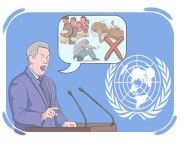
to publicly recommend or encourage a particular action, approach, or way of doing something
préconiser, recommander, prôner
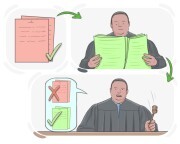
to prove something or someone wrong or false through evidence or argumentation
réfuter
Ils ont réfuté la théorie du complot avec des preuves crédibles.
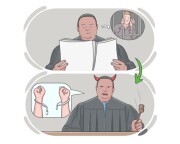
to influence someone or something unfairly in favor of or against a particular view or outcome
influencer
a noisy dispute
altercation, dispute
Une altercation animée s'est produite lors de la réunion municipale.
something that one perceives to be true, even though it remains to be proved, especially at the beginning of an argument
présupposition
Son argument était basé sur la présupposition que tous les électeurs sont bien informés.
to agree with or correspond to something
s'accorder avec, concorder avec
Ses actions n'étaient pas en accord avec ses promesses pendant la campagne.
a subject over which people disagree
pomme de discorde, sujet de désaccord
La place de parking reste une pomme de discorde entre les voisins.

a person that one is opposed to and fights or competes with
adversaire
Bien qu'ils aient été de féroces adversaires sur le terrain, en dehors du terrain, ils étaient de bons amis.

to argue over unimportant things in an ongoing and repetitive way
se chamailler, se disputer
Malgré leur forte amitié, les amis se chamaillaient parfois pour des questions insignifiantes, comme choisir un film.
a set of facts or information that can be used to win an argument against someone or to criticize them
armes
L'enquête du journaliste lui a donné beaucoup de munitions pour contester la version officielle.
the state of being in agreement
accord
Les scientifiques étaient en accord avec la théorie présentée par l'expert principal dans le domaine.
official approval or agreement
approbation
Après un examen attentif, le comité a accordé son approbation au budget proposé, reconnaissant sa solide planification financière et l'allocation des ressources.
to behave or think according to the accepted customs, expectations, or behavior of a group
se conformer

to agree to something, such as a suggestion, request, etc.
consentir, donner son consentement
Dans un processus démocratique, les citoyens expriment leur vote pour approuver ou rejeter la législation proposée.
a confident and forceful statement of fact or belief
affirmation, assertion
an open declaration or affirmation of one’s opinions
declaration
Elle a fait une déclaration audacieuse de son engagement envers les causes environnementales.
the act of adhering to established norms, protocols, and standardized behaviors within a social system or institution
conformité
Sa conformité aux procédures de bureau a fait de lui un employé fiable.
a state of heated disagreement, often coming from different viewpoints or interests
dispute, démêlé, conflit, discorde
Leur controverse sur le budget a conduit à plusieurs réunions animées.
a situation in which the parties involved do not compromise and therefore are unable to reach an agreement
impasse, blocage
Malgré des heures de débat, le comité a atteint un impasse concernant les changements proposés à la politique.

to disagree with someone or to hold different opinions, viewpoints, or beliefs
ne pas être d’accord
a difference of opinion, especially from commonly accepted beliefs
désaccord, différence d'opinion
Son dissentiment discret est passé inaperçu lors du débat animé.
someone who declares opposition to the government of one's country, knowing there is punishment for doing so
dissident, dissidente
Dans les régimes autoritaires, les dissidents doivent souvent opérer dans la clandestinité ou en exil pour éviter d'être arrêtés pour leurs activités dissidentes.
(of views, opinions, etc.) to be different from each other
diverger
Avec le temps, les positions des partis politiques ont commencé à diverger, conduisant à une polarisation accrue.
a belief or a belief system held by an authority who proclaims it to be undeniably true and expects immediate acceptance
dogme
Elle a remis en question le dogme de l'organisation, cherchant des preuves plutôt qu'une acceptation aveugle.
a projection about future events or hypothetical situations, drawn from known data, observations, or experience
extrapolation
Sur la base des tendances actuelles, l'extrapolation indique une pénurie de logements.
a heated argument that lasts for a long time
querelle
Leur querelle a commencé il y a des années à cause d'un désaccord commercial.
a division between a group of people caused by their disagreement over beliefs or views
schisme
Les schismes historiques remodelent souvent les sociétés et conduisent à des changements culturels significatifs.
any opinion or belief that conflicts with the official or widely accepted position
hérésie, hétérodoxie
Contester le consensus scientifique dominant peut être considéré comme une hérésie.
to give a particular fact or condition as an excuse or justification
invoquer, prétexter
not likely to offend people or cause disagreement or tension
anodin
Ses remarques anodines lors de la réunion n'ont pas permis d'aborder les problèmes fondamentaux.
(of statements, beliefs, facts, etc.) incompatible or opposed to one another, even if not strictly illogical
contradictoire
Ses émotions semblaient contradictoires—riant une minute et pleurant la suivante.
expressing one's feelings in a dramatic and forceful way
déclamatoire
Pendant le débat, le débatteur a utilisé des gestes déclamatoires et des arguments puissants pour affirmer son point de vue.
true and therefore impossible to be denied or disagreed with
incontestable
Son talent en tant que pianiste est incontestable, car elle a remporté de nombreux prix.
referring to the method of argumentation or discourse that involves the exchange of opposing ideas or viewpoints in order to reach a deeper understanding or resolution
dialectique
La méthode dialectique de Hegel postule que le progrès se produit à travers le choc et la synthèse d'idées conflictuelles.
very eager to persuade people to accept one's views or opinions
fanatique
Son enthousiasme évangélique pour la forme physique l'a conduite à créer un blog sur la santé.
ready toward a course of action
enclin à
James ne semblait pas disposé à saisir l'allusion.
involving rational arguments to support or oppose an opinion, usually the opposite of others'
polémique
Son discours polémique a remis en question les opinions dominantes sur la politique économique.

expressing feelings or opinions, loudly and forcefully
bruyant, virulent
Les journalistes ont décrit les rassemblements comme des manifestations bruyantes où la foule a scandé des slogans avec vigueur pendant des heures.
to provide evidence or reasons that support an argument, claim, opinion, or theory
soutenir, supporter

to have no respect for someone or something because one thinks they are stupid or undeserving
mépriser
Il méprise les individus qui répandent de fausses informations et de la désinformation.
