pattern

Essential Vocabulary for the GRE - Beliefs & World Views

Here you will learn some English words about decision, such as "bicker", "conform", "assertion", etc. that are needed for the GRE exam.

Review

Flashcards

Forms

Spelling

Quiz

Start learning
Essential Words Needed for the GRE
unanimity
unanimity
[noun]

a situation in which all those involved are in complete agreement on something
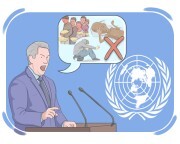
Ex: The unanimity of the jury surprised many, given the complexity of the case. 
Close
Sign in
to advocate

to publicly support or recommend something

Ex: The environmentalist passionately advocates for sustainable living practices. 
Close
Sign in
to confute

to prove something or someone wrong or false through evidence or argumentation
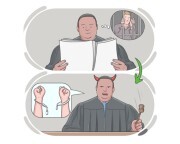
Ex: The scientist confuted the flawed hypothesis with rigorous experimentation. 
Close
Sign in
to bias
to bias
[Verb]

to unfairly influence or manipulate something or someone in favor of one particular opinion or point of view

Ex: She biased the hiring process by favoring candidates from her alma mater. 
Close
Sign in
altercation

a noisy dispute

Ex: The altercation in the restaurant drew the attention of every diner. 
Close
Sign in
presupposition

something that one perceives to be true, even though it remains to be proved, especially at the beginning of an argument

Ex: The debate began with the presupposition that economic growth leads to job creation. 
Close
Sign in
to accord with

to agree with or correspond to something

Ex: Her views on environmental policy accord with the organization's mission statement. 
Close
Sign in
bone of contention

a subject over which people disagree

Ex: The allocation of funds became the bone of contention during the budget meeting, leading to heated debates among department heads. 
Close
Sign in
adversary
adversary
[noun]

a person that one is opposed to and fights or competes with
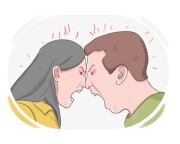
Ex: In the final round of the chess tournament, he faced his toughest adversary yet. 
Close
Sign in
to bicker
to bicker
[Verb]

to argue over unimportant things in an ongoing and repetitive way

Ex: The siblings continued to bicker over who got to use the TV remote, each insisting on their preferred channel. 
Close
Sign in
ammunition

a set of facts or information that can be used to win an argument against someone or to criticize them

Ex: The lawyer gathered substantial ammunition to strengthen her case in court. 
Close
Sign in
concurrence

the state of being in agreement

Ex: The committee members all concurred on the need for stricter safety regulations. 
Close
Sign in
approbation

official approval or agreement

Ex: The proposed policy changes received official approbation from the board of directors. 
Close
Sign in
to conform

to adjust oneself in order to align with new or different circumstances or expectations

Ex: She felt pressured to conform to the fashion trends of her peers. 
Close
Sign in
to assent
to assent
[Verb]

to agree to something, such as a suggestion, request, etc.

Ex: During the meeting, members of the committee were asked to assent to the proposed changes in the project plan. 
Close
Sign in
assertion
assertion
[noun]

a confident and forceful statement of fact or belief

Ex: Her assertion that the project would succeed was based on thorough research. 
Close
Sign in
avowal
avowal
[noun]

an open declaration or affirmation of one’s opinions

Ex: His avowal of support for the new policy was met with applause. 
Close
Sign in
conformity

the act of adhering to established norms, protocols, and standardized behaviors within a social system or institution

Ex: The company values conformity to its strict dress code. 
Close
Sign in
contention

a state of heated disagreement, often coming from different viewpoints or interests

Ex: The new policy caused contention among the board members. 
Close
Sign in
deadlock
deadlock
[noun]

a situation in which the parties involved do not compromise and therefore are unable to reach an agreement

Ex: The peace talks ended in a deadlock with neither side willing to budge on their demands. 
Close
Sign in
to differ
to differ
[Verb]

to disagree with someone or to hold different opinions, viewpoints, or beliefs

Ex: They differed on the best approach to solving the problem. 
Close
Sign in
dissent
dissent
[noun]

a difference of opinion, especially from commonly accepted beliefs

Ex: There was open dissent among the committee members over the proposal. 
Close
Sign in
dissident
dissident
[noun]

someone who declares opposition to the government of one's country, knowing there is punishment for doing so

Ex: Andrei Sakharov was a prominent Soviet physicist who became a dissident due to his campaigns for political and civil rights. 
Close
Sign in
to diverge

(of views, opinions, etc.) to be different from each other

Ex: During the debate, the candidates' views began to diverge on key economic policies. 
Close
Sign in
dogma
dogma
[noun]

a belief or a belief system held by an authority who proclaims it to be undeniably true and expects immediate acceptance

Ex: The church's dogma was strictly enforced, leaving no room for dissenting opinions. 
Close
Sign in
extrapolation

a projection about future events or hypothetical situations, drawn from known data, observations, or experience

Ex: His extrapolation suggested the policy would backfire. 
Close
Sign in
feud
feud
[noun]

a heated argument that lasts for a long time

Ex: The celebrities' public feud drew media attention for months. 
Close
Sign in
schism
schism
[noun]

a division between a group of people caused by their disagreement over beliefs or views

Ex: A schism in the political party caused a split in leadership and policy. 
Close
Sign in
heresy
heresy
[noun]

any opinion or belief that conflicts with the official or widely accepted position

Ex: Advocating for radical economic reforms was treated as heresy in the conservative party. 
Close
Sign in
to plead
to plead
[Verb]

to state something as an excuse

Ex: The defense lawyer pleaded self-defense, arguing that the defendant acted to protect himself from imminent harm. 
Close
Sign in
anodyne
anodyne
[Adjective]

not likely to offend people or cause disagreement or tension

Ex: The film’s anodyne humor appealed to a broad audience. 
Close
Sign in
contradictory
contradictory
[Adjective]

(of statements, beliefs, facts, etc.) incompatible or opposed to one another, even if not strictly illogical

Ex: The two theories were contradictory, each offering a different explanation for the same phenomenon. 
Close
Sign in
declamatory
declamatory
[Adjective]

expressing one's feelings in a dramatic and forceful way

Ex: In her declamatory poem, she expressed her innermost thoughts and desires with grandeur and intensity. 
Close
Sign in
incontestable
incontestable
[Adjective]

true and therefore impossible to be denied or disagreed with

Ex: The evidence provided was incontestable and proved the defendant's guilt. 
Close
Sign in
dialectical
dialectical
[Adjective]

referring to the method of argumentation or discourse that involves the exchange of opposing ideas or viewpoints in order to reach a deeper understanding or resolution

Ex: The dialectical approach to reasoning involves engaging with opposing arguments to uncover underlying truths. 
Close
Sign in
evangelical
evangelical
[Adjective]

very eager to persuade people to accept one's views or opinions

Ex: The speaker was highly evangelical about the benefits of renewable energy. 
Close
Sign in
disposed
disposed
[Adjective]

ready toward a course of action

Ex: She was disposed to accept the offer after hearing the full explanation. 
Close
Sign in
polemic
polemic
[Adjective]

involving rational arguments to support or oppose an opinion, usually the opposite of others'
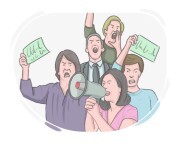
Ex: The writer's polemic article sparked heated debates among readers. 
Close
Sign in
vociferous
vociferous
[Adjective]

expressing feelings or opinions, loudly and forcefully

Ex: The opposition party voiced vociferous complaints about the new tax policy during the legislative session. 
Close
Sign in
to sustain

to support an opinion, argument, theory, etc. or to prove it's credibility

Ex: She presented evidence to sustain her argument during the debate. 
Close
Sign in
to scorn
to scorn
[Verb]

to have no respect for someone or something because one thinks they are stupid or undeserving

Ex: She scorns those who prioritize material wealth over kindness and compassion. 
Close
Sign in
LanGeek
Download LanGeek app