pattern

Liste de Mots Niveau B2 - Exprimons-Nous !

Ici, vous apprendrez quelques mots anglais sur l'évaluation et le discours, tels que "figure", "justify", "object", etc., préparés pour les apprenants de niveau B2.

Réviser

Flashcards

formes

Orthographe

Quiz

Commencer à apprendre
CEFR B2 Vocabulary
to figure
to figure
[verbe]

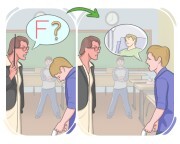
to form an opinion or assumption about something based on available information or logic

penser que, supposer que
penser que, supposer que

Ex: He figures that the project will be completed by next month. 

Il estime que le projet sera terminé d'ici le mois prochain.

to justify
to justify
[verbe]

to provide a valid reason or explanation for an action, decision, or belief, usually something that others consider wrong

justifier

justifier

Ex: In his research paper, the author worked to justify his conclusions by presenting strong evidence and logical reasoning. 

Dans son article de recherche, l'auteur a travaillé à justifier ses conclusions en présentant des preuves solides et un raisonnement logique.

in the first place

used to explain the main reason or starting point of a situation

en premier lieu, tout d'abord

en premier lieu, tout d'abord

Ex: Why hire him?  In the first place, he's unqualified, and in the second, he's unreliable. 

Pourquoi l'embaucher ? En premier lieu, il n'est pas qualifié, et en second lieu, il n'est pas fiable.

to object
to object
[verbe]

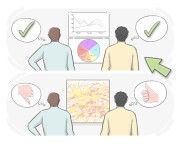
to give a fact or an opinion as a reason against something

émettre une objection
émettre une objection

Ex: The lawyer objected that the witness's statement was irrelevant to the case. 

L'avocat a objecté que la déclaration du témoin n'était pas pertinente pour l'affaire.

objective
objective
[Adjectif]

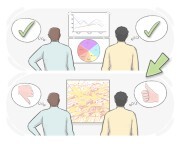
based only on facts and not influenced by personal feelings or judgments

objectif
objectif

Ex: In scientific research, it's essential to maintain an objective perspective to draw accurate conclusions. 

Dans la recherche scientifique, il est essentiel de maintenir une perspective objective pour tirer des conclusions précises.

subjective
subjective
[Adjectif]

based on or influenced by personal feelings or opinions rather than facts

subjectif, personnel

subjectif, personnel

Ex: The decision to hire the candidate was subjective, as each interviewer had their own criteria. 

La décision d'embaucher le candidat était subjective, car chaque intervieweur avait ses propres critères.

to maintain

to firmly and persistently express an opinion, belief, or statement as true and valid

soutenir

soutenir

Ex: Despite the controversy, the author maintains that the historical facts in the book are accurate. 

Malgré la controverse, l'auteur soutient que les faits historiques dans le livre sont exacts.

may
may
[verbe]

used to admit that a statement is true before making another one

pouvoir

pouvoir

Ex: He may have a point, but that does not change the overall situation. 

Il a peut-être raison, mais cela ne change pas la situation globale.

to name
to name
[verbe]

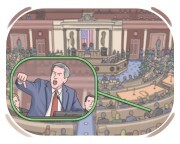
to state the name of someone or something

nommer
nommer

Ex: The teacher named the top performers in the class and praised their achievements. 

L'enseignant a nommé les meilleurs performeurs de la classe et a loué leurs réalisations.

to oppose
to oppose
[verbe]

to strongly disagree with a policy, plan, idea, etc. and try to prevent or change it

s’opposer à

s’opposer à

Ex: She opposed the new regulations, arguing that they were too restrictive for small businesses. 

Elle s'est opposée aux nouvelles réglementations, arguant qu'elles étaient trop restrictives pour les petites entreprises.

opposed
opposed
[Adjectif]

trying to stop something because one strongly disagrees with it

opposé à

opposé à

Ex: The political party was opposed to the proposed tax increase, arguing that it would burden low-income families. 

Le parti politique était opposé à l'augmentation d'impôt proposée, arguant qu'elle pèserait sur les familles à faible revenu.
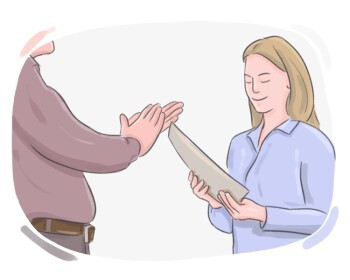
to praise
to praise
[verbe]

to express admiration or approval toward something or someone

louer, faire l'éloge

louer, faire l'éloge

Ex: Parents often praise their children for demonstrating kindness and good behavior. 

Les parents louent souvent leurs enfants pour avoir fait preuve de gentillesse et de bon comportement.

to reckon
to reckon
[verbe]

to think or have an opinion about something

penser

penser

Ex: She reckoned it was best to consult an expert before making a decision. 

Elle pensait qu'il était préférable de consulter un expert avant de prendre une décision.

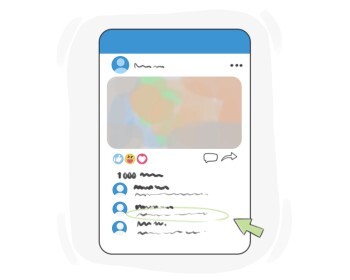
to regard
to regard
[verbe]

to think about someone or something in a specified way

considérer
considérer

Ex: The teacher regards hard work and dedication as essential factors for success. 

Le professeur considère le travail acharné et le dévouement comme des facteurs essentiels pour réussir.

to remark
to remark
[verbe]

to express one's opinion through a statement

faire remarquer

faire remarquer

Ex: During the presentation, the audience was encouraged to remark on the key points by writing down their thoughts. 

Pendant la présentation, le public a été encouragé à remarquer les points clés en écrivant leurs réflexions.

to speculate

to form a theory or opinion about a subject without knowing all the facts

spéculer

spéculer

Ex: Without clear details, they could only speculate about the cause of the sudden power outage. 

Sans détails clairs, ils ne pouvaient que spéculer sur la cause de la panne de courant soudaine.
speculation

the creation of theories or opinions about something with no fact or proof

spéculation, conjecture

spéculation, conjecture

Ex: Her speculation about the company's merger proved to be accurate. 

Sa spéculation concernant la fusion de l'entreprise s'est avérée exacte.

stance
stance
[nom]

a considered or deliberate mental or emotional attitude toward something

position, point de vue

position, point de vue

Ex: He maintained a neutral stance during the debate. 

Il a maintenu une position neutre pendant le débat.

to stand
to stand
[verbe]

to have a certain opinion regarding an issue

se tenir, être
se tenir, être

Ex: Despite the differing perspectives, she continues to stand for environmental conservation. 

Malgré les perspectives divergentes, elle continue de défendre la conservation de l'environnement.

to sum up
to sum up
[verbe]

to express a brief conclusion or judgment about someone or something based on available information

résumer, récapituler

résumer, récapituler

Ex: The interview allowed me to sum him up as knowledgeable and thoughtful. 

L'entretien m'a permis de le résumer comme étant compétent et réfléchi.

misunderstanding

the act of interpreting something incorrectly

malentendu, incompréhension

malentendu, incompréhension

Ex: He apologized for the misunderstanding in his instructions. 

Il s'est excusé pour le malentendu dans ses instructions.

perception

the image or idea that is formed based on how one understands something

perception

perception

Ex: The company's perception among customers improved with their new marketing strategy. 

La perception de l'entreprise parmi les clients s'est améliorée avec leur nouvelle stratégie marketing.

position

an opinion or stance held in opposition to another in a dispute or argument

position, opinion

position, opinion

Ex: She expressed her position during the debate. 

Elle a exprimé sa position lors du débat.

proof
proof
[nom]

the act or process of testing or verifying the truth of something through evidence or argument

preuve

preuve

Ex: The experiment served as proof of the hypothesis. 

L'expérience a servi de preuve de l'hypothèse.

public opinion

the collective attitudes, beliefs, and views held by the general population on various issues, events, or individuals

opinion publique

opinion publique

Ex: Public opinion on climate change has shifted significantly over the past decade, with more people recognizing its urgency. 

L'opinion publique sur le changement climatique a considérablement évolué au cours de la dernière décennie, avec davantage de personnes reconnaissant son urgence.

reason
reason
[nom]

the mind's power to understand or think logically

raisonnement, logique

raisonnement, logique

Ex: The philosopher emphasized the importance of reason in ethical discussions. 

Le philosophe a souligné l'importance de la raison dans les discussions éthiques.

remark
remark
[nom]

something that is said that shows one's opinion of something

remarque, commentaire

remarque, commentaire

Ex: His casual remark sparked a lively debate among the group. 

Sa remarque anodine a suscité un débat animé au sein du groupe.

reputation

the general opinion that the public has about someone or something because of what they did in the past

réputation

réputation

Ex: Her reputation as a reliable and diligent employee earned her a promotion. 

Sa réputation d'employée fiable et diligente lui a valu une promotion.

right
right
[Interjection]

used to show one's agreement

tout à fait, exactement 

tout à fait, exactement 

Ex: "This approach seems effective."  "Right, I agree with that." 

« Cette approche semble efficace. » « D'accord, je suis d'accord avec ça. »

side
side
[nom]

one of the people or groups involved in an argument, contest, etc.

côté

côté

Ex: The negotiation involved representatives from both sides reaching a compromise. 

La négociation a impliqué des représentants des deux côtés parvenant à un compromis.

while
while
[Conjonction]

used to indicate contrast

même si, bien que

même si, bien que

Ex: He is very outgoing and sociable, while his wife is more reserved and introverted. 

Il est très extraverti et sociable, tandis que sa femme est plus réservée et introvertie.

to sign
to sign
[verbe]

to use sign language for communication

signer, utiliser la langue des signes
signer, utiliser la langue des signes

Ex: He signs with remarkable speed, making communication swift and efficient. 

Il signe avec une rapidité remarquable, rendant la communication rapide et efficace.

in opposition to {sb/sth}

used to convay that one is strongly against someone or something

s'opposer à

s'opposer à

Ex: She stood in opposition to the bully, defending her friend. 

Elle s'est opposée à l'intimidateur, défendant son amie.

likewise
likewise
[Interjection]

used to show one feels the same as another person about a particular thing or is willing to do the same thing they do

De même !, Pareillement !

De même !, Pareillement !

Ex: Likewise, I appreciate your assistance. 

De même, j'apprécie votre aide.

judgment

an opinion that is formed after thinking carefully

jugement

jugement

Ex: The teacher's judgment on the students' performance was based on several criteria. 

Le jugement de l'enseignant sur la performance des élèves était basé sur plusieurs critères.

LanGeek
Télécharger l'application LanGeek