

言語行動の動詞 - 説明のための動詞

ここでは、「明確にする」、「定義する」、「詳しく説明する」などの説明を指すいくつかの英語の動詞を学びます。

review-disable

レビュー

flashcard-disable

フラッシュカード

spelling-disable

綴り

quiz-disable

クイズ

学習を開始
言語行動の動詞
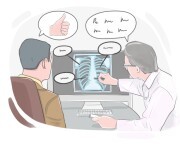
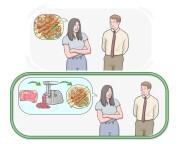
to explain [動詞]
اجرا کردن

説明する

Ex: He explained the plot of the movie to his friend who had n't seen it .

彼は映画を見ていなかった友人にそのプロットを説明した

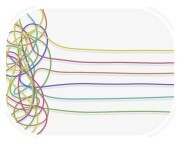
to clarify [動詞]
اجرا کردن

明確にする

Ex: The professor clarified the complex concept by giving real-life examples .

教授は、実生活の例を挙げて複雑な概念を明確にしました

to clear up [動詞]
اجرا کردن

明確にする

Ex: The professor took the time to clear up any misunderstandings about the assignment during office hours .

教授は、オフィスアワー中に課題に関する誤解を解消するために時間を割きました。

اجرا کردن

明確に説明する

Ex: She spelled the instructions out for the team, providing step-by-step details on how to complete the task.

彼女はチームのために指示を明確に説明し、タスクを完了する方法について段階的な詳細を提供しました。

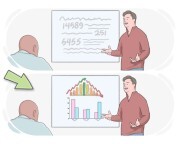
to simplify [動詞]
اجرا کردن

簡素化する

Ex: The teacher simplified the math problem to help the students grasp the concept .

教師は生徒が概念を理解するのを助けるために数学の問題を簡略化しました。

to define [動詞]
اجرا کردن

定義する

Ex: The teacher regularly defines unfamiliar words for the students in the class .

教師はクラスの生徒のために定期的に知らない単語を定義します。

اجرا کردن

詳しく説明する

Ex: The author elaborated on the historical context to provide readers with a deeper understanding of the events .

著者は、出来事について読者に深い理解を提供するために歴史的な文脈について詳しく説明しました

اجرا کردن

拡張する

Ex: Can you please expand on your proposal so that we have a clearer understanding of your ideas ?

あなたの提案について詳しく説明していただけますか?そうすれば、あなたのアイデアをより明確に理解できます。

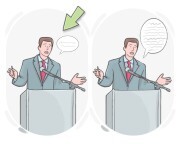
اجرا کردن

要約する

Ex: After reading the lengthy report , she asked her colleague to summarize the main findings for her .

長いレポートを読んだ後、彼女は同僚に主な発見を要約するように頼んだ。

to sum up [動詞]
اجرا کردن

要約する

Ex: To save time, the presenter decided to sum the discussion up quickly.

時間を節約するために、プレゼンターは議論を素早く要約することに決めました。

to outline [動詞]
اجرا کردن

概要を説明する

Ex: Before writing the essay , the student outlined the main ideas to organize the structure .

エッセイを書く前に、学生は構造を整理するために主要なアイデアを概説しました。

اجرا کردن

言い換える

Ex: The student paraphrased the paragraph to demonstrate a clear understanding of the concept .

学生は概念を明確に理解していることを示すために、段落を言い換えました。

اجرا کردن

要約する

Ex: In her final remarks , the speaker encapsulated the key themes of the conference .

彼女の最後のコメントで、スピーカーは会議の主要なテーマを要約しました

to recap [動詞]
اجرا کردن

要約する

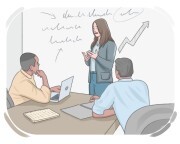
Ex: At the end of the meeting , the manager recapped the main decisions and action items .

会議の終わりに、マネージャーは主要な決定事項とアクション項目をまとめました

to specify [動詞]
اجرا کردن

指定する、明記する

Ex: In the meeting agenda , please specify the topics you 'd like to discuss .

会議の議題で、議論したいトピックを指定してください。

to depict [動詞]
اجرا کردن

描写する

Ex: The artist ’s work often depicts scenes from daily life in a vibrant style .

そのアーティストの作品は、しばしば日常生活の情景を活気あるスタイルで描き出します

to portray [動詞]
اجرا کردن

描写する

Ex: The author portrays the protagonist as a courageous and determined individual .

著者は主人公を勇敢で決意に満ちた人物として描いている

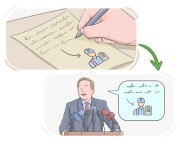
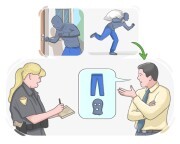
to describe [動詞]
اجرا کردن

描写する

Ex: He used metaphors to describe the power of nature in his poem .

彼は詩の中で自然の力を描写するために比喩を使った。

to profile [動詞]
اجرا کردن

プロファイルを作成する

Ex: The magazine decided to profile the successful entrepreneur , delving into his journey and achievements .

雑誌は、成功した起業家のプロファイルを決定し、彼の旅と業績を掘り下げました。

اجرا کردن

示す

Ex: The biologist demonstrated the process of photosynthesis using a leaf and a light source .

生物学者は、葉と光源を使って光合成の過程を実演しました。

to detail [動詞]
اجرا کردن

詳細に説明する

Ex: In the report , the researcher detailed the methodology used in the experiment , ensuring transparency and reproducibility .

報告書の中で、研究者は実験で使用された方法論を詳細に説明し、透明性と再現性を確保した。

اجرا کردن

特徴づける

Ex: The historian characterized the Renaissance period as a time of cultural rebirth and artistic innovation .

歴史家はルネサンス期を文化的な再生と芸術的革新の時代として特徴づけました