
Słownictwo do IELTS Academic (Wynik 6-7) - Geologia
Tutaj nauczysz się niektórych angielskich słów związanych z geologią, które są niezbędne do akademickiego egzaminu IELTS.
Przegląd
Fiszki
Pisownia
Test


the outermost layer of the Earth, consisting of solid rock and divided into the continental crust and the oceanic crust

skorupa, skorupa ziemska
Skorupa to najbardziej zewnętrzna warstwa struktury Ziemi i podlega dynamicznym procesom geologicznym przez długie okresy.
particles of solid material that settle at the bottom of a liquid
osad, sedyment

the gradual wearing away and removal of soil, rock, or other surface material by natural forces such as water, wind, or ice
erozja, erozja gleby
the scientific study of minerals, their composition, properties, and classification, often involving the analysis of crystal structures and the identification of various mineral species
mineralogia, badanie minerałów
Mikroskopy są powszechnie stosowane w mineralogii do badania mikroskopowych cech minerałów.
the branch of geology that focuses on the study of rocks, their classification, composition, origin, and the processes involved in their formation
petrologia, badanie skał
Badanie petrologii ma kluczowe znaczenie dla zrozumienia historii geologicznej i ewolucji skorupy ziemskiej.
the scientific study of landforms, their origin, development, and classification, often examining the processes that shape the Earth's surface, such as erosion, deposition, and tectonic activity
geomorfologia, naukowe badanie form terenu
Geomorfologia wybrzeża bada dynamiczne zmiany w formach terenu wybrzeża spowodowane procesami takimi jak erozja i osadzanie.
a tapering, icicle-like mineral formation hanging from the roof of a cave or underground structure, typically composed of calcium carbonate deposited by dripping water containing dissolved minerals
stalaktyt, zwisająca formacja mineralna
Speleolodzy badają stalaktyty, aby zrozumieć procesy geologiczne kształtujące środowiska podziemne.
a cone-shaped mineral formation rising from the floor of a cave or underground structure, formed by the deposition of minerals from dripping water containing dissolved substances
stalagmit, mineralna formacja stożkowa
Geolodzy badają stalagmity, aby uzyskać wgląd w historię geologiczną i warunki środowisk podziemnych.
a vast and longest subdivision of geological time
eon, era geologiczna
Eony zapewniają ramy do omawiania głównych kamieni milowych geologicznych i biologicznych w historii Ziemi.
a supercontinent that existed during the late Paleozoic and early Mesozoic eras, comprising most of Earth's landmasses fused together before breaking apart into the continents we recognize today
Pangea, Pangaea
Rozpad Pangei rozpoczął się około 175 milionów lat temu podczas ery mezozoicznej.
an ancient supercontinent that included South America, Africa, Antarctica, Australia, the Indian subcontinent, and the Arabian Peninsula
Gondwana, superkontynent Gondwana
Antarktyda, niegdyś część Gondwany, miała bardziej umiarkowany klimat, zanim dryfowała do swojej obecnej pozycji polarnej.
a hypothetical ancient supercontinent that existed from the late Precambrian to the Jurassic period, comprising the landmasses of present-day North America, Europe, Asia, and parts of Antarctica, before it began to break apart
Laurasia była hipotetycznym starożytnym superkontynentem, który istniał od późnego prekambru do okresu jurajskiego
Laurasia i Gondwana były dwoma głównymi superkontynentami, które ostatecznie dały początek obecnym kontynentom.
the total amount of water on Earth, including oceans, seas, lakes, rivers, groundwater, and atmospheric water vapor
hydrosfera, sfera wodna
Hydrosfera odgrywa kluczową rolę w regulowaniu klimatu Ziemi poprzez procesy takie jak parowanie i opady.
a principle in geology stating that in a sequence of undisturbed sedimentary rock layers, the youngest rocks are at the top, and the oldest rocks are at the bottom, helping determine the relative ages of geological formations
superpozycja, zasada superpozycji
Koncepcja superpozycji jest fundamentalna dla konstruowania geologicznych osi czasu i zrozumienia historii Ziemi.
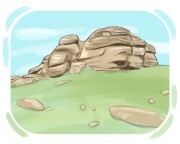
a visible exposure of rock or geological strata at the Earth's surface, often occurring on hillsides, cliffs, or other elevated areas, providing insight into the underlying geological structure
odsłonięcie, odsłonięcie skalne
Projekt budowlany został tymczasowo wstrzymany, gdy inżynierowie badali odkrywkę, aby zapewnić stabilne warunki gruntowe.
solid rock beneath surface materials, forming the Earth's crust foundation
skała macierzysta, podłoże skalne
Inżynierowie przeprowadzili badania geologiczne w celu oceny wytrzymałości skalnego podłoża przed zaplanowaniem budowy tamy.
the region of the Earth's interior, lying beneath the crust and extending to the outer core, composed of solid rock that can deform and flow over geological time scales
płaszcz, płaszcz Ziemi
Geolodzy badają fale sejsmiczne, aby uzyskać wgląd w skład i strukturę płaszcza.
