
Vocabular pentru IELTS Academic (Scor 6-7) - Geologie
Aici, vei învăța câteva cuvinte în engleză legate de geologie care sunt necesare pentru examenul academic IELTS.
Revizuire
Fișe de studiu
Ortografie
Chestionar


the outermost layer of the Earth, consisting of solid rock and divided into the continental crust and the oceanic crust

coajă, coaja Pământului
Studiul crustei terestre, cunoscut sub numele de geologie, oferă perspective asupra istoriei, evoluției planetei și a proceselor care modelează suprafața acesteia.
particles of solid material that settle at the bottom of a liquid
sediment, depunere
După ce râul a revărsat, un strat de sediment a acoperit albia râului.

the process by which soil and rock are gradually destroyed and removed by natural forces such as wind, water, and ice
eroziune, degradare
Marele Canion s-a format de-a lungul a milioane de ani prin eroziunea râului Colorado care a tăiat straturile de rocă.
the scientific study of minerals, their composition, properties, and classification, often involving the analysis of crystal structures and the identification of various mineral species
mineralogie, studiul mineralelor
Mineralogia examinează proprietățile unice ale mineralelor, inclusiv culoarea, duritatea și structura cristalină.
the branch of geology that focuses on the study of rocks, their classification, composition, origin, and the processes involved in their formation
petrologie, studiul rocilor
Petrologia investighează diversele tipuri de roci găsite în scoarța terestră și caracteristicile acestora.
the scientific study of landforms, their origin, development, and classification, often examining the processes that shape the Earth's surface, such as erosion, deposition, and tectonic activity
geomorfologie, studiul științific al formelor de relief
Geomorfologia investighează crearea și evoluția formelor de relief, inclusiv munții, văile și câmpiile.
a tapering, icicle-like mineral formation hanging from the roof of a cave or underground structure, typically composed of calcium carbonate deposited by dripping water containing dissolved minerals
stalactită, formațiune minerală agățată
Peșterile prezintă adesea frumoase stalactite formate în timp de apa bogată în minerale care picură din tavan.
a cone-shaped mineral formation rising from the floor of a cave or underground structure, formed by the deposition of minerals from dripping water containing dissolved substances
stalagmit, formațiune minerală conică
Peșterile expun stalagmite, care cresc în sus de pe podeaua peșterii datorită apei bogate în minerale care picură de sus.
a vast and longest subdivision of geological time
eon, eră geologică
Eonul Fanerozoic cuprinde ultimii 540 de milioane de ani și include era actuală, Cenozoicul.
a supercontinent that existed during the late Paleozoic and early Mesozoic eras, comprising most of Earth's landmasses fused together before breaking apart into the continents we recognize today
Pangeea, Pangaea
Pangea a fost un vast supercontinent care s-a format acum aproximativ 335 de milioane de ani.
an ancient supercontinent that included South America, Africa, Antarctica, Australia, the Indian subcontinent, and the Arabian Peninsula
Gondwana, supercontinentul Gondwana
Gondwana a fost o masă imensă de uscat care a jucat un rol semnificativ în istoria geologică a Pământului.
a hypothetical ancient supercontinent that existed from the late Precambrian to the Jurassic period, comprising the landmasses of present-day North America, Europe, Asia, and parts of Antarctica, before it began to break apart
Laurasia a fost un supercontinent antic ipotetic care a existat de la sfârșitul Precambrianului până în perioada Jurassică, cuprinzând masele de uscat ale actualei Americi de Nord
Laurasia a fost o masă de uscat semnificativă în trecutul geologic al Pământului, cuprinzând părți din America de Nord, Europa și Asia.
the total amount of water on Earth, including oceans, seas, lakes, rivers, groundwater, and atmospheric water vapor
hidrosferă, sferă hidrică
Hidrosfera acoperă aproximativ 71% din suprafața Pământului, fiind compusă în principal din oceane și mări.
a principle in geology stating that in a sequence of undisturbed sedimentary rock layers, the youngest rocks are at the top, and the oldest rocks are at the bottom, helping determine the relative ages of geological formations
suprapunere, principiul suprapunerii
Principiul suprapunerii ajută geologii să descifreze ordinea cronologică a straturilor de rocă dintr-o anumită formațiune geologică.
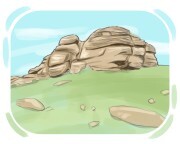
a visible exposure of rock or geological strata at the Earth's surface, often occurring on hillsides, cliffs, or other elevated areas, providing insight into the underlying geological structure
aflorament, aflorament rocos
În timp ce drumeam de-a lungul traseului, am dat peste un impresionant afloriment de rocă sedimentară, care dezvăluia straturi formate pe parcursul a milioane de ani.
solid rock beneath surface materials, forming the Earth's crust foundation
roca mamă, subsolul stâncos
Săpăturile pentru fundația clădirii au scos la iveală prezența unui piatră de temelie solidă, asigurând stabilitatea structurii.
the region of the Earth's interior, lying beneath the crust and extending to the outer core, composed of solid rock that can deform and flow over geological time scales
manta, manta Pământului
Mantaua este un strat al interiorului Pământului care se află între scoarță și nucleul exterior.
