pattern

Applied Science and Research - Electrical Equipment

Study terms for devices used in electrical measurement, control, conversion, protection, signal transmission, and power generation.

Review

Flashcards

Spelling

Quiz

Start learning
Words Related to Applied Science and Research
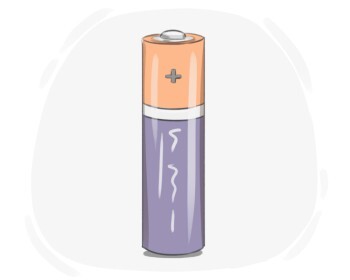
battery
battery
[noun]

an object that turns chemical energy to electricity to give power to a device or machine
Ex: The flashlight wouldn't turn on because the battery was dead. 
Close
Sign in
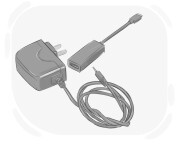
adapter
adapter
[noun]

a device used for connecting two pieces of equipment that are not compatible with each other
Close
Sign in
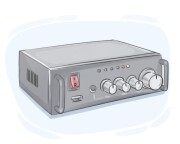
amplifier
amplifier
[noun]

an electronic device that strengthens electrical signals or causes sounds to get louder

Ex: The guitarist plugged his electric guitar into the amplifier to increase its volume. 
Close
Sign in
oscilloscope

an electronic instrument used to graphically display and analyze voltage signals over time, showing the waveform's amplitude, frequency, and other characteristics

Ex: The engineer used an oscilloscope to troubleshoot the circuit and identify the faulty component. 
Close
Sign in
ammeter
ammeter
[noun]

an instrument that measures the strength of an electric current in amperes

Ex: The ammeter showed a current of 2.5 amperes flowing through the circuit. 
Close
Sign in
ohmmeter
ohmmeter
[noun]

a device used for measuring electrical resistance in a circuit, stated in ohms

Ex: He used an ohmmeter to check the resistance of the circuit. 
Close
Sign in
voltmeter
voltmeter
[noun]

a device used to measure the electric potential difference between two points in an electrical circuit

Ex: A voltmeter indicated a low battery charge in the flashlight. 
Close
Sign in
alternator

a device in cars that turns mechanical energy into alternating current to charge the battery

Ex: The alternator in his car failed, so the battery wouldn't stay charged. 
Close
Sign in
dynamo
dynamo
[noun]

a machine that uses a rotating coil between magnets to produce electric current
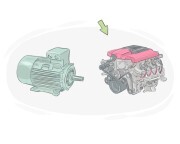
Ex: The bicycle's dynamo powered the headlight as the wheel spun. 
Close
Sign in
generator
generator
[noun]

a machine that produces electricity by converting mechanical energy into electrical energy

Ex: The hydroelectric generator harnesses the power of flowing water to produce electricity for nearby communities. 
Close
Sign in
genset
genset
[noun]

a combined unit consisting of an engine and an electric generator that produces electricity
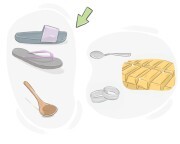
Ex: The construction site used a genset to power all the heavy tools. 
Close
Sign in
insulator
insulator
[noun]

a substance that doesn't conduct heat, sound, etc.

Ex: The walls were lined with an insulator to keep the room warm. 
Close
Sign in
sensor
sensor
[noun]

a machine or device that detects any changes in the environment and sends the information to other electronic devices

Ex: The temperature sensor measures the heat in the environment to adjust the heating system. 
Close
Sign in
console
console
[noun]

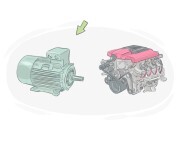
a panel with displays and controls that allows an operator to monitor and manage a system, such as a computer or machine
Close
Sign in
motor
motor
[noun]

a machine that converts any form of energy into mechanical energy
Ex: The electric motor powered the conveyor belt in the factory. 
Close
Sign in
controller

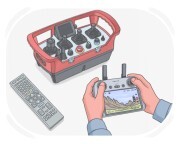
a piece of equipment by which a machine is operated

Ex: The drone's controller allows the pilot to navigate it smoothly through the air. 
Close
Sign in
transformer

an electric device that is used to increase or decrease the voltage of an alternating current

Ex: The electrical engineer installed a transformer to step down the high voltage from the power lines to a safer level for residential use. 
Close
Sign in
fuse
fuse
[noun]

an electrical device that is used to stop or control the flow of current in a circuit in case it is too strong
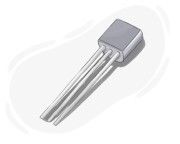
Ex: The fuse blew when too many appliances were plugged in. 
Close
Sign in
capacitor
capacitor
[noun]

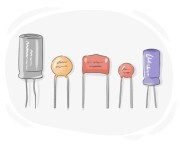
an electric device that is used to accumulate electric charge

Close
Sign in
condenser
condenser
[noun]

an electrical device that stores electric charge

Close
Sign in
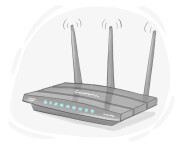
transistor

a small semiconductor device, used in television and radio sets, able to amplify or rectify an electric current
Close
Sign in
transmitter

a piece of electronic equipment used for sending electromagnetic waves carrying radio or television signals

Close
Sign in
transducer

a device that converts one form of energy into another

Ex: The transducer converts sound waves into electrical signals. 
Close
Sign in
resistor
resistor
[noun]

an electrical component designed to limit or control the flow of electric current in a circuit, typically by providing resistance

Ex: In electronic circuits, resistors are commonly used to regulate the flow of current and protect sensitive components. 
Close
Sign in
potentiometer

a measuring instrument used to measure direct current electromotive force by balancing it against a known voltage

Close
Sign in
thermistor

a semiconductor device whose resistance changes with temperature

Ex: The thermistor in the thermometer measures the room temperature accurately. 
Close
Sign in
oscillator

a piece of equipment for generating oscillating electric currents or voltages by non-mechanical means

Close
Sign in
rectifier
rectifier
[noun]

a device that converts alternating current into direct current

Ex: The rectifier in the power supply changes AC from the wall into DC for the circuit. 
Close
Sign in
inverter
inverter
[noun]

a device that converts direct current (DC) into alternating current (AC)

Ex: The solar panels generate DC electricity, which is then converted to AC power by the inverter for use in the home. 
Close
Sign in
phototransistor

(electronics) a transistor that turns light into electric current

Ex: The phototransistor in the sensor detected the beam of light from the remote. 
Close
Sign in
connector
connector
[noun]

a device or mechanism that joins or links two or more things together

Ex: The electrician used a connector to join the wires securely. 
Close
Sign in
LanGeek
Download LanGeek app