Four Corners 4 - Unit 9 Lesson A

Here you will find the vocabulary from Unit 9 Lesson A in the Four Corners 4 coursebook, such as "thoughtless", "odor", "speculate", etc.

review-disable

review

flashcard-disable

flashcard

spelling-disable

spelling

quiz-disable

quiz

start-learning
Four Corners 4

to accept something to be true even without proof

Ex: I find it hard to believe that she won the lottery twice in a row .

information or details that are given to make something clear or easier to understand

Ex: The teacher 's explanation made the math problem much easier to solve .
suffix [noun]

(grammar) a letter or a set of letters that are added to the end of a word to alter its meaning and make a new word

Ex: Students practiced adding different suffixes to root words to see how their meanings changed .
useful [adjective]

providing help when needed

Ex: A reliable GPS navigation system is especially useful during road trips to unfamiliar destinations .
useless [adjective]

lacking purpose or function, and unable to help in any way
Ex: The expired medication was useless and had to be disposed of properly .
powerful [adjective]

possessing great strength or force

Ex: The powerful tools in the workshop helped complete the job quickly .
powerless [adjective]

lacking the ability or authority to influence or control situations

Ex: The small country was powerless against the invading army .
fearful [adjective]

filled with fear or anxiety

Ex: His voice was shaky and fearful as he recounted the incident to the police .
fearless [adjective]

expressing no signs of fear in face of danger or difficulty
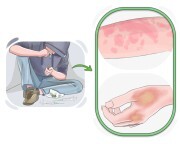
Ex: He 's known for his fearless attitude , never hesitating to speak his mind .
harmful [adjective]

causing damage or negative effects to someone or something

Ex: Excessive exposure to the sun 's UV rays can be harmful to your skin .
harmless [adjective]

causing no danger or damage

Ex: Despite its loud appearance , the fireworks display was harmless and enjoyed by all .
careful [adjective]

giving attention or thought to what we are doing to avoid doing something wrong, hurting ourselves, or damaging something
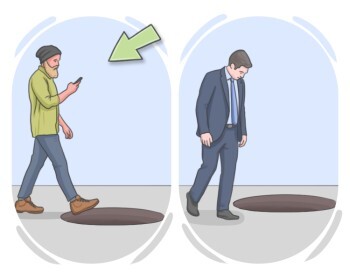
Ex: She was careful not to wake the sleeping baby .
careless [adjective]

not paying enough attention to what we are doing

Ex: He was so careless with his words , often saying things without thinking .
meaningless [adjective]

lacking any significance, value, or purpose

Ex: The words he said were meaningless , as they did n’t match his actions .
thoughtful [adjective]

thinking deeply about oneself and one's experiences, often resulting in new understandings or realizations

Ex: The elderly man was known for his thoughtful moments on the porch , reminiscing about his youth .
thoughtless [adjective]

acting without considering the consequences or the feelings of others
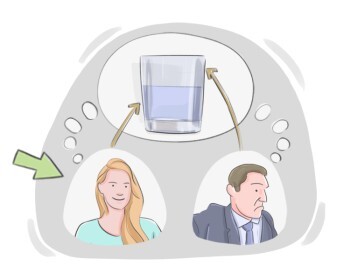
Ex: She made a thoughtless decision that cost the team a project .
hopeful [adjective]

(of a person) having a positive attitude and believing that good things are likely to happen
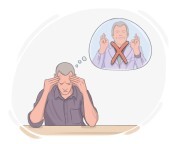
Ex: The therapist encouraged the patient to remain hopeful , reminding them that progress takes time .
hopeless [adjective]

having no possibility or expectation of improvement or success

Ex: He stared at the complicated math problem , feeling hopeless about solving it .
storm [noun]

a strong and noisy event in the sky with heavy rain, thunder, lightning, and strong winds

Ex: The boat rocked violently in the storm .

to cause damage to something in a way that it no longer exists, works, etc.

Ex: Yesterday , the fire tragically destroyed the old library , consuming many valuable books .
to raise [verb]

to grow or reproduce animals or plants
Ex: Jim retired to raise raspberries .
totally [adverb]

in a complete and absolute way

Ex: The city was totally different from what I remembered .
building [noun]

a structure that has walls, a roof, and sometimes many levels, like an apartment, house, school, etc.

Ex: The school building has a playground for the students .
odor [noun]

a distinctive and often unpleasant smell or scent that is produced by a substance or object
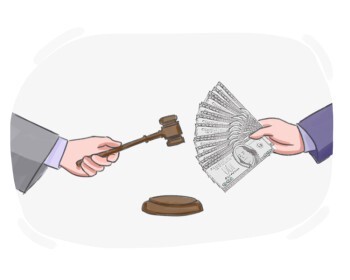
to fine [verb]

to make someone pay a sum of money as punishment for violation of the law

Ex: The company was fined heavily for violating environmental regulations .

the action of successfully finishing studies at a high school or a university degree

Ex: Graduation is often a time for reflecting on personal achievements .
grade [noun]

a letter or number given by a teacher to show how a student is performing in class, school, etc.

Ex: Mark 's grades have improved significantly since he started studying regularly .
explainable [adjective]

capable of being understood or made clear in a logical manner
Ex: The mistake is explainable if you consider how rushed the work was .
behavior [noun]

the way that someone acts, particularly in the presence of others

Ex: I was disappointed by his behavior at the family dinner .
impressive [adjective]

causing admiration because of size, skill, importance, etc.

Ex: The view from the top of the mountain was absolutely impressive .
comfortable [adjective]

physically feeling relaxed and not feeling pain, stress, fear, etc.

Ex: After a warm bath , he felt comfortable and ready for bed .

to wear formal clothes for a special occasion or event
Ex: It 's customary to dress up in traditional attire for cultural celebrations .
possible [adjective]

able to exist, happen, or be done

Ex: It is possible to learn a new language at any age .
simply [adverb]

used to show that something is the case and nothing more

Ex: The reason is simply that the product is out of stock .
to offer [verb]

to present or propose something to someone

Ex: The teacher offered valuable feedback to help the students improve their work .

to ask someone questions to see whether they are qualified for a course of study, job, etc.

Ex: We need to interview potential interns for the summer program .

to form a theory or opinion about a subject without knowing all the facts

Ex: When the stock prices suddenly dropped , investors started to speculate on the reasons for the market downturn .
could [verb]

used to show the possibility of something happening or being the case

must [verb]

used to express a logical conclusion

Ex: He must know about the meeting by now .
might [verb]

used to express a possibility

Ex: We might go to the beach if the weather is nice .
should [verb]

used to indicate a degree of expectation regarding something that is likely to happen

Ex: The company should announce their decision by tomorrow .
meaningful [adjective]

having a significant purpose or importance

Ex: The couple exchanged meaningful glances during the wedding ceremony .