pattern

SAT Word Skills 3 - Lesson 44

Review

Flashcards

Forms

Spelling

Quiz

Start learning
SAT Word Skills 3
to speculate

to form a theory or opinion about a subject without knowing all the facts

Ex: Observing the unusual behavior, scientists began to speculate about the potential causes of the phenomenon. 
Close
Sign in
speculator

a person who takes financial risks for potential profits

Close
Sign in
to correlate

to be closely connected or have mutual effects

Ex: The increase in exercise tends to correlate with improvements in overall health and well-being. 
Close
Sign in
correlation

a mutual relationship between things, where one tends to influence the other
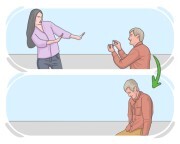
Ex: The correlation between screen time and attention span is still debated. 
Close
Sign in
correlative
correlative
[Adjective]

having a relationship in which each side is necessary for the other

Close
Sign in
to deject
to deject
[Verb]

to make someone feel disheartened or low in spirits

Ex: His failure in the exam dejected him. 
Close
Sign in
dejection
dejection
[noun]

a state of low spirits, sadness, or melancholy

Ex: The loss in the final match was evident in the players' faces, displaying a collective sense of dejection. 
Close
Sign in
to embellish

to make a statement or narrative more interesting by exaggerating or adding incorrect information

Ex: During the interview, she embellished her qualifications, claiming fluency in multiple languages she barely understood. 
Close
Sign in
solicitude

care or worry for a person's well-being

Ex: Her solicitude for the children was evident in her gentle care. 
Close
Sign in
solicitous
solicitous
[Adjective]

displaying careful, watchful attention, often in a way that shows eagerness to help or please
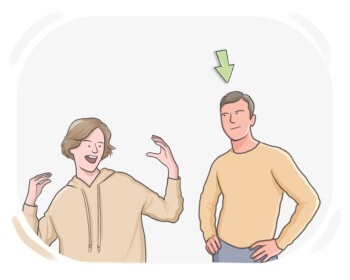
Ex: The solicitous nurse checked on each patient with gentle precision. 
Close
Sign in
solemn
solemn
[Adjective]

reflecting deep sincerity or a lack of humor
Ex: The solemn ceremony honored the sacrifices of those who served in the military. 
Close
Sign in
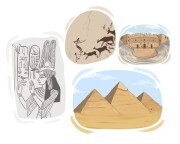
archaic
archaic
[Adjective]

dating back to the ancient past

Ex: The museum has a collection of archaic pottery from ancient Greece. 
Close
Sign in
penury
penury
[noun]

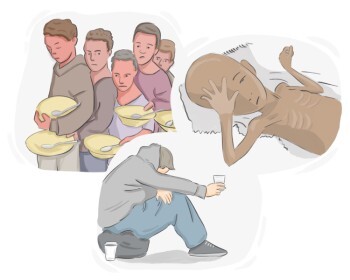
a state of being exceedingly poor and in need

Ex: He grew up in penury, struggling to meet basic needs. 
Close
Sign in
penurious
penurious
[Adjective]

extremely poor or unwilling to spend money

Ex: The penurious family struggled to afford even the basic necessities of life. 
Close
Sign in
to rebut
to rebut
[Verb]

to argue logically in order to disprove a statement

Close
Sign in
rebuttal
rebuttal
[noun]

the act of arguing to prove that something, usually an accusation or evidence, is wrong

Close
Sign in
to tempt
to tempt
[Verb]

to feel the desire to do something

Ex: The urge to splurge on designer shoes tempted her every time she passed by the boutique window. 
Close
Sign in
tempter
tempter
[noun]

a person who encourages others to make choices that might not be the best or safest

Close
Sign in
archeology

the study of civilizations of the past and historical periods by the excavation of sites and the analysis of artifacts and other physical remains

Ex: Archaeology is the study of human history and prehistory through the excavation and analysis of artifacts, sites, and other physical remains. 
Close
Sign in
LanGeek
Download LanGeek app