Adjectives of Abstract Attributes - Adjectives of Commonness

These adjectives describe the widespread, prevalent, or ordinary nature of something, conveying attributes like "ordinary", "prevalent", "ubiquitous", etc.

review-disable

review

flashcard-disable

flashcard

spelling-disable

spelling

quiz-disable

quiz

start-learning
Adjectives of Abstract Attributes
typical [adjective]

having or showing the usual qualities of a particular group of people or things
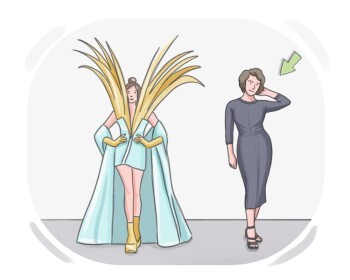
Ex: The architecture in this neighborhood is typical of Victorian-era homes .
usual [adjective]

conforming to what is generally anticipated or considered typical

Ex: They followed the usual protocol during the meeting .
standardized [adjective]

made consistent or uniform according to a set standard or rule

Ex: The standardized format of the report allows for easy comparison of data across different departments .
stereotypical [adjective]

conforming to a fixed or oversimplified idea or image of a particular group or thing
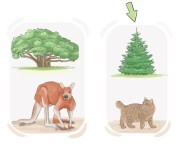
Ex: The advertisement perpetuated stereotypical gender roles , showing women as homemakers and men as breadwinners .
rife [adjective]

widespread and often associated with something harmful or undesirable

Ex: Misinformation was rife throughout the community .
common [adjective]

regular and without any exceptional features

Ex: The restaurant offered common dishes like pasta and salad .
standard [adjective]

commonly recognized, done, used, etc.

Ex: The company 's standard warranty covers repairs for up to one year after purchase .
routine [adjective]

occurring or done as a usual part of a process or job

Ex: Completing paperwork is a routine part of the hiring process for new employees .
predictable [adjective]

easily anticipated or expected to happen based on past experiences or knowledge

Ex: The company 's earnings were predictable , as they followed a steady growth pattern over the years .
prevalent [adjective]

widespread or commonly occurring at a particular time or in a particular place

Ex: Gender inequality remains prevalent in many workplaces despite efforts to promote diversity .
mainstream [adjective]

widely accepted or popular among the general public

Ex:
ubiquitous [adjective]

seeming to exist or appear everywhere

Ex: Email communication has become ubiquitous in the workplace , replacing traditional written memos .
commonplace [adjective]

lacking distinctive features or uniqueness

Ex:
customary [adjective]

commonly practiced or accepted as a usual way of doing things

Ex: It is customary for the bride to wear a white dress at weddings in Western cultures .
unmarked [adjective]

lacking visible signs or distinctive features

Ex: The unmarked police car patrolled the streets , keeping a low profile .
characteristic [adjective]

serving to identify or distinguish something or someone

Ex: The bird 's characteristic song could be heard every morning at dawn .
viral [adjective]

(of a video, picture, piece of news, etc.) shared quickly on social media among a lot of Internet users

Ex: The viral photo of the sunset over the city skyline was shared by countless Instagram users .
quintessential [adjective]

representing the most typical or perfect example of something

Ex: The little black dress is often considered the quintessential wardrobe staple for any woman .
widespread [adjective]

existing or spreading among many people, groups, or communities through communication, influence, or awareness

Ex: The artist ’s work gained widespread recognition after being featured in an international exhibition .
pervasive [adjective]

spreading widely or throughout a particular area or group

Ex: The pervasive use of plastic has led to environmental concerns about pollution and waste .