
Animals - The Anatomy of Mammals
Here you will learn some words related to the anatomy of mammals in English such as "paw", "tusk", and "fang".
Review
Flashcards
Spelling
Quiz
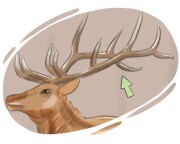
any of the pair of branched horns that grow annually on the head of an adult animal, typically a male one, from the deer family
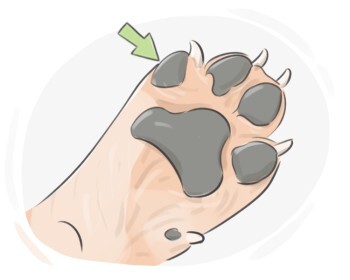
an animal's foot that typically has a combination of nails, claws, fur, and pads
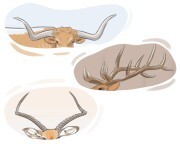
a hard, pointed, often curved growth on the head of certain animals

any of the long, stiff hairs that grow on the face of a cat, mouse, etc.
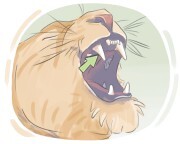
a long, pointed tooth found in carnivorous animals, used for biting, gripping, and tearing flesh
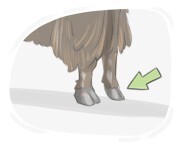
the foot of a mammal that is divided into two parts such as that of goats, sheep, etc.
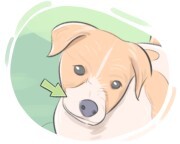
the long and protruding facial part of an animal which comprises its nose and mouth, especially in a mammal

the soft fleshy underside of the end of a finger or toe, or of an animal's foot

a broad flat limb without any fingers that is used for swimming by some sea animals such as seals, turtles, etc.
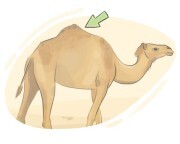
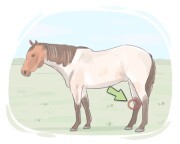
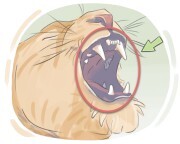
either of the bony structures that frame the mouth and hold the teeth in a vertebrate
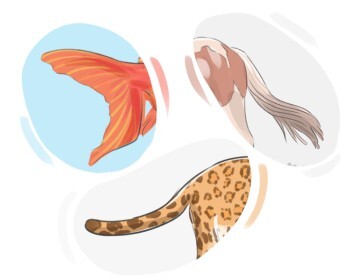
the part of the body of an animal, a bird or a fish that sticks out at the back, which can move
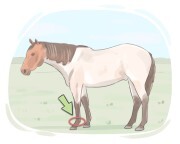
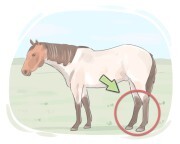
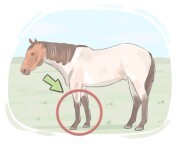
the joint at the back of the leg and just above the hoof of any quadruped, such as a horse
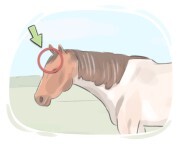
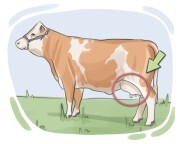
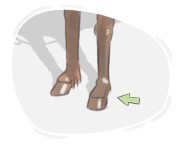
the horny and hard part at the end of a limb of a mammal, such as a horse
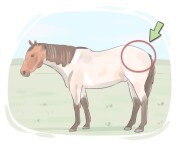
an organ shaped like a bag that produces milk in a female mammal such as a horse, sheep, cow, etc.
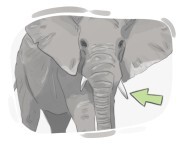
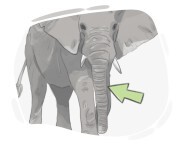
each of the curved pointy teeth of some animals such as elephants, boars, etc., especially one that stands out from the closed mouth
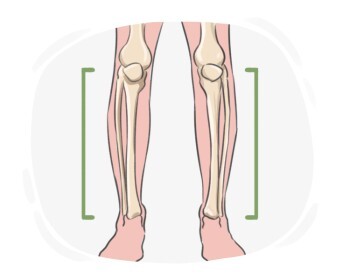
the lower part of the leg of an animal between the knee and the ankle
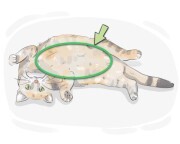
the projecting part of the face of some animals such as dogs and horses that includes their jaws and noses
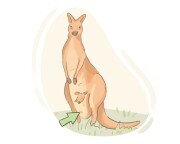
a pocket-like structure that female marsupials, such as kangaroos, use to carry their young with them
a bone in the skull that connects to other bones in the head and is located near the temple
a specialized organ of the immune system located near the heart that produces T cells and plays a crucial role in the development of the immune system in early life
a specialized wet surface found in the noses of some mammals that helps them to detect and analyze different scents
a compartment of the ruminant stomach that features a honeycomb-like structure and aids in the breakdown and fermentation of ingested plant material
a stomach compartment in ruminant animals that helps filter and process food particles before further digestion and absorption
the fourth chamber of the stomach in ruminant animals, functioning as the true stomach where gastric juices aid in the breakdown of ingested food
a big part of the stomach in animals like cows, sheep, and goats, where food is processed and stored before it's fully digested
