pattern

C2 Level Wordlist - Arts

Here you will learn all the essential words for talking about Arts, collected specifically for level C2 learners.

Review

Flashcards

Forms

Spelling

Quiz

Start learning
CEFR C2 Vocabulary
pastiche
pastiche
[noun]

an artwork that imitates the style of someone or something else on purpose

Ex: The artist created a pastiche of Van Gogh's work, capturing his signature brushstrokes and vibrant colors in a modern context. 
Close
Sign in
oeuvre
oeuvre
[noun]

the collection of artistic or literary works produced by a particular painter, author, etc.

Ex: The museum's retrospective showcased the entire oeuvre of the renowned painter, highlighting his evolution over four decades. 
Close
Sign in
parody
parody
[noun]

a piece of writing, music, etc. that imitates the style of someone else in a humorous way

Ex: The comedian's parody of the popular song went viral, making people laugh with its clever and humorous lyrics. 
Close
Sign in
magnum opus

the greatest literary or artistic piece that an author or artist has created

Ex: Many critics consider Beethoven's Ninth Symphony to be his magnum opus, showcasing the pinnacle of his musical genius. 
Close
Sign in
Afrofuturism

a cultural and artistic movement that explores the intersection of African and African Diaspora culture with technology and the future

Ex: The film "Black Panther" is often cited as a prime example of Afrofuturism, blending African culture with futuristic technology and themes. 
Close
Sign in
canon
canon
[noun]

generally accepted rules or principles, especially those that are considered as fundamental in a field of art or philosophy

Ex: In literature, Shakespeare's plays are often considered part of the canon, representing some of the most significant works in English literature. 
Close
Sign in
altarpiece

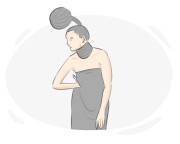
a work of art that is placed above or behind an altar
Ex: The cathedral's altarpiece, a magnificent triptych depicting scenes from the life of Christ, drew worshippers from far and wide to admire its beauty. 
Close
Sign in
bust
bust
[noun]

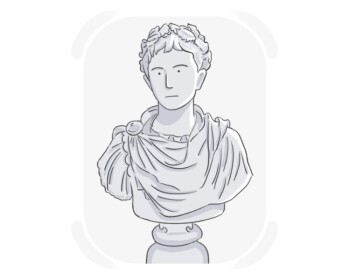
a sculpture representing someone's head, shoulders, and chest
Ex: The museum's collection included a marble bust of Julius Caesar, sculpted by a renowned artist during the Roman era. 
Close
Sign in
etching
etching
[noun]

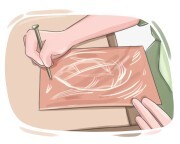
the process of creating designs on a metal plate by cutting or using acid, and producing prints from it

Ex: She learned etching in art class and printed her first design. 
Close
Sign in
impasto
impasto
[noun]

a painting technique in which paint is applied so thickly to the canvas or panel that the brush strokes are visible
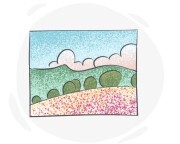
Ex: The artist's use of impasto technique created a rich texture on the canvas, with thick layers of paint giving the artwork a three-dimensional quality. 
Close
Sign in
pointillism

a painting created using dots and small strokes of color

Ex: The gallery displayed a pointillism of a bustling Paris street. 
Close
Sign in
fresco
fresco
[noun]

a technique of mural painting that is done by putting watercolor on wet plaster on a wall or ceiling

Ex: The cathedral's walls were adorned with magnificent frescoes depicting scenes from biblical stories, their vibrant colors still vivid after centuries. 
Close
Sign in
mannerism
mannerism
[noun]

a European style of art in the late 16th century characterized by hyper-idealization and distorted human forms

Ex: The painting exhibited at the museum exemplified the mannerism style, with elongated figures and exaggerated poses creating a sense of drama and tension. 
Close
Sign in
Baroque
Baroque
[noun]

an ornate and grand style of art, music, and architecture present in the 17th and early 18th centuries in Europe

Ex: The cathedral's interior was a magnificent example of Baroque architecture, with its elaborate decoration, dramatic lighting, and ornate detailing. 
Close
Sign in
neoclassicism

a style of art, literature, music, or architecture that imitates the style practiced in ancient Greece and Rome

Ex: Neoclassicism emerged as a dominant artistic movement in the late 18th century, characterized by a revival of classical principles and aesthetics. 
Close
Sign in
diorama
diorama
[noun]

a small-scale three-dimensional model or display depicting a scene, often enclosed within a glass case for viewing
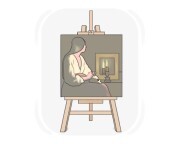
Ex: The museum featured a diorama showcasing a prehistoric dinosaur habitat, complete with miniature plants and realistic terrain. 
Close
Sign in
chiaroscuro

a technique used in drawing and painting that involves the use of light and dark tones to create a sense of depth and contrast
Ex: The artist’s use of chiaroscuro in her portrait added a dramatic effect, making the subject appear as though they were emerging from the shadows. 
Close
Sign in
Dadaism
Dadaism
[noun]

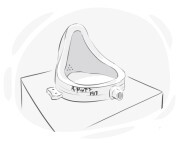
an art movement that challenges the concept of art itself, often creating works that reject traditional principles

Ex: Dadaism challenged the idea of what art could be. 
Close
Sign in
Rococo
Rococo
[noun]

an elaborate and heavily decorated style of art, architecture, and furniture with asymmetrical patterns that was prevalent in Europe in the 18th century

Ex: The Rococo movement left a legacy of intricate scrollwork and florid details that continue to inspire modern designers. 
Close
Sign in
trompe l'oeil

an art technique that deceives the eye by creating realistic optical illusions

Ex: He used trompe l'oeil to create the illusion of a door where none existed. 
Close
Sign in
abstract expressionism

a modern art movement originated in New York in which an artist expresses subjective feelings in abstract forms rather than external objects or figures

Ex: Abstract expressionism emerged in the mid-20th century, characterized by spontaneous, intuitive creations often devoid of recognizable subject matter. 
Close
Sign in
kinetic art

a modern art form that depends on motion to produce the desired effect

Ex: Kinetic art is a form of art that incorporates moving parts or relies on motion for its effect, often engaging viewers in an interactive experience. 
Close
Sign in
mimesis
mimesis
[noun]

the artistic representation or imitation of reality, often with the aim of depicting the natural world or human experiences

Ex: The painting aimed for mimesis by realistically depicting the landscape. 
Close
Sign in
Quattrocento

the artistic period of the 15th century in Italian Renaissance art

Ex: Quattrocento art reflects the cultural and artistic achievements of the Italian Renaissance. 
Close
Sign in
tableau
tableau
[noun]

a group of models or statues arranged in an artistic way, representing a famous historical or fictitious scene

Ex: The museum exhibit featured a tableau depicting the signing of the Declaration of Independence, with meticulously crafted statues arranged around a replica of the historic document. 
Close
Sign in
aesthete
aesthete
[noun]

a person with highly refined artistic tastes who appreciates and actively seeks out experiences of beauty
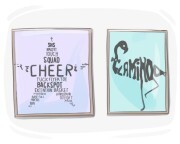
Ex: As an aesthete, John spent his mornings admiring the paintings in the gallery. 
Close
Sign in
typography

the art and technique of organizing written text in a visually appealing and readable manner
Ex: The graphic designer meticulously crafted the typography for the book cover, selecting fonts and arranging text to capture the essence of the story while maintaining readability. 
Close
Sign in
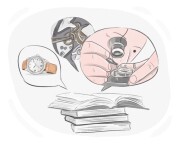
horology
horology
[noun]

the art of making watches and clocks

Ex: Horology, the art and science of timekeeping, encompasses the intricate craftsmanship of mechanical watches and clocks, from precision engineering to intricate design. 
Close
Sign in
avant-garde
avant-garde
[Adjective]

innovative, experimental, or unconventional in style or approach, especially in the arts

Ex: The avant-garde filmmaker pushed the boundaries of narrative structure, crafting abstract, non-linear stories that challenged viewers' perceptions of cinema. 
Close
Sign in
LanGeek
Download LanGeek app