ACT Science - Diseases

Here you will learn some English words related to diseases, such as "narcolepsy", "dementia", "latent", etc. that will help you ace your ACTs.

review-disable

review

flashcard-disable

flashcard

spelling-disable

spelling

quiz-disable

quiz

start-learning
ACT Science
benign [adjective]

(of an ilness) not fatal or harmful

Ex: Despite experiencing symptoms , the tests revealed that his condition was benign and temporary .
malignant [adjective]

(of a tumor or disease) uncontrollable and likely to be fatal

Ex: The oncologist recommended a combination of chemotherapy and radiation to combat the malignant disease .
latent [adjective]

(of a medical condition or infection) present in the body but not currently producing symptoms

Ex: Herpes often enters a latent phase between outbreaks .
chronic [adjective]

(of an illness) difficult to cure and long-lasting

Ex: Tom 's chronic arthritis makes it challenging for him to move around comfortably .
life-threatening [adjective]

posing a significant risk to a person's life

Ex: The storm created life-threatening situations for residents in the area .
asymptomatic [adjective]

(of a disease) not showing any symptoms associated with it

Ex: Many individuals infected with the parasite are asymptomatic and may not seek medical attention .
cardiovascular [adjective]

related to the heart and blood vessels

Ex: Regular exercise and a healthy diet can help maintain cardiovascular health and reduce the risk of heart disease .
virulent [adjective]

(of a disease) able to make one sick

Ex:
ailment [noun]

an illness, often a minor one

Ex: The elderly often suffer from various age-related ailments such as arthritis .

a state of pain or suffering due to a physical or mental condition

Ex: Chronic back pain was his most debilitating affliction , affecting his ability to work and enjoy daily activities .

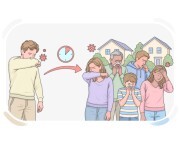
any disease or virus that can be easily passed from one person to another

Ex: Frequent handwashing and wearing masks are effective measures to reduce the risk of contagion in crowded places .

a professional opinion regarding the likely course of an illness

Ex: The prognosis for patients with untreated tuberculosis can be poor if the infection spreads to vital organs .
syndrome [noun]

a group of medical signs that indicate a person is suffering from a particular disease or condition

Ex:
glaucoma [noun]

an eye condition characterized by increased pressure within the eye, which can lead to optic nerve damage and vision loss if not treated

Ex: Increased pressure in the eye can damage the optic nerve , causing peripheral vision loss in glaucoma .

a physical condition in which a part of the body becomes swollen, painful, and red as a result of an infection or injury

sepsis [noun]

a severe, life-threatening response to infection causing widespread inflammation and potential organ failure

Ex: Sepsis symptoms include fever , rapid heart rate , and altered mental status .

a condition where excess fat accumulates in liver cells, often due to factors like alcohol consumption or obesity

Ex: Treatment for fatty liver focuses on lifestyle changes such as diet and exercise .

a medical condition characterized by the abnormal accumulation of fat within liver cells

allergy [noun]

a medical condition in which one's body severely reacts to a specific substance if it is inhaled, touched, or ingested

Ex: The doctor advised her to avoid dairy products because of her lactose allergy .

a momentary loss of consciousness provoked by a hard blow on the head

Ex: The patient presented with symptoms of a concussion , including dizziness , confusion , and sensitivity to light , after a car accident .
autism [noun]

a disorder that begins in early childhood, causing behavioral, social, and communication challenges

a condition that arises when one is experiencing a chronic elevation of blood pressure

a potentially severe bacterial disease that primarily affects the lungs and causes swellings to appear on them or other parts of the body

a genetic disorder causing the production of thick and sticky mucus, affecting the respiratory and digestive systems and leading to various complications

Ex: Individuals with cystic fibrosis are at risk of developing complications such as diabetes and liver disease .

a tropical viral disease, characterized by fever, muscle pain, etc. which consequently leads to jaundice and potential death, transmitted by infected mosquitoes

insomnia [noun]

a disorder in which one is unable to sleep or stay asleep

Ex: The doctor recommended a few relaxation techniques to help combat her insomnia and improve her sleep quality .
obesity [noun]

the condition of having such a high amount of body fat that it becomes very dangerous for one's health

Ex: Obesity increases the risk of developing chronic diseases such as diabetes , heart disease , and certain types of cancer .

a neurological condition characterized by difficulty in sustaining attention, hyperactivity, and impulsivity, typically diagnosed in childhood and often persisting into adulthood

Ex:
dementia [noun]

a mental condition that happens when the brain is damaged by disease or injury, causing memory loss and impairing the ability to think or make decisions

Ex: The doctor explained that dementia can affect both short-term and long-term memory .
mumps [noun]

an infectious viral disease characterized by fever and the painful swelling of the neck

measles [noun]

a contagious disease that causes high fever and small red spots on the body, common in children

Ex: Measles can spread through coughing and sneezing , as well as direct contact with infected droplets .

a neurological condition causing sudden, uncontrollable episodes of sleep, often accompanied by muscle weakness or vivid dreams

Ex: The use of medications , such as stimulants , is common in managing symptoms of narcolepsy .

a condition causing an irresistible urge to move the legs, often with uncomfortable sensations, usually worse in the evening or at night

Ex: Restless leg syndrome often kept him awake , leading to tiredness during the day .

a general term referring to inflammation of the skin, often causing redness, itching, and various skin conditions

Ex: Eczema is a form of dermatitis characterized by itchy , inflamed skin .

a rare medical condition characterized by excessive growth and height due to an overproduction of growth hormone during childhood and adolescence

Ex: Treatment for gigantism often involves surgery or medication to reduce the production of growth hormone .
trauma [noun]

a medical condition of the mind caused by extreme shock, which could last for a very long time
Ex: Childhood trauma can have long-lasting effects on a person 's mental and emotional well-being .
fester [noun]

a sore or wound that has become infected and is producing pus, often characterized by inflammation and discomfort

Ex: A warm compress can help reduce the swelling of a fester .
epidemic [noun]

the rapid spread of an infectious disease within a specific population, community, or region, affecting a significant number of individuals at the same time

Ex: The flu epidemic affected thousands of people last winter .