pattern

Key Scientists Vocabulary - Alexander Graham Bell

Review

Flashcards

Forms

Spelling

Quiz

Start learning
Key Scientists Vocabulary
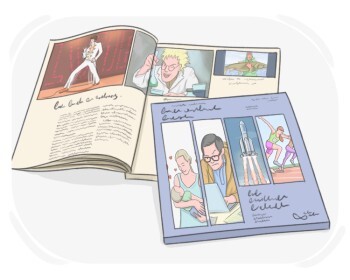
magazine
magazine
[noun]

a colorful thin book that has news, pictures, and stories about different things like fashion, sports, and animals, usually issued weekly or monthly
Ex: I often read parenting magazines to get advice on raising my children. 
Close
Sign in
education
education
[noun]

knowledge acquired by learning and instruction

Close
Sign in
all over the (world|globe)

in every part of the world

Ex: The brand is recognized all over the world. 
Close
Sign in
to distract

to cause someone to lose their focus or attention from something they were doing or thinking about

Ex: During the important meeting, the constant tapping of a pen began to distract everyone in the room. 
Close
Sign in
Scotland
Scotland
[noun]

a European country in the northern United Kingdom

Ex: Scotland is known for its breathtaking landscapes, including the Highlands and numerous lochs. 
Close
Sign in
famous
famous
[Adjective]

known by a lot of people

Ex: The famous singer performed to a sold-out crowd at the arena. 
Close
Sign in
to invent
to invent
[Verb]

to make or design something that did not exist before
Ex: Thomas Edison invented the electric light bulb, revolutionizing illumination. 
Close
Sign in
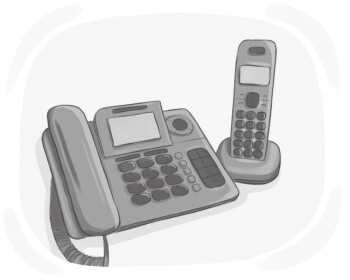
telephone
telephone
[noun]

a communication device used for talking to people who are far away and also have a similar device
Ex: He needs to recharge his telephone battery. 
Close
Sign in
interested
interested
[Adjective]

having a feeling of curiosity or attention toward a particular thing or person because one likes them
Ex: She was genuinely interested in learning French. 
Close
Sign in
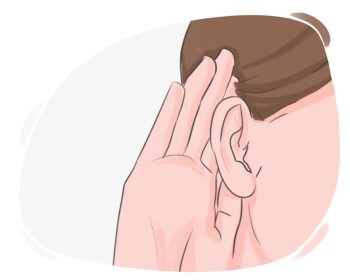
to hear
to hear
[Verb]

to notice the sound a person or thing is making

Ex: I heard footsteps behind me and quickly turned around. 
Close
Sign in
to move
to move
[Verb]

to change one's place of residence or work

Ex: He is moving to a different country to pursue his career. 
Close
Sign in
Canada
Canada
[noun]

the second largest country in the world that is in the northern part of North America

Ex: Canada celebrates its national day, Canada Day, on July 1st. 
Close
Sign in
the United States

a country in North America that has 50 states
Ex: English is the primary language spoken in the United States. 
Close
Sign in
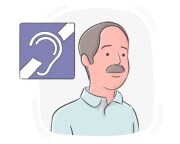
deaf
deaf
[Adjective]

partly or completely unable to hear

Ex: The deaf child communicates using sign language. 
Close
Sign in
wire
wire
[noun]

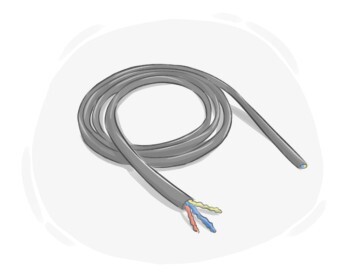
a long and thin piece of metal that carries an electric current
Ex: The electrician installed new wire to ensure the lights functioned properly. 
Close
Sign in
to happen
to happen
[Verb]

to come into existence by chance or as a consequence

Ex: An unexpected storm can happen at any time of year. 
Close
Sign in
by accident
by accident
[Adverb]

without any intention or planning

Ex: She broke the vase by accident while cleaning the shelf. 
Close
Sign in
telegraph
telegraph
[noun]

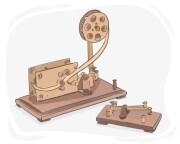
a communication system by which people were able to send and receive messages over long distances, using electrical or radio signals

Ex: The old train station still has a room dedicated to the telegraph, showcasing relics from the past. 
Close
Sign in
helper
helper
[noun]

a person who assists in completing a task or reaching a goal

Ex: The teacher's aide was a valuable helper in managing the classroom and assisting students. 
Close
Sign in
invention
invention
[noun]

a brand new machine, tool, or process that is made after study and experiment
Ex: The invention of the smartphone revolutionized the way we communicate and access information. 
Close
Sign in
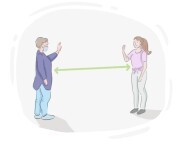
distance
distance
[noun]

the length of the space that is between two places or points

Ex: The distance between New York City and Los Angeles is over 2,700 miles. 
Close
Sign in
phonograph

machine in which rotating records cause a stylus to vibrate and the vibrations are amplified acoustically or electronically

Close
Sign in
to record
to record
[Verb]

to capture sound or a performance in a format that can be reproduced or broadcast later

Ex: Right now, the reporter is recording an interview with the celebrity. 
Close
Sign in
scientific
scientific
[Adjective]

relating to or involving science

Ex: The scientist conducted a series of scientific experiments to test the hypothesis. 
Close
Sign in
curious
curious
[Adjective]

(of a person) interested in learning and knowing about things

Ex: She's so curious; she always asks questions and loves to explore new topics. 
Close
Sign in
to explore

to investigate something to gain knowledge or understanding about it

Ex: The researchers explored the effects of climate change on local ecosystems, conducting experiments to gather data and analyze their findings. 
Close
Sign in
plus
plus
[preposition]

used to introduce an additional fact, feature, or point

Ex: The weather was beautiful, plus there were free ice cream samples at the park. 
Close
Sign in
LanGeek
Download LanGeek app