
pattern

Key Scientists Vocabulary - Galileo Galilei

Review

Flashcards

Forms

Spelling

Quiz

Start learning
Key Scientists Vocabulary
Italy
Italy
[noun]

a country in southern Europe, with a long Mediterranean coastline

Ex: I traveled to Italy last year to explore its rich history and beautiful cities. 
Close
Sign in
famous
famous
[Adjective]

known by a lot of people

Ex: The famous singer performed to a sold-out crowd at the arena. 
Close
Sign in
scientist
scientist
[noun]

someone whose job or education is about science
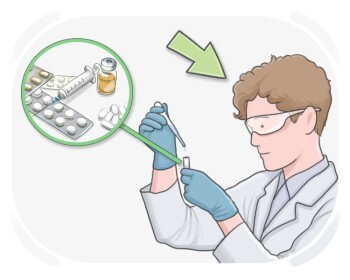
Ex: As a scientist, he spends a lot of time in the lab. 
Close
Sign in
medicine
medicine
[noun]

the field of science that is concerned with treating injuries and diseases
Ex: After years of rigorous study, she graduated from medical school and was excited to begin her career in medicine, helping patients recover from illnesses. 
Close
Sign in
to realize

to have a sudden or complete understanding of a fact or situation
Ex: He realized his mistake at once after reviewing the report. 
Close
Sign in
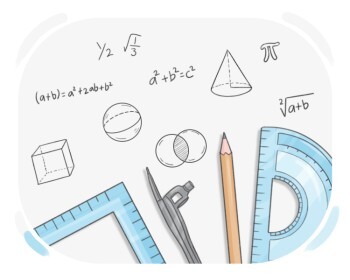
mathematics

the study of numbers and shapes that involves calculation and description
Ex: Can you explain this math concept to me? 
Close
Sign in
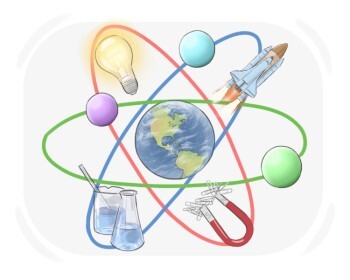
science
science
[noun]

knowledge about the structure and behavior of the natural and physical world, especially based on testing and proving facts
Ex: I enjoy conducting experiments and making observations in science class. 
Close
Sign in
to decide
to decide
[Verb]

to think carefully about different things and choose one of them
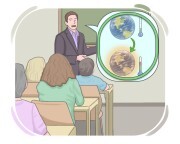
Ex: He had to decide whether to accept the job offer. 
Close
Sign in
subject
subject
[noun]

a branch or an area of knowledge that we study at a school, college, or university
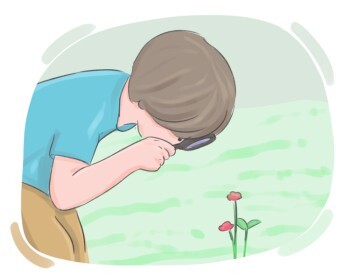
Ex: At university, Jane specialized in the subject of linguistics, studying various languages and their structures. 
Close
Sign in
curious
curious
[Adjective]

(of a person) interested in learning and knowing about things
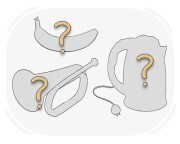
Ex: She's so curious; she always asks questions and loves to explore new topics. 
Close
Sign in
object
object
[noun]

a non-living thing that one can touch or see
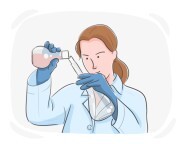
Ex: The sculpture in the museum is an ancient object made of marble. 
Close
Sign in
experiment

a test done to prove the truthfulness of a hypothesis
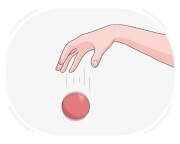
Ex: The scientists conducted an experiment to test their new hypothesis. 
Close
Sign in
to drop
to drop
[Verb]

to let or make something fall to the ground
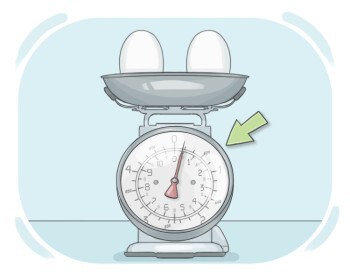
Ex: Supplies are being dropped for the refugees. 
Close
Sign in
weight
weight
[noun]

the heaviness of something or someone, which can be measured
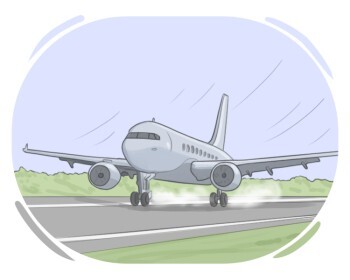
Ex: The weight of the bag is 10 kilograms. 
Close
Sign in
to land
to land
[Verb]

to arrive and rest on the ground or another surface after being in the air
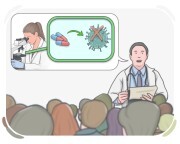
Ex: The plane lands smoothly on the runway. 
Close
Sign in
to prove
to prove
[Verb]

to show that something is true through the use of evidence or facts
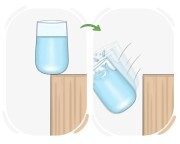
Ex: He often proves his point through well-researched arguments. 
Close
Sign in
to fall
to fall
[Verb]

to quickly move from a higher place toward the ground
Ex: Be careful not to slip and fall on the wet floor. 
Close
Sign in
discovery
discovery
[noun]

something that is discovered

Close
Sign in
planet
planet
[noun]

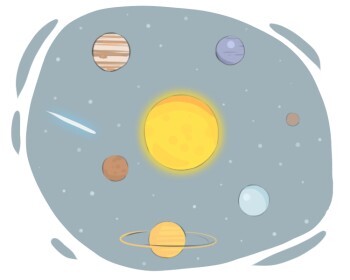
a huge round object that moves in an orbit, around the sun, or any other star
Ex: Jupiter is the largest planet in our solar system. 
Close
Sign in
telescope
telescope
[noun]

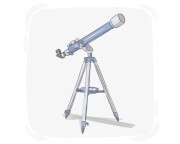
a piece of equipment by which the far objects, particularly those in space, are made clearly visible
Ex: He used a telescope to observe the stars. 
Close
Sign in
moon
moon
[noun]

any natural satellite of a planet

Close
Sign in
Jupiter
Jupiter
[noun]

the 5th and the largest planet of the solar system located between Mars and Saturn

Ex: Jupiter is the fifth planet from the sun in the solar system. 
Close
Sign in
Venus
Venus
[noun]

the 2nd planet of the solar system located between Mercury and earth

Ex: Venus, often called the "morning star" or "evening star," is the brightest natural object in the night sky after the Moon. 
Close
Sign in
phase
phase
[noun]

(astronomy) the particular appearance of a body's state of illumination (especially one of the recurring shapes of the part of Earth's moon that is illuminated by the sun)
Close
Sign in
Earth
Earth
[noun]

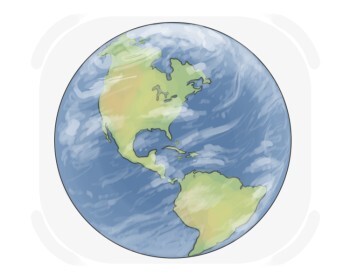
a big round mass covered in land and water, on which we all live

Ex: The Earth has diverse ecosystems, ranging from forests to deserts. 
Close
Sign in
research
research
[noun]

a careful and systematic study of a subject to discover new facts or information about it
Ex: Mark spent hours in the library doing research for his history paper. 
Close
Sign in
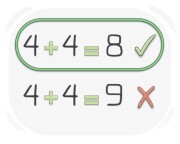
correct
correct
[Adjective]

accurate and in accordance with reality or truth
Ex: His correct pronunciation impressed everyone in the language class. 
Close
Sign in
angry
angry
[Adjective]

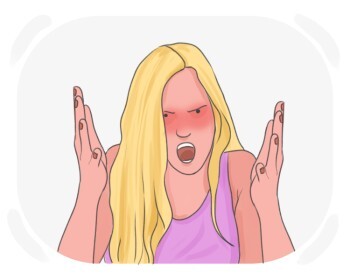
feeling very annoyed because of something that we do not like
Ex: I get angry when people lie to me. 
Close
Sign in
church
church
[noun]

the body of people who attend or belong to a particular local church

Close
Sign in
Bible
Bible
[noun]

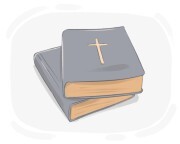
the holy book of Christianity that consists of the Old Testament and the New Testament
Ex: Many people turn to the Bible for comfort and guidance in their lives. 
Close
Sign in
universe
universe
[noun]

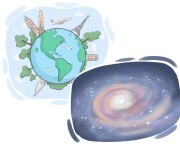
all that exists in the physical world, such as space, planets, galaxies, etc.
Ex: Astronomers study distant galaxies to understand the vastness and complexity of the universe. 
Close
Sign in
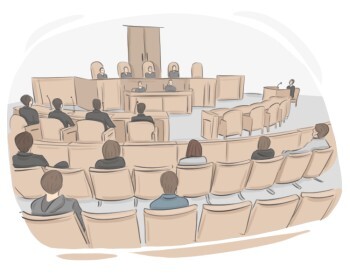
court
court
[noun]

the place in which legal proceedings are conducted

Ex: In family court, judges handle matters such as divorce, child custody, and domestic violence disputes. 
Close
Sign in
to punish
to punish
[Verb]

to cause someone suffering for breaking the law or having done something they should not have

Ex: The court decided to punish the thief with a prison sentence for stealing. 
Close
Sign in
LanGeek
Download LanGeek app