
pattern

Key Scientists Vocabulary - Marie Curie

Review

Flashcards

Forms

Spelling

Quiz

Start learning
Key Scientists Vocabulary
warsaw
warsaw
[noun]

the capital and largest city of Poland; located in central Poland

Close
Sign in
Poland
Poland
[noun]

a country in the Central Europe near the Baltic Sea
Ex: I didn't know that Poland joined the European Union in 2004. 
Close
Sign in
smart
smart
[Adjective]

able to think and learn in a good and quick way
Ex: My daughter is a smart student, and her teachers appreciate her enthusiasm for learning. 
Close
Sign in
science
science
[noun]

knowledge about the structure and behavior of the natural and physical world, especially based on testing and proving facts

Ex: I enjoy conducting experiments and making observations in science class. 
Close
Sign in
to move
to move
[Verb]

to change one's place of residence or work
Ex: He is moving to a different country to pursue his career. 
Close
Sign in
paris
paris
[noun]

the capital and largest city of France; and international center of culture and commerce

Close
Sign in
France
France
[noun]

a country in Europe known for its famous landmarks such as the Eiffel Tower

Ex: France is known for its rich history and cultural heritage. 
Close
Sign in
to study
to study
[Verb]

to engage in formal learning or education at a school, college, or university
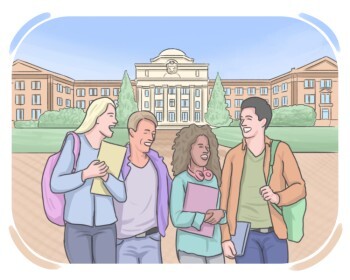
Ex: They are planning to study abroad next year to experience a new culture. 
Close
Sign in
university

an educational institution at the highest level, where we can study for a degree or do research
Ex: I will graduate from university next year with a degree in psychology. 
Close
Sign in
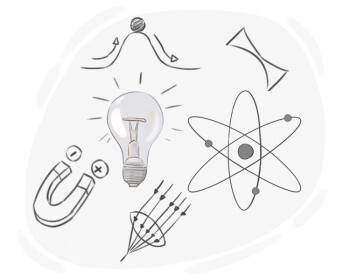
physics
physics
[noun]

the scientific study of matter and energy and the relationships between them, including the study of natural forces such as light, heat, and movement
Ex: She excelled in physics, particularly enjoying the lessons on electromagnetism and thermodynamics. 
Close
Sign in
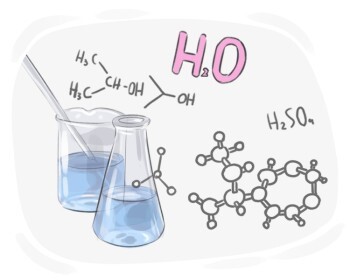
chemistry
chemistry
[noun]

the branch of science that is concerned with studying the structure of substances and the way that they change or combine with each other
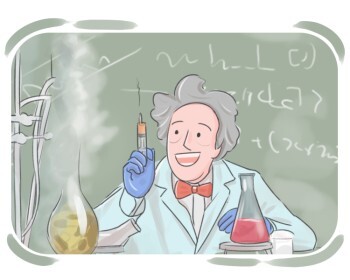
Ex: She found the chemistry lesson on chemical reactions absolutely fascinating. 
Close
Sign in
scientist
scientist
[noun]

someone whose job or education is about science

Ex: As a scientist, he spends a lot of time in the lab. 
Close
Sign in
to marry
to marry
[Verb]

to become someone's husband or wife

Ex: She didn't expect to marry so soon, but she fell in love. 
Close
Sign in
laboratory

a place where people do scientific experiments, manufacture drugs, etc.
Ex: The chemistry students conducted experiments in the laboratory to study chemical reactions. 
Close
Sign in
energy
energy
[noun]

(physics) a source of power that is required to do any work that may exist in potential, kinetic, thermal and other forms

Ex: The energy required to lift the box depends on its weight and the height it is lifted. 
Close
Sign in
radioactivity

the emission of ionizing radiation or particles caused by the spontaneous disintegration of atomic nuclei in radioactive substances
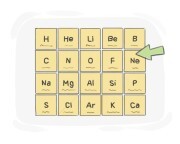
Ex: The phenomenon of radioactivity was discovered by Henri Becquerel while studying the properties of uranium salts. 
Close
Sign in
chemical element

any of the simple chemical substances that consist of atoms of only one type, such as gold, oxygen, carbon, etc.
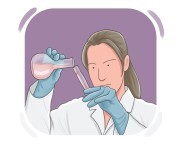
Ex: Hydrogen is the lightest chemical element and is found in many compounds. 
Close
Sign in
discovery
discovery
[noun]

the act of finding something for the first time and before others
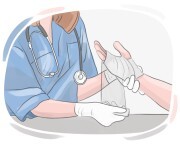
Ex: The discovery of penicillin revolutionized medicine by introducing the first antibiotic. 
Close
Sign in
to treat
to treat
[Verb]

to provide medical care such as medicine or therapy to heal injuries, illnesses, or wounds and make someone better

Ex: First aid is administered to treat minor injuries and wounds. 
Close
Sign in
to win
to win
[Verb]

to be awarded something such as a prize after winning a contest, bet, etc.

Ex: She won a scholarship to study abroad. 
Close
Sign in
nobel prize

an annual award for outstanding contributions to chemistry or physics or physiology and medicine or literature or economics or peace
Close
Sign in
science
science
[noun]

a particular area of science

Close
Sign in
to die
to die
[Verb]

to no longer be alive

Ex: Unfortunately, her pet fish died after being in poor health for a week. 
Close
Sign in
World War I

the war that took place from the year 1914 to 1918 between the allies and the central powers
Close
Sign in
to install

to set a piece of equipment in place and make it ready for use

Ex: To upgrade the kitchen, they hired a professional to install the new dishwasher. 
Close
Sign in
x-ray machine

an apparatus that provides a source of X rays

Close
Sign in
battlefield

an area where a battle is being or was fought
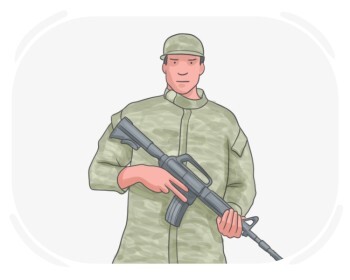
Ex: Soldiers advanced cautiously across the battlefield, taking cover behind trees and rocks. 
Close
Sign in
soldier
soldier
[noun]

someone who serves in an army, particularly a person who is not an officer

Ex: Every soldier must undergo rigorous training. 
Close
Sign in
radiation
radiation
[noun]

energy transmitted through space or matter in the form of waves or particles

Ex: The sun emits radiation that warms the Earth. 
Close
Sign in
LanGeek
Download LanGeek app