B1 Level Wordlist - Literature

Here you will learn some English words about literature, such as "author", "bestseller", "fiction", etc. prepared for B1 learners.

review-disable

review

flashcard-disable

flashcard

spelling-disable

spelling

quiz-disable

quiz

start-learning
B1 Level Wordlist
author [noun]

a person who writes books, articles, etc., often as a job
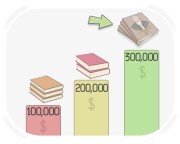
Ex: The aspiring author diligently worked on their manuscript , hoping to one day see their book in print .

an item, especially a book, that is bought by a large number of people

Ex: He was thrilled when his book became a bestseller in multiple countries .

the story of someone's life that is written by another person
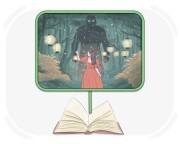
Ex: The new biography of the famous artist became a bestseller overnight .

a type of folktale that typically features mythical creatures, magical events, and enchanted settings, often with a moral lesson or a happy ending
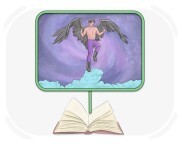
Ex: Fairy tales often feature mythical creatures such as fairies , witches , dragons , and talking animals .
fiction [noun]

a type of literature about unreal people, events, etc.
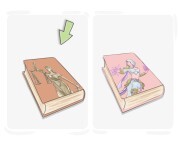
Ex: His favorite genre of fiction includes science fiction and fantasy .

a type of literature about real people, or events, etc.
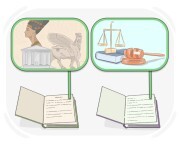
Ex: His latest non-fiction book explores the life of a famous scientist .

the part of a book or speech that provides a brief explanation of what it is about
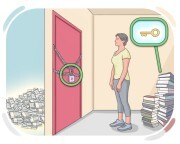
Ex: The introduction of the textbook offered students a roadmap for navigating the complex subject matter ahead .
metaphor [noun]

a figure of speech that compares two unrelated things to highlight their similarities and convey a deeper meaning

Ex: His writing style relies heavily on vivid metaphors and imagery .
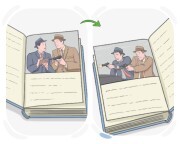
mystery [noun]

a movie, novel, or play in which a crime takes place, especially a murder, and the story starts unraveling as it goes on
Ex:
myth [noun]

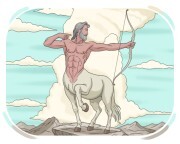
a story involving the ancient history of a people, usually about heroes and supernatural events that could be unreal
Ex: The ancient myth described how fire was stolen from the gods .
plot [noun]

the events that are crucial to the formation and continuity of a story in a movie, play, novel, etc.
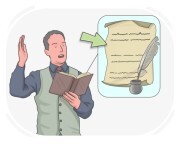
Ex: She explained the plot of the play , highlighting the main conflicts and resolutions .
poem [noun]

a written piece with particularly arranged words in a way that, usually rhyme, conveys a lot of emotion and style
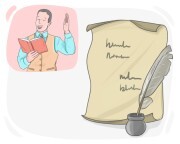
Ex: The poem painted vivid pictures of the bustling cityscape .
poetry [noun]

a type of writing that uses special language, rhythm, and imagery to express emotions and ideas
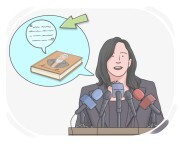
Ex: The class studied several famous pieces of poetry during the semester .

a sentence or group of words from a movie, book, etc. that someone else repeats
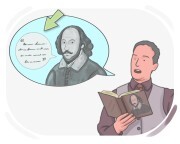
Ex: He often uses a quotation from his favorite movie to inspire others .
to quote [verb]

to say the exact sentence or group of words someone else used in a movie, book, etc.
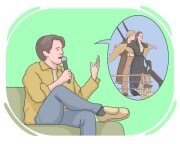
Ex: The professor quoted Albert Einstein 's famous statement , " Imagination is more important than knowledge . "

to share personal opinions about a book, movie, or media to inform and provide insights into its strengths and weaknesses
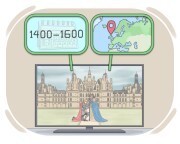
Ex: As a critic , it 's important to review not only the plot but also the technical aspects of a movie , such as sound design and editing .
setting [noun]

the time and place in which the story of a movie, play, etc. is taking place
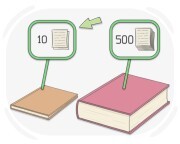
Ex: The novel 's setting includes various locations in Italy during World War II .

a complete story that is not long and can be read in a short time
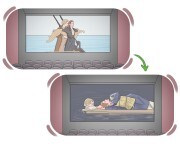
Ex: His short story won first place in the writing competition .

the plot of a movie, play, novel, etc.

Ex: Critics praised the show for its complex and engaging storyline .
tale [noun]

a true or imaginary story, particularly one that is full of exciting events

title [noun]

the name given to a movie, book, etc.
Ex: The song 's title quickly became a trending topic on social media .
verse [noun]

a set of words that usually have a rhythmic pattern
Ex: Memorizing a favorite verse can provide comfort during difficult times , serving as a source of inspiration and strength .
writing [noun]

(plural) written works particularly those belonging to an author or covering a specific topic
Ex: The library shelves were filled with a diverse array of writing , from classic novels to contemporary essays , catering to readers of all interests and tastes .
Gothic [adjective]

(of a novel, etc.) written or made in a spooky and mysterious way and often focus on creepy places like old castles or haunted houses, with themes of darkness and the supernatural
Ex: The gothic genre captivates audiences with its emphasis on the macabre , drawing readers into haunted houses and gloomy settings where eerie events take place .
literary [adjective]

related to literature, especially in terms of its style, structure, or content
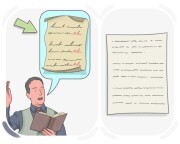
Ex: The literary magazine published short stories , poetry , and essays from emerging writers .
poetic [adjective]

relating to poetry as a form of expression or literature
Ex: The film 's cinematography captured the landscape in poetic detail , showcasing nature 's breathtaking beauty .
young adult [adjective]

relating to movies or programs that are suitable or made for adolescents

play [noun]

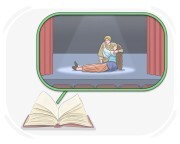
a written story that is meant to be performed on a stage, radio, or television

Ex: They adapted the popular novel into a television play , bringing the story to life on screen .