
Verbes des Sens et des Émotions - Verbes pour les Actions Sensorielles
Ici, vous apprendrez quelques verbes anglais se référant à des actions sensorielles telles que "entendre", "toucher" et "sentir".
Réviser
Flashcards
formes
Orthographe
Quiz

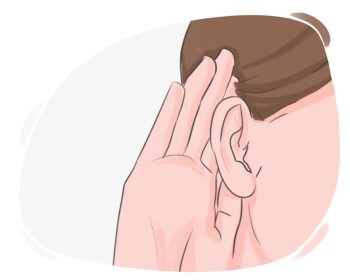
to notice the sound a person or thing is making

entendre, percevoir
Elle a entendu le téléphone sonner et est allée répondre.
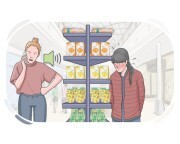
to unintentionally hear a conversation or someone's remarks
entendre par hasard, surprendre une conversation
Hier soir, j'ai entendu par hasard mes voisins parler de leurs projets de vacances.
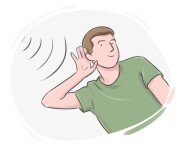
to give our attention to the sound a person or thing is making
écouter
Les enfants écoutaient avec admiration tandis que la conteuse déroulait son histoire.
to listen attentively
écouter attentivement, prêter l'oreille
Il écoute souvent les sons de la nature pour se détendre.

to know about somebody or something because one has received information or news about them
entendre parler de
C'est la première fois que j'entends parler de vos projets de voyage autour du monde; ça a l'air incroyable.
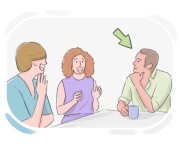
to listen to a conversation or communication without participating
écouter, espionner
Le manager a écouté la conversation des employés, espérant obtenir des informations sur leur satisfaction au travail.
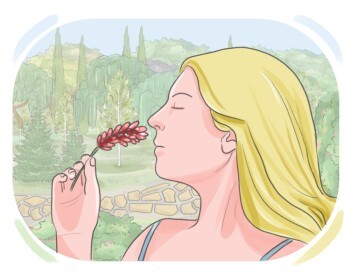
to recognize or become aware of a particular scent
sentir
Elle sent souvent le parfum des roses dans son jardin.
to track something using one's sense of smell, typically performed by animals to locate food, identify potential threats, or find mates
flairer, pister
Les loups flairent souvent leur proie à une distance considérable.
to detect a faint scent by inhaling through the nose
renifler, humer
En ce moment, je hume le parfum d'un délicieux repas en train de cuisiner dans la cuisine.
to inhale air audibly through the nose, often to detect or identify a scent or odor
renifler, sentir
Il renifle régulièrement l'air pour déterminer ce qui cuit dans la cuisine.
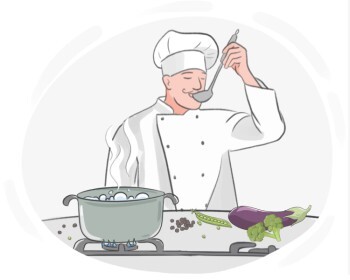
to be able to recognize the flavor of something by eating or drinking it
goûter, savourer
Alors que le connaisseur en vin faisait tourner le verre, il anticipait l'occasion de goûter les notes complexes du vin rouge vieilli.
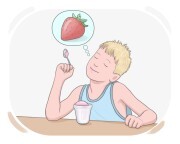
to taste food or drink carefully, appreciating and analyzing its flavors, often as part of a formal or discerning evaluation
déguster
Elle déguste chaque vin avant de l'ajouter à sa collection.
to fully appreciate and enjoy the flavor or aroma of a food or drink as much as possible, particularly by slowly consuming it
savourer, déguster
En ce moment, je savoure la chaleur d'un café fraîchement infusé.
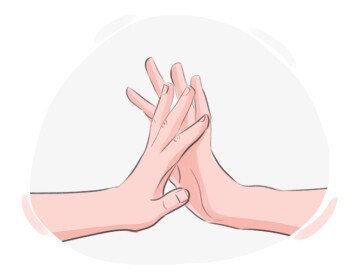
to put our hand or body part on a thing or person
toucher
Elle touchait doucement le bras de son amie pour offrir du réconfort et du soutien.
to be aware of something or someone through touching or being touched
sentir
Elle ressentait une douleur sourde dans le dos après être restée assise à son bureau toute la journée.
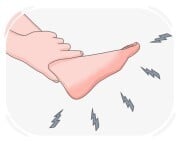
to make a part of the body feel a bit ticklish or have a slight, unusual sensation
picoter, fourmiller
En ce moment, la sensation de chaleur de l'huile de massage picote mon dos.

to notice something that is not immediately obvious
relever
Sarah a rapidement remarqué la tension dans la pièce lorsqu'elle est entrée.
| Verbes des Sens et des Émotions | |||
|---|---|---|---|
| Verbes pour les Actions Sensorielles | Verbes pour la Vision | Verbes pour la visibilité | Verbes pour l'invisibilité |
| Verbes pour l'émission de son | Verbes pour les actions émotionnelles | Verbes pour exprimer les émotions | Verbes pour l'Empathie |
