
Verbes du Cours des Événements - Verbes pour la planification et l'ordonnancement
Ici, vous apprendrez quelques verbes anglais se référant à la planification et à la programmation tels que "comploter", "stratégiser" et "reporter".
Réviser
Flashcards
formes
Orthographe
Quiz


to decide on and make arrangements or preparations for something ahead of time

planifier, prévoir

to secretly make a plan to harm someone or do something illegal
conspirer, comploter
to devise a plan, especially a secret or dishonest one
comploter, manigancer
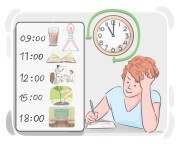
to plan something in detail
élaborer, planifier
Nous devons élaborer le planning pour tenir compte de la disponibilité de chacun.

to develop an idea, plan, theory, or principle through mental effort
élaborer, concevoir
Il a élaboré une solution brillante au problème complexe.

to plan or direct a complex or intricate scheme or project
concevoir, orchestrer
Le PDG a conçu l'expansion de l'entreprise sur les marchés internationaux.

to give a higher level of importance or urgency to a particular task, goal, or objective compared to others
prioriser, donner la priorité
L'équipe a priorisé les mesures de sécurité avant tout pendant le projet.
to plan a course of action for achieving a specific goal or desired outcome
élaborer une stratégie, planifier
Elle a stratégisé son avancement de carrière en cherchant une formation supplémentaire.

to measure how long an event, action, or someone performing an action takes
chronométrer, minuter

to schedule something for a specific time or purpose
planifier, programmer
Elle a programmé ses vacances pour la fin de l'année.
to set a specific time to do something or make an event happen
planifier, programmer
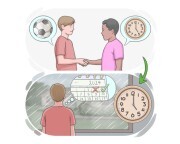
to arrange a new time or date for something that was previously set
reprogrammer, replanifier
Les organisateurs de l'événement ont dû reprogrammer le concert en raison du mauvais temps.
to arrange for an event or activity to happen at a particular time
programmer, planifier

to arrange or put off an activity or an event for a later time than its original schedule
reporter
Elle a reporté ses vacances à cause d'engagements professionnels imprévus.

to refrain from taking immediate action
attendre, différer
L'équipe a choisi de reporter le lancement du projet jusqu'à ce qu'ils aient résolu les problèmes critiques.

to postpone to a later time
reporter, différer
En raison de problèmes techniques, le lancement du nouveau logiciel a été reporté d'un mois.
to postpone an appointment or arrangement
reporter, repousser, décaler
Elle a reporté le rendez-vous à la semaine prochaine en raison d'engagements personnels.
to reschedule an appointment or event for a later time or date
reporter, décaler
Pouvons-nous reporter notre déjeuner d'une heure ? J'ai une course imprévue à faire.
to move something from one time to another
reporter, transférer
Reportons cette discussion à notre réunion la semaine prochaine.
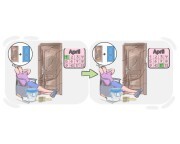
to postpone something that needs to be done
remettre au lendemain
Il a reporté le paiement de ses factures jusqu'à ce qu'elles soient en retard.

to slow down or postpone something
retarder, différer

to have something in mind as a plan or purpose
avoir l’intention de

to be supposed or intended to do a certain thing
vouloir faire, avoir l'intention de faire

to work toward a specific goal
viser, avoir pour objectif
Ses efforts visent à améliorer sa condition physique et sa santé globale.

to create a plan or layout for something
concevoir, élaborer

to create a plan, document, or written agreement, often in a formal or official context
rédiger, établir
L'architecte a travaillé avec diligence pour établir des plans détaillés pour le projet de construction.
| Verbes du Cours des Événements | |||
|---|---|---|---|
| Verbes pour la planification et l'ordonnancement | Verbes pour le Timing | Verbes pour débutants | Verbes pour la continuation et l'interruption |
| Verbes pour la fin | Verbes pour la Répétition | Verbes pour la restauration et la refonte | |
