
Verbes de Relations de Pouvoir - Verbes pour Exercer le Pouvoir
Ici, vous apprendrez quelques verbes anglais se référant à l'exercice du pouvoir tels que "contrôler", "diriger" et "asservir".
Réviser
Flashcards
formes
Orthographe
Quiz


to have power over a person, company, country, etc. and to decide how things should be done

contrôler, commander

to control and be in charge of a country
gouverner
to rule a country or territory as a monarch
régner sur
to officially rule and manage a country, region, or community
gouverner
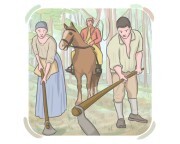
to act with excessive, unfair authority or harshness
tyranniser, opprimer
Le général tyrannisa les soldats, les forçant à travailler de longues heures.

to place a crown on someone's head in a ceremony so that person officially becomes a king or queen
couronner

to force someone to do what they do not want
imposer, infliger
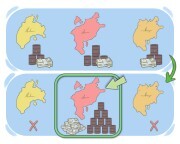
to have the power to completely or partially control someone or something
dominer

to make a particular behavior or situation happen or be accepted through authority or pressure
imposer, faire appliquer
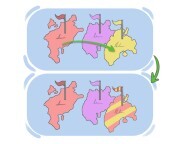
to establish control over an area or people, often by settling and exploiting it
coloniser

to invade or overwhelm with a large number, surpassing defenses
envahir
Lors de l'attaque surprise, les envahisseurs ont cherché à envahir la ville stratégiquement importante.
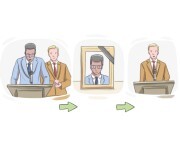
to begin to be in charge of something, often previously managed by someone else
prendre en charge ou prendre le contrôle de quelque chose auparavant géré par quelqu'un d'autre, remplacer quelqu'un à la direction de quelque chose
Le superviseur prend en charge le programme de formation de l'équipe.
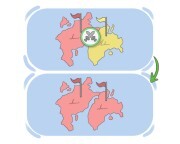
to gain control of a place or people using armed forces
conquérir
Le seigneur de guerre visait à conquérir les régions voisines pour étendre son dominion.
to gain control and governance over a person, group, or territory, often through conquest or forceful means
subjuguer, assujettir, asservir
L'armée impériale cherchait à subjuguer des terres lointaines, les ajoutant à l'empire en expansion.

to force someone into a condition of forced labor or work
asservir, réduire en esclavage
Les conquérants cherchaient à asservir la population locale pour travailler dans les plantations.

to wrongly take someone else's position, power, or right
usurper
Les tribus locales pensaient que le gouvernement essayait de usurper leurs terres.
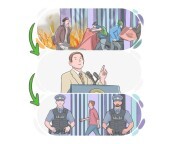
to forcefully stop or crush something
réprimer, étouffer
La police a utilisé des gaz lacrymogènes pour réprimer la manifestation et disperser la foule.
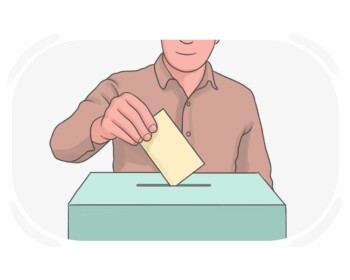
to show which candidate one wants to win in an election or which plan one supports, by marking a piece of paper, raising one's hand, etc.
voter
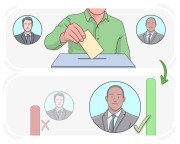
to choose a person for a specific job, particularly a political one, by voting
élire
to formally vote or make a choice, especially in elections, by marking a paper
voter, scrutiner

to ask people specific questions to gather their opinions or preferences on a particular subject
sonder, interroger

to assign or designate someone to a particular position or responsibility
désigner
Les membres de l'organisation auront l'occasion de nommer des individus à des postes de direction.
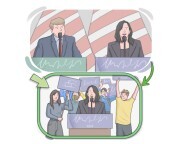
to promote or advertise something, typically in a sustained and organized way
faire campagne, promouvoir
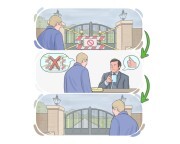
to try to persuade politicians or officials to support or oppose a particular policy, law, or action
faire du lobbying
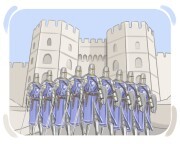
to passionately campaign or fight, often with a religious or moral purpose
se battre (pour une cause), lutter (pour une cause)
Le roi a exhorté ses sujets à croisader pour la protection des reliques sacrées.
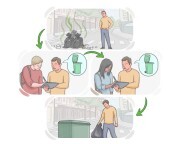
to make a formal request to a person, organization, or court in authority
pétitionner, adresser une pétition

to make a system more open and fair, giving everyone a chance and involving more people
démocratiser, rendre plus démocratique
Au fil des années, de nombreux pays ont travaillé à démocratiser leurs structures de gouvernance pour une plus grande participation des citoyens.
| Verbes de Relations de Pouvoir | |||
|---|---|---|---|
| Verbes pour l'Enfermement et la Libération | Verbes pour la restriction | Verbes de privation | Verbes pour Exercer le Pouvoir |
| Verbes pour réagir au pouvoir | Verbes pour la Gestion | Verbes pour le Pardon et la Négligence | |
