

pattern

B2 수준 단어 목록 - Outer Space

여기에서 B2 학습자를 위해 준비된 "외계인", "우주", "소행성" 등과 같은 우주에 관한 몇 가지 영어 단어를 배우게 됩니다.

리뷰

플래시카드

형태

철자법

퀴즈

학습 시작
CEFR B2 Vocabulary
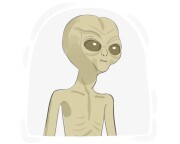
alien
alien
[명사]

a creature that is believed to exist in other worlds or planets

외계인, 에일리언

외계인, 에일리언

Ex: The idea of aliens visiting Earth has been a topic of debate and speculation, with various reports and sightings fueling conspiracy theories. 
닫기
로그인
space
space
[명사]

any area beyond the Earth's atmosphere

우주, 공간

우주, 공간

Ex: Astronauts trained for travel in space. 
닫기
로그인
outer space
outer space
[명사]

the space outside the earth's atmosphere

우주 공간, 외부 공간

우주 공간, 외부 공간

Ex: Outer space is characterized by the absence of air, so astronauts must wear spacesuits to survive the vacuum and extreme conditions. 
닫기
로그인
universe
universe
[명사]

all that exists in the physical world, such as space, planets, galaxies, etc.

우주

우주

Ex: Astronomers study distant galaxies to understand the vastness and complexity of the universe. 
닫기
로그인
asteroid
asteroid
[명사]

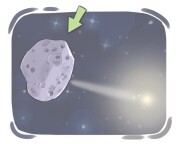
any of the rocky bodies orbiting the sun, ranging greatly in diameter, also found in large numbers between Jupiter and Mars

소행성, 암석 천체

소행성, 암석 천체

Ex: Scientists study asteroids to learn about the early solar system and potential threats to Earth. 
닫기
로그인
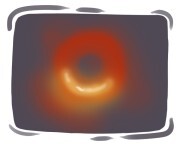
black hole
black hole
[명사]

a place in the space with such high gravity that pulls in everything, even light

블랙홀, 검은 구멍

블랙홀, 검은 구멍

Ex: Black holes are formed from the remnants of massive stars that have ended their life cycles and collapsed under their own gravity. 
닫기
로그인
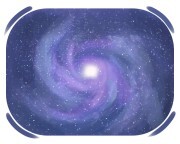
galaxy
galaxy
[명사]

a large number of star systems bound together by gravitational force

은하

은하

Ex: Galaxies can vary in shape and size, with types including spiral, elliptical, and irregular galaxies, each having distinct structures and characteristics. 
닫기
로그인
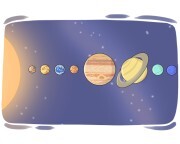
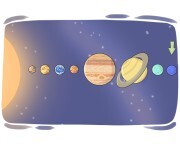
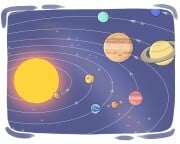
solar system
solar system
[명사]

the sun and the group of planets orbiting around it, including the earth

태양계, 태양계

태양계, 태양계

Ex: Earth is one of eight planets in the solar system. 
닫기
로그인
Mercury
Mercury
[명사]

the 1st and smallest planet in the solar system which is the closest to the sun

수성

수성

Ex: Mercury, the closest planet to the Sun, has surface temperatures that can reach up to 800 degrees Fahrenheit during the day. 
닫기
로그인
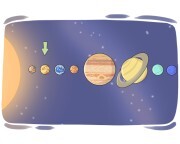
Venus
Venus
[명사]

the 2nd planet of the solar system located between Mercury and earth

금성, 금성이라는 행성

금성, 금성이라는 행성

Ex: Venus, often called the "morning star" or "evening star," is the brightest natural object in the night sky after the Moon. 
닫기
로그인
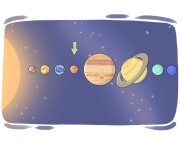
Mars
Mars
[명사]

the 4th planet of the solar system located between earth and Jupiter

화성

화성

Ex: Mars has fascinated astronomers for centuries due to its distinct reddish hue visible from Earth. 
닫기
로그인
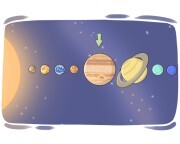
Jupiter
Jupiter
[명사]

the 5th and the largest planet of the solar system located between Mars and Saturn

목성은 화성과 토성 사이에 위치한 태양계의 다섯 번째이자 가장 큰 행성입니다.

목성은 화성과 토성 사이에 위치한 태양계의 다섯 번째이자 가장 큰 행성입니다.

Ex: Jupiter is the fifth planet from the sun in the solar system. 
닫기
로그인
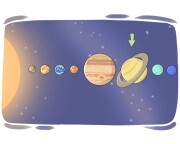
Saturn
Saturn
[명사]

the 6th planet of the solar system located between Jupiter and Uranus, which has rings around it

토성, 토성이라는 행성

토성, 토성이라는 행성

Ex: Saturn is the second-largest planet in the solar system, after Jupiter, and has a diameter about 9 times that of Earth. 
닫기
로그인
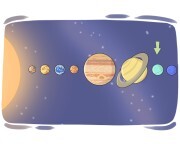
Uranus
Uranus
[명사]

the 7th planet of the solar system with a blue-green color located between Saturn and Neptune

천왕성, 천왕성이라는 행성

천왕성, 천왕성이라는 행성

Ex: The Voyager 2 spacecraft flew by Uranus in 1986, providing the first close-up images and data about its rings and moons. 
닫기
로그인
Neptune
Neptune
[명사]

the 8th planet of the solar system with a ring of icy particles around it

해왕성, 해왕성이라는 행성

해왕성, 해왕성이라는 행성

Ex: Neptune’s vibrant blue color is due to the presence of methane in its atmosphere, which absorbs red light. 
닫기
로그인
astronomy
astronomy
[명사]

a branch of science that studies space, planets, etc.

천문학, 별의 과학

천문학, 별의 과학

Ex: Advances in astronomy have led to the discovery of exoplanets orbiting other stars in our galaxy. 
닫기
로그인
astronomer
astronomer
[명사]

a scientist who studies or observes planets, stars, and other happenings in the universe

천문학자

천문학자

Ex: The astronomer discovered a new exoplanet using advanced telescope technology. 
닫기
로그인
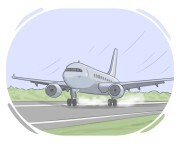
landing
landing
[명사]

the act of an aircraft or spacecraft arriving on the ground or a solid surface

착륙

착륙

Ex: The astronauts successfully completed the landing on the surface of the Moon. 
닫기
로그인
outer
outer
[형용사]

situated on the outside of something else

외부의, 바깥쪽의

외부의, 바깥쪽의

Ex: The outer coating of the tablet protects it from moisture until it reaches the stomach. 
닫기
로그인
orbit
orbit
[명사]

the path an object in the space follows to move around a planet, star, etc.

궤도, 운행 궤도

궤도, 운행 궤도

Ex: The satellite was placed into a stable orbit to continuously monitor weather patterns from space. 
닫기
로그인
to orbit
to orbit
[동사]

to move around a star, planet, or a large object in space

궤도를 돌다, 공전하다

궤도를 돌다, 공전하다

Ex: The moon orbits around the Earth once every 27.3 days. 
닫기
로그인
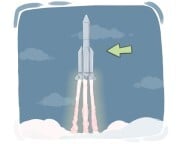
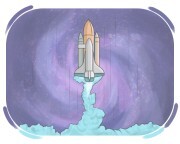
rocket
rocket
[명사]

a spacecraft that moves up by the force of the gases produced when the fuel burns

로켓

로켓

Ex: The rocket lifted off from the launch pad, carrying a satellite into orbit around Earth. 
닫기
로그인
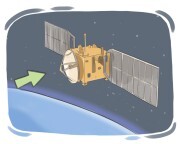
satellite
satellite
[명사]

an object sent into space to travel around the earth and send or receive information

위성, 우주선

위성, 우주선

Ex: The weather satellite provided real-time images of storm systems to help meteorologists forecast the weather. 
닫기
로그인
to launch
to launch
[동사]

to send an object, such as a satellite, missile, etc., into space

발사하다, 시작하다

발사하다, 시작하다

Ex: The military launched a missile as part of a test exercise. 
닫기
로그인
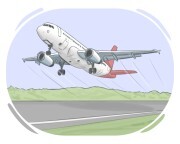
takeoff
takeoff
[명사]

the process by which an aircraft leaves the ground and starts to fly

이륙

이륙

Ex: The plane’s takeoff was smooth, and passengers were soon enjoying the view from above the clouds. 
닫기
로그인
spacecraft
spacecraft
[명사]

a vehicle designed to travel in space

우주선, 우주 비행체

우주선, 우주 비행체

Ex: The spacecraft was launched to explore Mars and collect data about the planet's surface and atmosphere. 
닫기
로그인
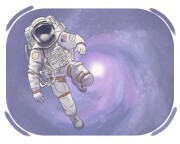
spaceman
spaceman
[명사]

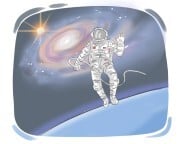
someone who travels into space, such as an astronaut

우주비행사, 우주인

우주비행사, 우주인

Ex: The spaceman conducted scientific experiments in space to study the effects of microgravity on various materials. 
닫기
로그인
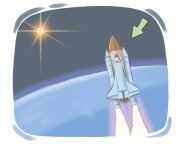
spaceship
spaceship
[명사]

a kind of spacecraft used by astronauts to explore in space

우주선, 우주 왕복선

우주선, 우주 왕복선

Ex: Scientists are working on developing reusable spaceships to reduce the cost of space exploration. 
닫기
로그인
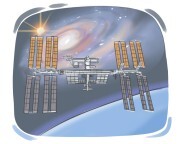
space station

a large structure used as a long-term base for people to stay in space and conduct research

우주 정거장, 우주 기지

우주 정거장, 우주 기지

Ex: The space station serves as a platform for testing technologies needed for future deep-space exploration. 
닫기
로그인
spacesuit
spacesuit
[명사]

clothing used by astronauts while traveling in space

우주복, 스페이스슈트

우주복, 스페이스슈트

Ex: During training, astronauts practiced maneuvering in their spacesuits to become accustomed to the added bulk. 
닫기
로그인
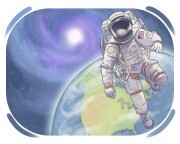
spacewalk
spacewalk
[명사]

a period during which an astronaut moves outside an spacecraft in space, typically to perform repairs or experiments

우주 유영, 선외 활동

우주 유영, 선외 활동

Ex: The astronauts conducted a spacewalk to repair the solar panels on the International Space Station. 
닫기
로그인
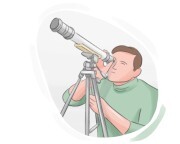
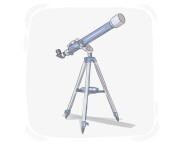
telescope
telescope
[명사]

a piece of equipment by which the far objects, particularly those in space, are made clearly visible

망원경, 텔레스코프

망원경, 텔레스코프

Ex: He used a telescope to observe the stars. 
닫기
로그인
voyage
voyage
[명사]

a long journey taken on a ship or spacecraft

여행, 항해

여행, 항해

Ex: The space mission was a historic voyage to the International Space Station. 
닫기
로그인
LanGeek
LanGeek 앱 다운로드