
Matematyka i Logika SAT - Arytmetyka i Statystyka
Tutaj nauczysz się niektórych angielskich słów związanych z arytmetyką i statystyką, takich jak "podzielny", "zakres", "mediana" itp., które będą Ci potrzebne do zdania egzaminów SAT.
Przegląd
Fiszki
Pisownia
Test

a combination of a whole number and a proper fraction

liczba mieszana, ułamek mieszany
Dzieląc liczby mieszane, zamieniamy je na ułamki niewłaściwe, wykonujemy dzielenie, a następnie upraszczamy wynik, jeśli to możliwe.
a number greater than 1 with only two devisors which can be itself or 1
liczba pierwsza
Matematycy badają rozkład liczb pierwszych wśród liczb całkowitych.
a number that can be written as a fraction, where both the top and bottom are whole numbers, and the bottom is not zero
liczba wymierna, ułamek wymierny
2/3 to liczba wymierna, ponieważ reprezentuje dzielenie dwóch liczb całkowitych, -2 i 3, a wynik jest wartością skończoną.
a number incapable of being expressed as a ratio of two integers
liczba niewymierna, liczba nieproporcjonalna
Liczby niewymierne nie mogą być zapisane jako proste ułamki.
a number that has both a real part and a part involving a unit that, when squared, gives a negative result
liczba zespolona, zespolona
Liczby zespolone są szeroko stosowane w inżynierii elektrycznej do analizy obwodów prądu przemiennego.
any number that can be found on the number line, including both positive and negative numbers, zero, and fractions
liczba rzeczywista, rzeczywista
Liczby rzeczywiste mogą być używane do pomiaru ciągłych wielkości, takich jak odległość i czas.
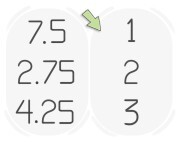
any positive number without fractions or decimals, including zero
liczba całkowita, liczba naturalna
Liczby 0, 1, 2, 3 i tak dalej to wszystkie liczby całkowite.
any number without fractions or decimals, including positive numbers, negative numbers, and zero
liczba całkowita
Zaokrąglając liczbę dziesiętną, często otrzymujemy liczbę całkowitą jako wynik.
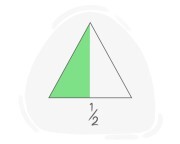
a number expressed as one quantity divided by another, especially one written with a numerator and denominator
ułamek, liczba ułamkowa
(mathematics) a number less than one, called a fraction, that is represented as a period followed by the number of tenths, hundredths, etc.
dziesiętny, liczba dziesiętna
Naukowcy używają notacji dziesiętnej do wyrażania bardzo małych ilości, takich jak pomiary w nanometrach.
a fraction where the the top number is greater than or equal to the equal to the bottom number
ułamek niewłaściwy
W niektórych problemach matematycznych praca z ułamkami niewłaściwymi jest bardziej bezpośrednia niż używanie liczb mieszanych.
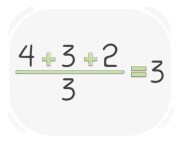
(mathematics) the average value of a set of quantities calculated by adding them, and dividing them by the total number of the quantities
średnia, średnia arytmetyczna
a value that, when multiplied by itself a specified number of times, results in the given number
pierwiastek, radykał
the difference between the highest and lowest values in a set of numbers
zakres, rozpiętość
(mathematics) the product of a number multiplied by itself
kwadrat
calculated by adding a set of numbers together and dividing this amount by the total number of amounts in that set
średni
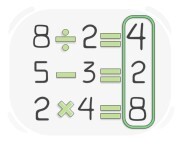
a correct answer to a problem in mathematics or a puzzle
rozwiązanie, odpowiedź
the result of multiplying two or more numbers or quantities together
iloczyn, wynik mnożenia
the result obtained by dividing one quantity or number by another, expressed as the outcome of a division operation
iloraz
Iloraz licznika 8 i mianownika 2 w ułamku 8/2 wynosi 4.
(mathematics) one of the numbers that another number can be divided by
czynnik
(mathematics) an amount that is shown by a sign or letter
wartość, ilość
a mathematical statement showing that one quantity or expression is greater or less than another
nierówność
(mathematics) a statement indicating the equality between two values
równanie
the lowest amount, degree, or extent there is or is possible, allowed or required
minimum, najniższy
a mathematical expression where a number is multiplied by itself a certain number of times determined by a variable
wykładnicza, funkcja wykładnicza
Rozwiązanie równania wymaga zrozumienia, jak manipulować wykładnikami.
related to equations that create straight lines when graphed, indicating a constant rate of change
liniowy
Uznała, że łatwiej jest zrozumieć relacje liniowe, ponieważ wykres był zawsze prostą linią.
the constant ratio between consecutive terms
wspólny stosunek, stały stosunek
Wspólny stosunek to kluczowy parametr w opisie zachowania populacji w modelach wzrostu wykładniczego.
a number that is a multiple of two or more given numbers
wspólna wielokrotność, wspólny mnożnik
Wspólne wielokrotności 3 i 7 obejmują 21, 42 i 63.
a number that divides exactly into two or more given numbers without leaving a remainder
wspólny czynnik, wspólny dzielnik
Wspólny dzielnik liczb 15 i 25 to 5.
(mathematics) a shared multiple of the bottom numbers of two or more fractions
wspólny mianownik, wspólny dzielnik mianowników
the smallest positive integer that is a common multiple of the denominators of two or more fractions
najmniejszy wspólny mianownik, najmniejszy mianownik wspólny
Aby dodać ułamki 1/4 i 1/6, najpierw znajdujemy najmniejszy wspólny mianownik, którym jest 12.

a mathematical measure of how likely an event is to occur, expressed as a number between zero and one
prawdopodobieństwo, szansa

to guess the value, number, quantity, size, etc. of something without exact calculation
oszacować, ocenić
a sequence of numbers in which the difference between any two consecutive terms is constant
ciąg arytmetyczny, sekwencja arytmetyczna
Aby określić, czy istnieje ciąg arytmetyczny, sprawdzamy, czy różnica między kolejnymi wyrazami pozostaje stała.
the number of times a particular event occurs within a specific period or among a set of observations
częstotliwość
(statistics) an arrangement of values of a variable showing how often each occurs, either observed or theoretical
rozkład, dystrybucja
a statistical measure that represents the middle value of a data set when the values are arranged in ascending or descending order
mediana, wartość środkowa
Jeśli zbiór danych to {4, 7, 9, 10}, to mediana to średnia z 7 i 9, czyli 8.
the value that appears most frequently in a data set
moda, wartość modalna
having or involving two distinct modes, peaks, or most frequent values
bimodalny, z dwoma modami
Badanie wykazało, że rozkład wieku uczestników był bimodalny, z grupami w wieku 20 i 50 lat.
a measure of how much the values in a set typically differ from the average
odchylenie standardowe, odchylenie typowe
Obliczenie odchylenia standardowego pomaga zrozumieć rozrzut zbioru danych.
the range within which the true value is expected to fall, accounting for potential inaccuracies in measurement or sampling
margines błędu, zakres błędu
Inżynierowie uwzględnili margines błędu w swoich pomiarach, aby uwzględnić niewielkie niedoskonałości.
occurring in such a way that each possible outcome has a certain probability of occurring, but the specific outcome cannot be predicted with certainty
losowy, przypadkowy
Koncept losowej zmienności wyjaśnia, dlaczego powtarzane pomiary tej samej wielkości mogą dawać różne wyniki z powodu nieodłącznej nieprzewidywalności.
a straight line drawn through a set of data points on a graph to represent the general direction or pattern of the data
linia trendu, linia tendencji
Podczas analizy danych linia trendu ujawniła stopniowy spadek zadowolenia klientów.
a type of statistical chart consisting of dots that represent individual data points
wykres punktowy, diagram punktowy
Wykres punktowy pokazał wyraźną wartość odstającą, z jednym punktem danych znacznie wyższym niż reszta wartości.
a mathematical representation that describes the relationship between two or more variables using a linear equation
model liniowy, model regresji liniowej
Korzystając z modelu liniowego, badacz był w stanie przewidzieć tempo wzrostu bakterii na podstawie temperatury.
